AI-augmented software development is no longer an experimental novelty — it is rapidly becoming the standard for how high-performing engineering teams build software. According to McKinsey’s research on generative AI, AI-powered development tools can boost developer productivity by 20–45% depending on the task, translating into hundreds of billions of dollars in annual value for the global software industry.
The evidence is already visible. GitHub’s own research found that developers using Copilot completed tasks 55% faster than those coding without AI assistance. Meanwhile, Gartner predicts that by 2028, 75% of enterprise software engineers will use AI coding assistants — up from less than 10% in early 2023.
But speed is just the beginning. AI-augmented development transforms the entire software development lifecycle (SDLC) — from planning and code generation to testing, documentation, deployment, and maintenance. This guide breaks down the top 10 benefits enterprises are realizing today, backed by data, real-world examples, and a practical roadmap for getting started.
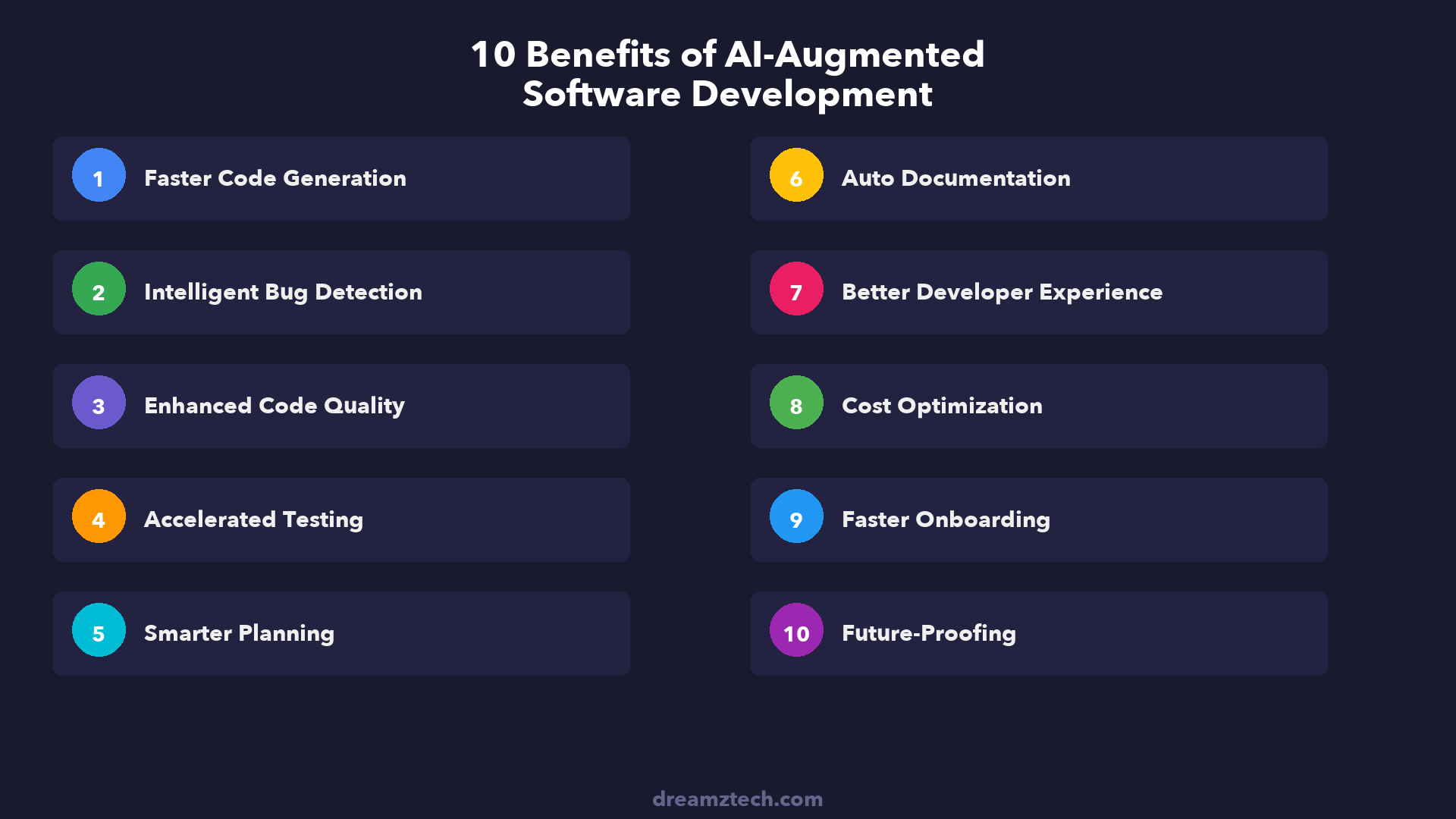
The Top 10 Benefits of AI-Augmented Software Development at a Glance
What Is AI-Augmented Software Development?
AI-augmented software development refers to the integration of artificial intelligence tools and capabilities across the software development lifecycle to enhance — not replace — human developers. This includes:
- AI Code Assistants: Tools like GitHub Copilot, Amazon CodeWhisperer, and Cursor that generate, complete, and refactor code in real-time
- AI-Powered Testing: Automated test generation, visual regression testing, and intelligent test prioritization
- Intelligent Code Review: AI systems that identify bugs, security vulnerabilities, and code quality issues before they reach production
- Natural Language to Code: Converting business requirements and user stories directly into functional code through generative AI technologies
- AI-Driven DevOps: Predictive monitoring, automated incident response, and intelligent deployment strategies
- Automated Documentation: Generating and maintaining technical documentation, API references, and inline comments
The key distinction is augmentation, not automation. AI handles the repetitive, pattern-based aspects of development while human engineers focus on architecture, complex problem-solving, and creative decisions that require contextual understanding and business judgment.
The Top 10 Benefits of AI-Augmented Software Development
1. Dramatically Faster Code Generation
The most immediate and measurable benefit is speed. AI coding assistants can generate boilerplate code, implement common patterns, and scaffold entire features in seconds — tasks that previously consumed hours of developer time.
Real-world impact:
- GitHub Copilot users write code 55% faster across languages (Python, JavaScript, TypeScript, Java)
- Repetitive tasks like CRUD operations, API endpoints, and data models see 70–80% time reduction
- McKinsey found that developers using AI assistants for code generation were 35–45% more productive in generating new code, and up to 20% more productive overall when factoring in code review and debugging
For enterprises running large development teams, a 20–40% productivity increase translates directly into faster time-to-market and significant cost savings. Organizations investing in AI software development services are seeing these gains compound across their entire engineering organization.
2. Intelligent Bug Detection and Resolution
AI does not just write code — it catches bugs before they become problems. AI-powered static analysis tools can identify issues that traditional linters miss, including:
- Logic errors: Detecting off-by-one errors, null pointer dereferences, and race conditions
- Security vulnerabilities: Identifying SQL injection, XSS, authentication bypasses, and insecure configurations in real-time
- Performance issues: Flagging inefficient algorithms, memory leaks, and N+1 query patterns
- Dependency risks: Alerting on vulnerable third-party packages and license compliance issues
According to NIST research, fixing a bug in production costs 30x more than fixing it during the coding phase. AI-augmented development shifts bug detection left — catching issues when they are cheapest and easiest to fix.
3. Enhanced Code Quality and Consistency
AI tools enforce coding standards, design patterns, and best practices consistently across teams — something that manual code reviews and style guides alone cannot achieve at scale.
- Automated refactoring: AI suggests cleaner implementations, removes code duplication, and applies design patterns
- Style consistency: Ensures uniform coding conventions across hundreds of developers and thousands of files
- Architecture adherence: Flags violations of established patterns (e.g., bypassing the service layer, direct database access from controllers)
- Technical debt reduction: Continuously identifies and suggests remediation for accumulating tech debt
The 2024 Stack Overflow Developer Survey found that 76% of developers are using or planning to use AI tools in their development process, with code quality improvement cited as one of the top benefits.
4. Accelerated Testing and Quality Assurance
Testing is traditionally one of the most time-consuming phases of software development. AI transforms testing in several critical ways:
- Automated test generation: AI analyzes code and generates unit tests, integration tests, and edge case scenarios automatically
- Visual regression testing: AI compares UI screenshots across builds, detecting visual changes that would take hours to find manually
- Intelligent test prioritization: AI identifies which tests to run based on code changes, reducing CI/CD pipeline time by 40–60%
- Self-healing tests: AI updates test selectors and assertions when the UI or API changes, reducing test maintenance overhead
Research from Capgemini’s World Quality Report indicates that AI-driven testing can reduce test execution time by up to 50% while improving defect detection rates by 30%.
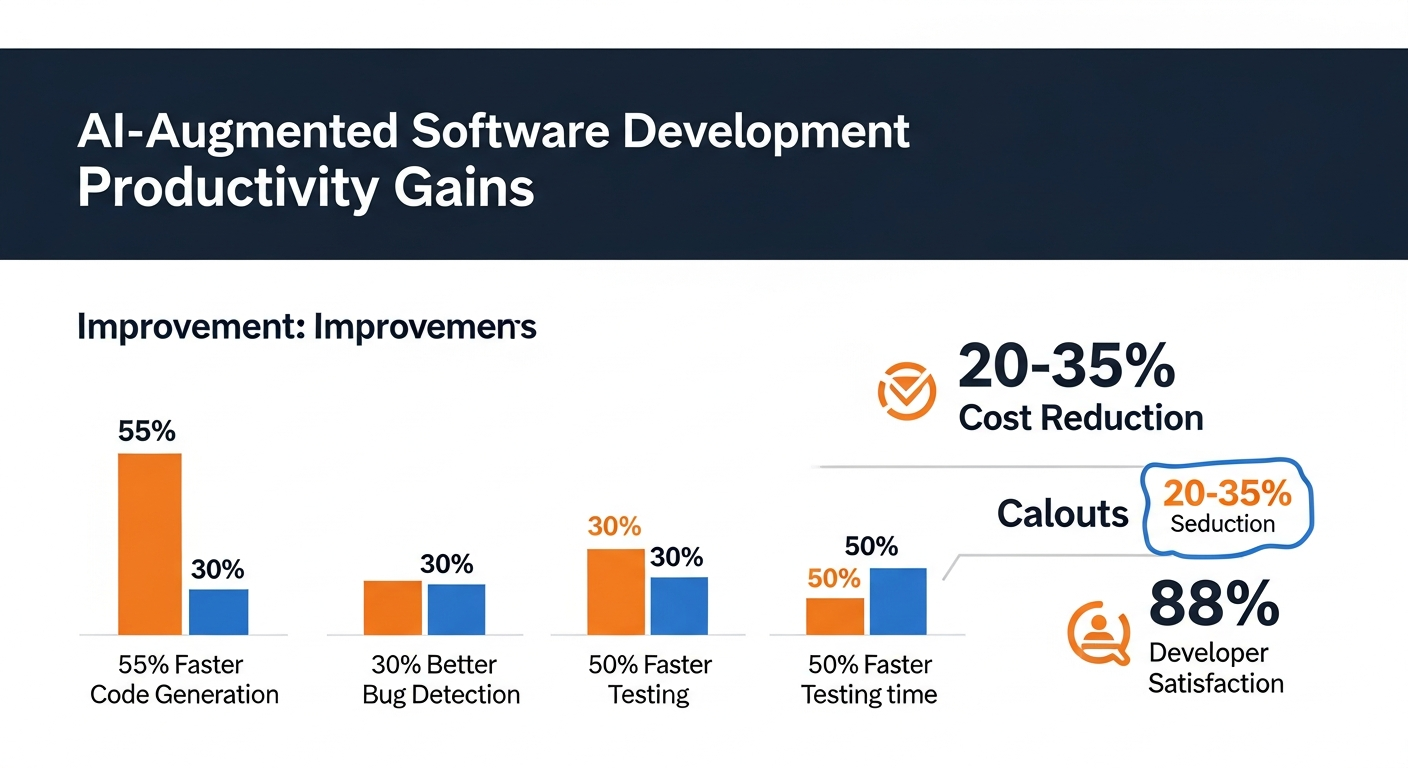
AI-Augmented Development: Productivity Gains Across the Software Development Lifecycle
5. Smarter Project Planning and Estimation
Software estimation is notoriously unreliable — the industry average sees projects exceeding estimates by 50–100%. AI is changing this by analyzing historical project data, code complexity metrics, and team velocity to generate more accurate estimates.
- Historical pattern matching: AI compares new features against similar past implementations to predict effort
- Risk identification: Automatically flags dependencies, integration complexities, and technical unknowns that typically cause delays
- Sprint optimization: AI-driven workload balancing ensures optimal task distribution across team members based on skills and availability
- Scope creep detection: Monitors requirement changes in real-time and automatically recalculates impact on timelines and resources
6. Automated Documentation Generation
Documentation is the perennial challenge of software development — it is either outdated, incomplete, or nonexistent. AI solves this by generating documentation directly from code:
- API documentation: Automatically generates and updates API reference docs from code annotations and actual endpoint behavior
- Inline code comments: AI adds meaningful comments explaining complex logic, algorithms, and business rules
- Architecture diagrams: Generates system architecture and data flow diagrams from codebase analysis
- Onboarding guides: Creates contextual documentation for new team members based on the codebase structure
According to Atlassian’s developer survey, developers spend an average of 8–10 hours per week searching for information and writing documentation. AI-automated documentation can recover 30–50% of that time for actual coding.
7. Improved Developer Experience and Retention
Developer satisfaction matters. Burnout and turnover are expensive — replacing a senior developer costs $50,000–$150,000 in recruiting, onboarding, and lost productivity. AI-augmented development directly improves developer experience by:
- Eliminating tedious work: AI handles boilerplate, repetitive patterns, and routine tasks that developers find demotivating
- Reducing context switching: In-IDE AI assistance means fewer trips to Stack Overflow, documentation sites, and colleague interruptions
- Enabling creative focus: When AI handles the “what,” developers can focus on the “how” and “why” — the creative, satisfying aspects of engineering
- Faster feedback loops: Instant AI-powered code review and testing feedback accelerates the build-test-learn cycle
GitHub’s research confirms this: 74% of developers using Copilot reported feeling less frustrated with repetitive tasks, and 88% said they felt more productive. For organizations looking to hire AI developers, offering AI-augmented workflows is becoming a competitive advantage in talent acquisition.
8. Cost Optimization Across the SDLC
The cumulative cost impact of AI-augmented development is substantial. Here is how the savings compound across the lifecycle:
- Development phase (40–50% savings): Faster code generation means fewer developer-hours per feature. A 30% productivity boost for a 10-developer team at $150K/year average salary equals $450,000 in annual savings.
- Testing phase (30–40% savings): Automated test generation and intelligent test prioritization reduce QA cycle time and manual testing costs
- Maintenance phase (25–35% savings): AI-assisted debugging, automated documentation, and proactive monitoring reduce the cost of maintaining existing systems
- Bug-fix costs (50–70% reduction): Catching bugs earlier through AI-powered analysis dramatically reduces the cost-per-defect
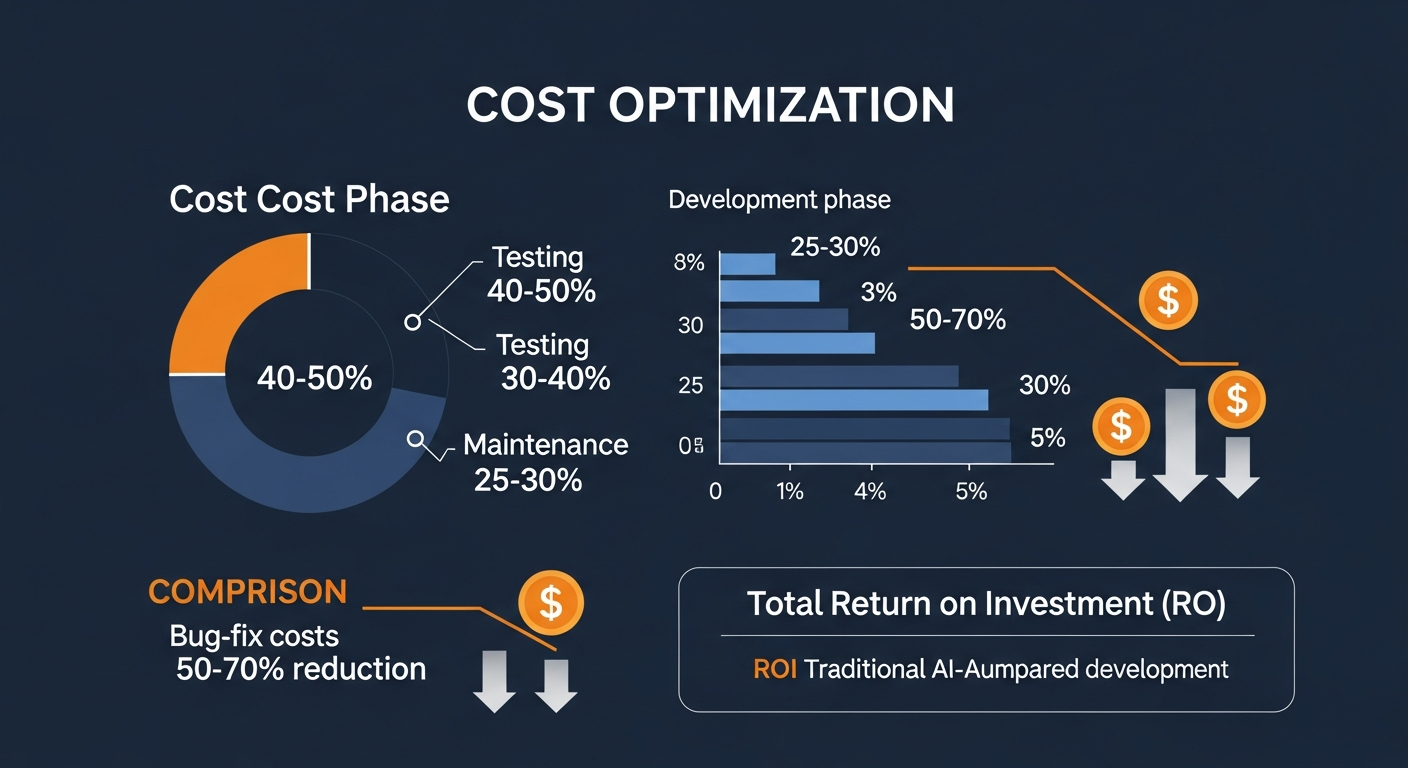
Cost Optimization: How AI-Augmented Development Reduces Costs Across the SDLC
Deloitte’s research on generative AI and work estimates that enterprises adopting AI-augmented development can reduce overall software development costs by 20–35% within the first 12–18 months of implementation.
9. Faster Onboarding for New Developers
Onboarding new developers to a complex enterprise codebase typically takes 3–6 months before they reach full productivity. AI dramatically accelerates this:
- Codebase navigation: AI chatbots can answer questions about the codebase — “What does this service do?”, “Where is authentication handled?”, “How does the payment flow work?”
- Contextual assistance: AI provides real-time explanations of complex code, legacy patterns, and business logic directly in the IDE
- Learning acceleration: New developers learn codebase patterns and conventions faster by seeing AI-generated examples that follow the team’s established practices
- Reduced dependency on senior engineers: Junior developers can resolve many questions through AI instead of interrupting senior team members, preserving senior engineering bandwidth for high-value work
Organizations building custom AI agents are taking this further — creating internal developer assistants trained on their specific codebase, architecture decisions, and engineering standards.
10. Future-Proofing Your Engineering Organization
Perhaps the most strategic benefit is positioning your organization for the future of software development. AI augmentation is not a temporary trend — it is the new foundation of how software will be built.
- Competitive advantage: Organizations that adopt AI-augmented development today will ship faster, iterate more quickly, and outpace competitors still using traditional approaches
- Talent magnetism: Top engineering talent increasingly expects AI tools in their workflow. Not offering them is a recruitment disadvantage.
- Scalability: AI augmentation lets smaller teams punch above their weight — a 10-person AI-augmented team can deliver output comparable to a 15–20 person traditional team
- Continuous improvement: AI tools learn from your codebase, your patterns, and your team’s feedback — they get better over time, creating a compounding advantage
Companies investing in AI consulting services are building roadmaps that extend well beyond code generation — integrating AI across requirements gathering, architecture design, deployment, monitoring, and incident response.
AI-Augmented Development by the Numbers
Here is a consolidated view of the measurable impact enterprises are reporting:
| Metric | Without AI | With AI Augmentation | Improvement |
|---|---|---|---|
| Code generation speed | Baseline | 55% faster | +55% |
| Bug detection rate | ~70% pre-production | ~92% pre-production | +31% |
| Test coverage | 60–70% | 85–95% | +25–35% |
| Time to onboard new developer | 3–6 months | 1–3 months | 50% faster |
| Documentation completeness | 30–50% | 80–95% | +40–55% |
| Overall development cost | Baseline | 20–35% lower | 20–35% savings |
| Developer satisfaction | Moderate | High (88% report improvement) | Significant |
How to Get Started with AI-Augmented Development
Implementing AI-augmented development is not a switch you flip — it is a strategic transformation that requires planning, change management, and iterative rollout. Here is a practical roadmap:
Phase 1: Pilot and Evaluate (Weeks 1–4)
- Select a small team (5–10 developers) and a defined project scope
- Deploy AI coding assistants (Copilot, CodeWhisperer, or Cursor) for the pilot group
- Establish baseline metrics: lines of code per day, bug rates, PR cycle time, developer satisfaction
- Run for 4 weeks and measure against baseline
Phase 2: Expand and Integrate (Weeks 5–12)
- Roll AI tools out to the broader engineering team based on pilot results
- Integrate AI-powered code review and security scanning into CI/CD pipelines
- Deploy AI-driven testing tools for automated test generation
- Implement AI-powered documentation generation
- Develop team guidelines for AI tool usage — when to use AI suggestions, when to reject, and how to review AI-generated code
Phase 3: Optimize and Customize (Weeks 12–24)
- Fine-tune AI models on your specific codebase and coding standards using LLM development expertise
- Build custom AI agents for internal tooling, deployment automation, and monitoring
- Establish an AI Center of Excellence to govern, optimize, and expand AI usage across engineering
- Integrate AI insights into sprint planning, capacity forecasting, and technical debt management
Phase 4: Scale and Innovate (Ongoing)
- Expand AI augmentation beyond coding to architecture design, requirements analysis, and stakeholder communication
- Develop proprietary AI capabilities that become competitive advantages
- Continuously measure and optimize — AI tools improve over time, and so should your usage patterns
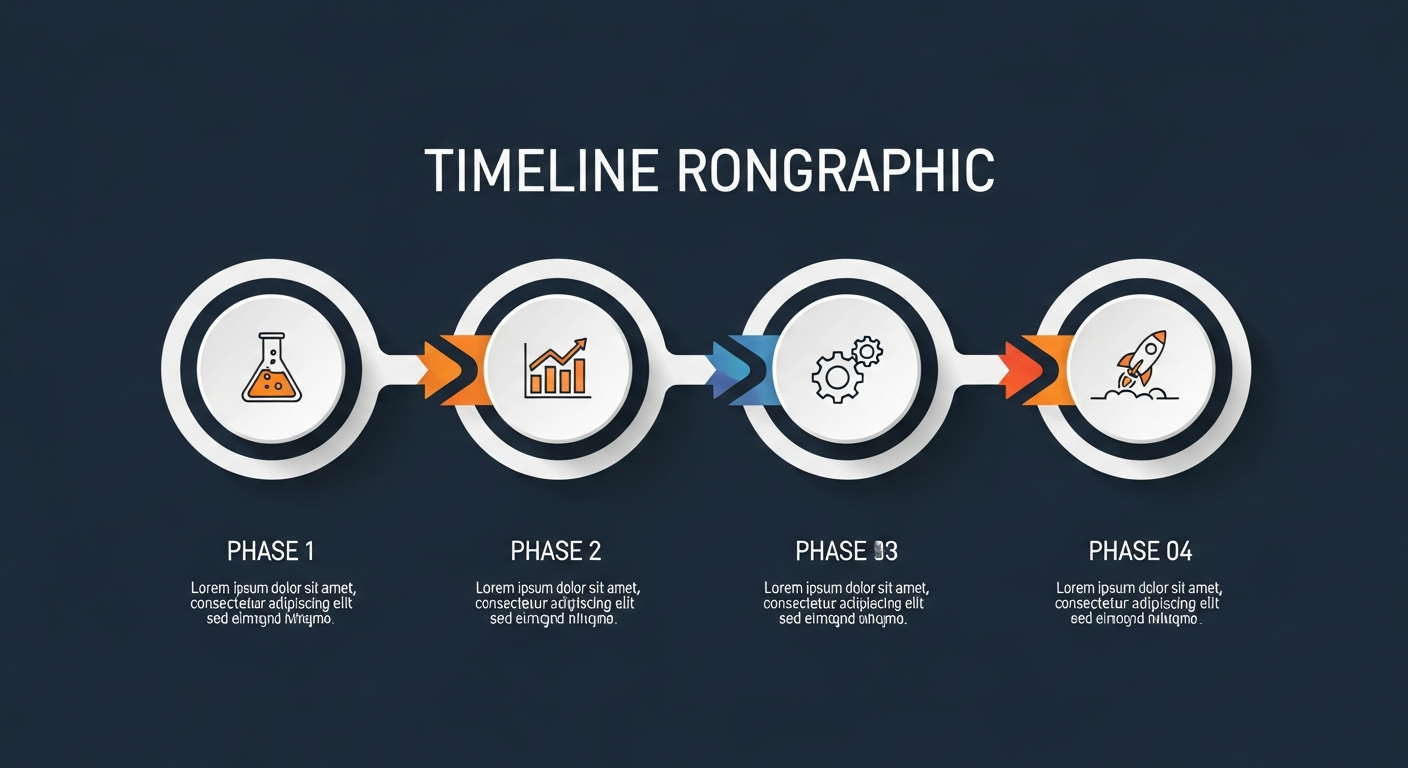
Implementation Roadmap: 4 Phases to AI-Augmented Software Development
Common Concerns (and Reality Checks)
Enterprise leaders often raise legitimate concerns about AI-augmented development. Here are the most common ones — with honest answers:
“Will AI replace our developers?”
No. AI augments developers, making them more productive — not redundant. The industry is adding engineering roles, not eliminating them. The U.S. Bureau of Labor Statistics projects 25% growth in software developer employment through 2031. AI handles the mundane; humans handle the complex, creative, and strategic. See our detailed analysis on whether AI will replace software developers.
“Is AI-generated code secure?”
AI-generated code requires the same review as human-written code. The key is integrating AI-powered security scanning alongside AI code generation. The combination — AI generating code plus AI reviewing code — actually produces more consistently secure output than human-only development, because AI never forgets to check for common vulnerabilities.
“What about intellectual property?”
Enterprise AI coding tools (GitHub Copilot Enterprise, Amazon CodeWhisperer) include IP indemnification and code origin filtering. Use enterprise tiers with proper licensing, and establish clear policies about AI-generated code review and attribution.
“Our codebase is too complex / too legacy”
Legacy codebases actually benefit the most from AI augmentation. AI excels at explaining undocumented legacy code, identifying refactoring opportunities, and generating tests for untested code. The more complex and undocumented the codebase, the higher the ROI from AI-powered understanding and documentation tools.
Conclusion: The Augmented Developer Is the Future
AI-augmented software development is not about replacing developers with machines. It is about giving every developer superpowers — the ability to write code faster, catch bugs earlier, maintain higher quality standards, and focus on the creative, complex work that drives real business value.
The ten benefits outlined in this guide — from 55% faster code generation to 20–35% cost reduction to significantly improved developer satisfaction — are not theoretical. They are being realized today by enterprises that have made AI augmentation a strategic priority.
The competitive window is closing. Organizations that adopt AI-augmented development now will build compounding advantages in speed, quality, and cost efficiency. Those that wait will find themselves competing against teams that can ship faster, iterate quicker, and build better software at lower cost.
The future of software development is augmented. The only question is whether your organization will lead — or follow.
About DreamzTech: We are a leading AI software development company helping enterprises worldwide integrate artificial intelligence into their software development lifecycle. From AI consulting and generative AI development to custom AI agent development and LLM solutions, our team delivers measurable results that transform how organizations build software.
Ready to explore AI-augmented development? Contact us today for a free consultation on how AI can accelerate your software development.