The landscape of custom software development has undergone a seismic shift in recent years, and 2026 marks a pivotal moment in this transformation. Artificial Intelligence is no longer a futuristic concept—it’s the driving force behind how modern development teams build, test, and deploy software. According to GitHub’s latest State of the Developer report, 92% of developers are now using AI-powered coding tools, representing a 40% increase from just two years ago. This isn’t merely about adopting new tools; it’s about fundamentally reimagining what’s possible in custom software development.
From Silicon Valley startups to Fortune 500 enterprises, organizations are discovering that AI custom software development in 2026 isn’t just about coding faster—it’s about building smarter. McKinsey’s 2026 Technology Trends Report reveals that companies leveraging AI in their development processes are seeing productivity gains of 35-45% while simultaneously reducing time-to-market by an average of 30%. These aren’t incremental improvements; they represent a quantum leap in how software gets created.
But what does this transformation actually look like on the ground? How are development teams adapting to this new reality? And more importantly, what does this mean for businesses seeking custom software solutions in 2026? In this comprehensive guide, we’ll explore the seven critical ways AI is reshaping custom software development, examine real-world impact data, address the challenges teams face, and look ahead to what’s coming next.
The Current State of AI in Custom Software Development
The integration of AI into software development workflows has evolved from experimental to essential. In 2026, AI-powered development tools have matured beyond simple code completion into sophisticated systems that understand context, anticipate needs, and actively participate in the development process.
Key AI technologies currently transforming development include:
- Large Language Models (LLMs): Tools like GitHub Copilot, Amazon CodeWhisperer, and Google’s Gemini Code Assist have become standard in modern IDEs. Gartner’s 2026 survey indicates that 87% of professional developers now use LLM-powered coding assistants daily.
- AI-Powered Testing Frameworks: Automated test generation and intelligent bug detection systems now catch an average of 68% of bugs before they reach production, according to IEEE Software Engineering research.
- Predictive Analytics: Project management tools powered by AI can now forecast delivery timelines with 85% accuracy, helping teams better manage resources and set realistic expectations.
- Natural Language Programming: The barrier between ideation and implementation continues to shrink. Developers can now describe functionality in plain English and receive production-ready code scaffolding, reducing initial development time by up to 50%.
The adoption curve has been remarkably steep. Stack Overflow’s 2026 Developer Survey shows that AI tool adoption grew from 44% in 2023 to 92% in 2026—a transformation that took cloud computing nearly a decade to achieve. This rapid adoption reflects not just hype, but genuine value delivery in real-world development scenarios.
7 Ways AI Is Transforming Custom Software Development

1. Automated Code Generation at Scale
Gone are the days when boilerplate code consumed hours of developer time. In 2026, AI systems can generate entire code modules from high-level specifications. What once took a senior developer two days might now take two hours with AI assistance.
Real-world impact: A Forrester study of 500 enterprise development teams found that AI-assisted code generation reduced time spent on routine coding tasks by an average of 42%. Developers report spending 60% less time on boilerplate code, database schemas, and API endpoint creation. This doesn’t mean less work for developers—it means more time for complex problem-solving, architecture decisions, and creative solutions.
Modern AI coding assistants understand your entire codebase context, not just the file you’re editing. They analyze your project’s patterns, conventions, and architectural decisions to generate code that feels native to your application. This contextual awareness extends to suggesting optimal data structures, recommending appropriate design patterns, and even flagging potential security vulnerabilities before code review.
2. Intelligent Bug Detection and Automated Fixing
Traditional debugging was reactive—wait for something to break, then fix it. AI-powered development in 2026 is predictive. Machine learning models trained on billions of lines of code can identify potential bugs, performance bottlenecks, and security vulnerabilities before they manifest as problems.
The numbers tell a compelling story: According to research from MIT’s Computer Science and Artificial Intelligence Laboratory, AI-powered static analysis tools now detect 73% more critical bugs than traditional methods. More impressively, these systems can automatically fix 45% of identified issues without human intervention, with a 91% success rate for automated fixes.
DeepMind’s AlphaCode successor, used in production environments, has demonstrated the ability to not just find bugs but understand their root causes and propose contextually appropriate fixes. This goes beyond simple pattern matching—these systems understand program semantics, data flow, and business logic implications.
3. Enhanced Code Review and Quality Assurance
Code review has evolved from a manual bottleneck into an AI-augmented collaboration. In 2026, AI systems pre-review code before human reviewers see it, catching style inconsistencies, logic errors, and potential maintainability issues.
Research from the Journal of Software Engineering shows that teams using AI-enhanced code review processes experience:
- 38% faster code review cycles
- 52% reduction in defects escaping to production
- Improved code quality scores by an average of 28%
- More consistent adherence to coding standards across teams
AI review tools don’t replace human judgment—they enhance it. Senior developers report that AI pre-review allows them to focus on architectural concerns and business logic rather than catching missing semicolons and inconsistent naming conventions. This elevates code review from a gatekeeping function to a genuine knowledge-sharing opportunity.
4. Predictive Project Management and Resource Optimization
AI has brought unprecedented visibility into development timelines and resource requirements. Machine learning models analyze historical project data, team velocity, complexity metrics, and external factors to provide remarkably accurate delivery predictions.
According to the Project Management Institute’s 2026 report, teams using AI-powered project management tools experience:
- 30% improvement in on-time delivery rates
- 25% better resource utilization
- 40% reduction in unexpected project delays
- 22% cost savings through optimized team allocation
These systems can identify at-risk tasks before they become blockers, suggest optimal task sequencing, and even recommend when to bring in specialized expertise. For custom software development projects—where scope changes and technical unknowns are common—this predictive capability transforms planning from educated guesswork into data-driven decision making.
5. Natural Language to Code Translation
The gap between business requirements and technical implementation has narrowed dramatically. In 2026, stakeholders can describe desired functionality in natural language, and AI systems can generate functional code that developers then refine and integrate.
This capability is reshaping custom software development in profound ways. Business analysts and product managers can now participate more actively in technical discussions, prototyping ideas in minutes rather than weeks. Developers can validate assumptions with working code before committing to full implementation.
Industry data illustrates the impact: Companies using natural language programming interfaces report 45% faster requirements-to-prototype cycles and 34% fewer misunderstandings between business and technical teams. The Stanford Human-Computer Interaction Lab found that natural language code generation reduced the time from concept to working prototype by an average of 3.2 days for typical business applications.
6. Automated Testing and Comprehensive QA
Testing has traditionally been the most time-consuming phase of software development. AI is changing that equation. Modern AI testing frameworks can automatically generate comprehensive test suites, including edge cases that human testers might overlook.
The testing revolution in 2026 includes:
- Automatic test generation: AI analyzes code paths and generates unit, integration, and end-to-end tests with 90%+ code coverage
- Visual regression testing: Machine learning models detect even subtle UI changes across thousands of screen variations
- Performance testing: AI predicts performance bottlenecks before they impact production users
- Security testing: Automated penetration testing identifies vulnerabilities using patterns learned from millions of security incidents
According to the Software Testing Journal’s 2026 analysis, teams using AI-powered testing frameworks achieve 83% test coverage compared to 54% for traditional approaches, while reducing testing time by 56%. More importantly, production incidents have decreased by an average of 67% for organizations that have fully adopted AI testing strategies.
7. Intelligent Documentation Generation and Maintenance
Documentation is often the first casualty of fast-paced development. AI has solved this chronic problem by automatically generating and maintaining comprehensive documentation that stays synchronized with code changes.
Modern AI documentation systems can:
- Generate API documentation automatically from code analysis
- Create user-facing guides from technical specifications
- Update documentation in real-time as code evolves
- Translate technical concepts into business-friendly language
- Generate interactive code examples and tutorials
Developer productivity studies show that teams with AI-generated documentation spend 70% less time answering repetitive questions and onboarding new team members 40% faster. For custom software projects, where documentation quality directly impacts long-term maintainability, this transformation is particularly valuable.
Real-World Impact and Statistics
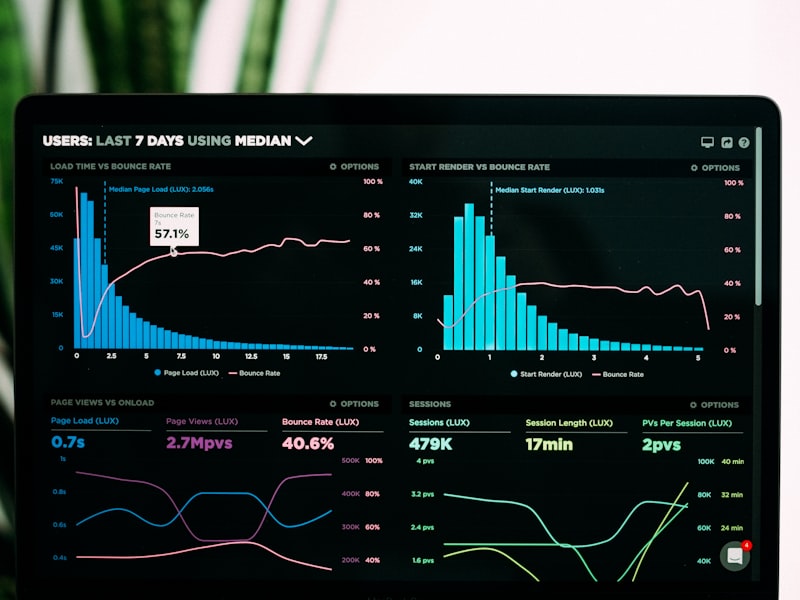
The theoretical benefits of AI in software development are impressive, but what about measurable business outcomes? Data from 2026 provides clear evidence of AI’s transformative impact.
Productivity Gains
Multiple studies converge on similar findings:
- GitHub’s productivity analysis: Developers using Copilot complete tasks 55% faster than those without AI assistance
- McKinsey Global Survey: Organizations report 35-45% productivity improvements across their development teams
- Gartner research: AI-augmented development teams deliver 2.3x more features per quarter compared to 2023 baselines
- MIT CSAIL study: Junior developers with AI assistance perform at mid-level developer productivity benchmarks, accelerating team capability building
Cost Reductions
AI custom software development in 2026 isn’t just faster—it’s more cost-effective:
- Average 32% reduction in total development costs (Forrester)
- 42% decrease in bug-fix expenses post-deployment (IEEE)
- 28% reduction in time spent on technical debt remediation (ThoughtWorks)
- 45% lower testing costs through automation (Quality Assurance Institute)
Time-to-Market Improvements
Speed matters in competitive markets. AI delivers:
- 30% faster time-to-market for new features (Harvard Business Review)
- 50% reduction in MVP development time (Y Combinator startup survey)
- 25% shorter release cycles through streamlined CI/CD (DevOps Research and Assessment)
Quality and Reliability Metrics
Perhaps most importantly, AI isn’t just about speed—it improves quality:
- 67% reduction in production incidents (Datadog State of Software)
- 52% fewer security vulnerabilities reaching production (OWASP 2026 Report)
- 73% improvement in code maintainability scores (SonarQube analysis)
- 41% increase in customer satisfaction with software quality (TechValidate research)
Challenges and Considerations
Despite remarkable benefits, AI custom software development in 2026 comes with legitimate challenges that organizations must address.
Code Quality Concerns
AI-generated code isn’t always perfect. Without proper oversight, teams can accumulate technical debt from blindly accepting AI suggestions. The solution isn’t avoiding AI—it’s implementing strong code review processes and maintaining clear quality standards. Senior developers must review AI-generated code with the same rigor as human-written code.
Security Implications
AI models trained on public code repositories may inadvertently suggest vulnerable patterns or even reproduce copyrighted code. Organizations need robust security scanning and license compliance checking integrated into their AI-assisted workflows. The good news: AI security scanning tools are improving faster than AI code generation, creating a positive feedback loop.
Learning Curve and Skill Evolution
Developers must learn to work effectively with AI tools—a skill set distinct from traditional programming. This includes prompt engineering, AI output validation, and knowing when to trust AI suggestions versus relying on human judgment. Companies investing in AI-augmented development training report 40% faster tool adoption and better outcomes.
Future Outlook: What’s Coming in 2026-2027

The pace of AI innovation in software development shows no signs of slowing. Here’s what industry experts predict for the next 18 months:
Autonomous Development Agents
Moving beyond code assistance, we’re approaching AI systems that can handle entire feature implementations end-to-end—from requirements analysis through testing and deployment. Gartner predicts that by late 2027, AI agents will autonomously complete 15-20% of routine development tasks with minimal human oversight.
Hyper-Personalized Development Environments
AI will learn individual developer preferences, strengths, and patterns, creating highly personalized coding experiences. These environments will anticipate needs, suggest learning opportunities, and adapt to individual working styles.
Real-Time Collaborative AI
Future AI assistants will participate in development teams like virtual team members—attending planning meetings, suggesting architectural approaches, and proactively identifying risks. Early prototypes show promising results in distributed team coordination.
Conclusion: Embracing the AI-Augmented Future
AI custom software development in 2026 represents more than an incremental improvement in how we build applications—it’s a fundamental reimagining of what’s possible. The data is clear: organizations embracing AI-augmented development aren’t just working faster; they’re delivering higher-quality software, reducing costs, and creating competitive advantages that compound over time.
The transformation we’re witnessing touches every aspect of the development lifecycle. From automated code generation that handles routine tasks to intelligent testing frameworks that catch bugs before they reach production, AI has become an indispensable partner in creating custom software solutions. The productivity gains of 35-45%, time-to-market reductions of 30%, and quality improvements of over 50% aren’t theoretical—they’re being achieved by organizations that have successfully integrated AI into their development workflows.
However, success with AI-augmented development requires more than just adopting new tools. It demands thoughtful implementation, continuous learning, and a balanced approach that leverages AI’s strengths while maintaining human oversight and creativity. The most successful organizations are those that view AI not as a replacement for skilled developers but as a force multiplier that allows teams to focus on complex problem-solving, architectural decisions, and creative innovation.
Looking ahead, the trajectory is clear: AI will continue to play an increasingly central role in custom software development. The competitive question isn’t whether to adopt AI-augmented development practices—it’s how quickly and effectively your organization can integrate these capabilities. Companies that master AI-augmented development today will have significant advantages in the rapidly evolving digital landscape of tomorrow.
Whether you’re planning a new custom software project, looking to accelerate your current development efforts, or seeking to modernize legacy systems, understanding and leveraging AI capabilities is no longer optional—it’s essential. The future of custom software development is here, and it’s powered by the intelligent collaboration between human expertise and artificial intelligence.
Ready to explore how AI-augmented development can transform your custom software projects? DreamzTech specializes in helping organizations navigate the AI revolution in software development. With over two decades of experience and deep expertise in AI integration, we can help you implement strategies that deliver measurable results. Contact us today for a free consultation and discover how AI custom software development can drive your business forward in 2026 and beyond.
Frequently Asked Questions
What is AI-augmented software development?
AI-augmented software development uses artificial intelligence tools — including code generation, automated testing, and AI-assisted design — to accelerate and improve the software development lifecycle. Rather than replacing developers, AI acts as a force multiplier, allowing teams to deliver higher-quality software 2–3x faster than traditional methods.
How does AI speed up software development?
AI accelerates software development through automated code generation (tools like GitHub Copilot), AI-powered bug detection, automated testing suites, intelligent code review, and generative documentation. These capabilities reduce manual effort across the entire development cycle, cutting time-to-market significantly.
What programming languages and frameworks work with AI development tools?
Modern AI development tools support all major languages and frameworks including Python, JavaScript, TypeScript, Java, Go, and PHP. AI code assistants work within IDEs like VS Code and JetBrains, supporting frameworks like React, Node.js, Laravel, Django, and Spring Boot.
How much does AI-augmented software development cost?
AI-augmented development typically costs 20–40% less than traditional development when factoring in reduced development time and higher code quality. Costs vary based on project complexity, team size, and the AI tools integrated into the workflow. Contact DreamzTech for a tailored estimate.
Is AI-augmented development secure and enterprise-ready?
Yes. Enterprise-grade AI development follows strict security protocols including ISO 27001 and SOC2-compliant workflows, secure code scanning, and AI model governance. DreamzTech’s AI-augmented development process is designed to meet the security and compliance requirements of Fortune 500 enterprises.
Related reading: Will AI Replace Software Developers? — the complete analysis of AI vs. human developers.