Your freight costs jumped 23% last year. Your carriers are missing SLA windows. Your ops team is still copy-pasting shipment data between three different spreadsheets at 11pm. And your CFO just asked why competitors are moving the same volume for 18% less per lane. The answer, almost certainly, is a Transportation Management System — and the gap between companies that have deployed one intelligently and those still patching together legacy tools is widening fast. According to Grand View Research, the global TMS market is on track to hit $75.3 billion by 2030, growing at a CAGR of 17.4%. That’s not a trend. That’s a mandate.
This guide is for VP-level supply chain leaders, CTOs at logistics companies, and operations directors who need a clear-eyed, no-fluff breakdown of what TMS software actually does, which capabilities matter in 2026, how to evaluate vendors without getting burned, and what real ROI looks like post-deployment.
Let’s get into it.
Quick answer — What is TMS software?
Transportation Management Software (TMS software) is a cloud platform that plans, executes, and optimises freight movement across truckload, LTL, parcel, ocean, and air modes. Modern TMS software handles rate management, load planning, carrier tender, real-time tracking, freight audit, and analytics — replacing the spreadsheets, phone calls, and disconnected point tools that most logistics teams still rely on. Enterprises that deploy TMS software typically cut freight cost by 8–15%, lift on-time service by 8–12%, and reach payback inside 12–18 months.
What Is a Transportation Management System (TMS)?
A Transportation Management System is a software platform that plans, executes, and optimizes the physical movement of goods — inbound, outbound, and third-party — across every mode of transport. Think of it as the operating system for your freight network. It sits between your ERP or WMS and the real world of carriers, lanes, rates, and last-mile delivery.
But that definition undersells it. A modern TMS isn’t just a routing engine. It’s a decision-support platform that connects rate management, carrier procurement, load optimization, real-time visibility, freight audit, and analytics into a single operational loop. Every shipment you move generates data. A TMS turns that data into lower cost-per-mile, higher on-time performance, and faster exception resolution.
TMS vs. WMS vs. ERP: Clearing Up the Confusion
Leaders regularly conflate these three systems. Here’s the clean separation:
Your ERP (SAP, Oracle, NetSuite) manages financial transactions, purchase orders, and master data. It knows that a shipment needs to happen. Your WMS (Warehouse Management System) manages what happens inside four walls — inventory slotting, pick-pack, dock scheduling. It knows where the goods are before they leave. Your TMS manages everything from the dock door to the delivery point. It decides how the shipment moves, at what cost, via which carrier, on which route, and whether it actually arrived on time.
These systems need to talk to each other. But they are not interchangeable, and an ERP freight module is not a TMS. It never will be.
Cloud TMS vs. On-Premise: What the Market Moved To
By 2026, over 78% of new TMS deployments are cloud-based, according to Gartner. The reasons are structural: carrier network integrations update in real time, machine learning models improve with every shipment tendered across the platform, and implementation timelines drop from 18 months to 90–120 days. On-premise TMS still exists in regulated industries where data sovereignty is non-negotiable, but it’s the exception, not the model.
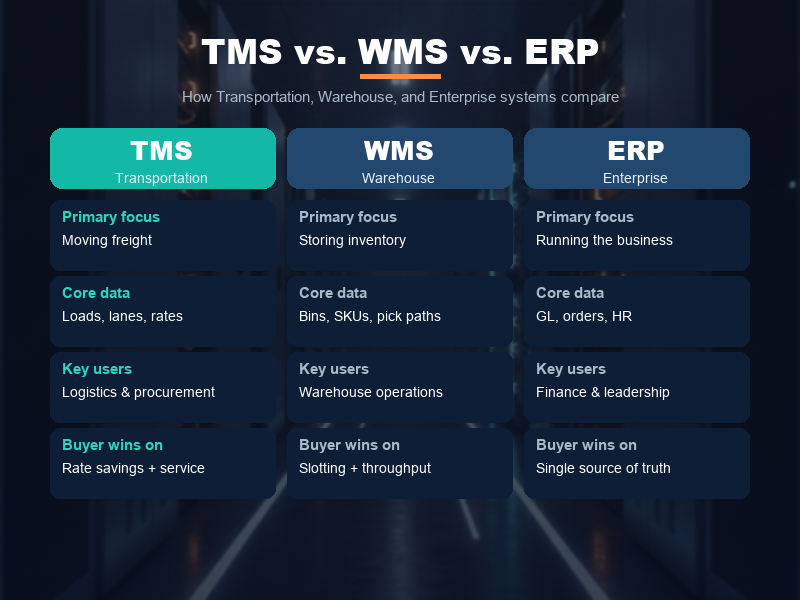
Figure 1: Comparison infographic for Transportation Management System (TMS): Complete Guide for Logistics Companies (2026)
Why 2026 Is the Inflection Point for TMS Adoption
The logistics industry has been flirting with TMS for two decades. So why does 2026 feel different? Because three forces that were previously separate have converged simultaneously.
Freight Market Volatility Has Become Structural
Post-pandemic freight markets taught every supply chain leader a brutal lesson: rate volatility is no longer cyclical — it’s persistent. Spot rates on major truckload lanes swung by as much as 40% quarter-over-quarter between 2020 and 2024. A TMS with dynamic rate benchmarking and multi-mode optimization isn’t a nice-to-have in that environment. It’s the difference between protecting margin and hemorrhaging it. McKinsey’s Supply Chain research found that companies with advanced TMS capabilities recovered from freight disruptions 2.3x faster than those without.
Shipper-of-Choice Status Is Now a Competitive Weapon
Carriers allocate their best capacity to shippers who tender clean, predictable loads with minimal friction. A TMS that automates tender communication, reduces guide violations, and pays freight bills accurately transforms your relationship with your carrier base. When capacity tightens — and it will — shipper-of-choice companies don’t scramble for trucks. Everyone else does.
AI Has Crossed the Threshold From Experimental to Operational
Predictive ETA engines, autonomous load matching, and AI-driven carrier scoring aren’t beta features in 2026. They’re production-grade capabilities in leading TMS softwares. According to Deloitte Insights, AI-enabled transportation optimization reduces freight spend by 8–15% on average and cuts manual planning time by up to 70%. The platforms that don’t have these capabilities are losing ground — fast.
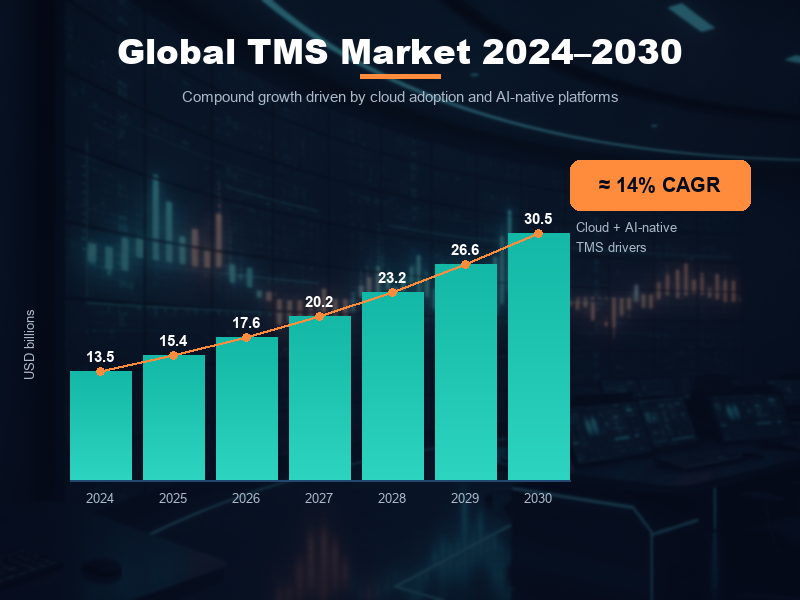
Figure 2: Transportation Management System (TMS): Complete Guide for Logistics Companies (2026) market growth 2024-2030
Core TMS Capabilities: What a Modern Platform Must Do
Not all TMS softwares are created equal. The market spans from basic freight audit tools wearing a TMS badge to full-suite orchestration platforms managing $10B+ in annual freight spend. Here’s what genuinely matters in 2026.
1. Rate Management and Carrier Procurement
The TMS must ingest your contracted rates from every carrier — truckload, LTL, parcel, intermodal, ocean, air — and present a ranked, mode-optimized selection for every shipment at the point of tender. This means structured rate tariffs, dynamic spot rate integration via APIs to load boards, and a bid management module for annual RFPs. If your TMS can’t run a freight bid and model the output against historical lane spend before you sign contracts, you’re leaving significant money on the table every procurement cycle.
2. Load Planning and Route Optimization
Multi-stop route optimization that accounts for weight, cube, driver HOS (Hours of Service) rules, time windows, and fuel cost differentials — automatically, in seconds — is table stakes. The differentiator in 2026 is continuous optimization: the TMS re-runs route plans as new orders drop and as real-world conditions (traffic, weather, carrier availability) change throughout the day. Static overnight planning runs are dead.
3. Carrier Execution and Tender Management
Automated tender workflows — primary carrier, conditional backup, spot fallback — with configurable acceptance windows and guide-violation tracking keep your routing guide compliance above 90%. Every manual phone call to a carrier dispatcher costs you $12–18 in labor. At scale, automation here delivers six-figure annual savings before you touch a single freight rate.
4. Real-Time Visibility and Tracking
Your customers no longer accept “call the carrier and check.” They expect Amazon-grade visibility on B2B freight. Modern TMS softwares integrate with carrier ELD data, project44, FourKites, or their own tracking networks to deliver real-time GPS positions, predictive ETA, and automated exception alerts. When a shipment goes late, the TMS should notify your customer service team and the customer simultaneously — before anyone asks.
5. Freight Audit and Payment
Industry data from AIIM and freight audit firms consistently shows 3–8% billing error rates in carrier invoices. On $50M in annual freight spend, that’s $1.5–4M in overcharges — most of which go unchallenged without automated audit logic. A TMS with embedded freight audit matches invoices to contracted rates, flags discrepancies, and routes disputes to carriers automatically, protecting margin without adding headcount.
6. Analytics, Reporting, and Business Intelligence
Operational dashboards are expected. Strategic analytics are rare. The TMS should surface lane-level profitability, carrier performance scorecards, mode shift opportunities, and cost-per-unit trends — connected to your P&L in terms finance actually uses. If your TMS can’t answer “which 20% of our lanes are driving 60% of our freight cost variance,” it’s an execution tool, not a competitive advantage.
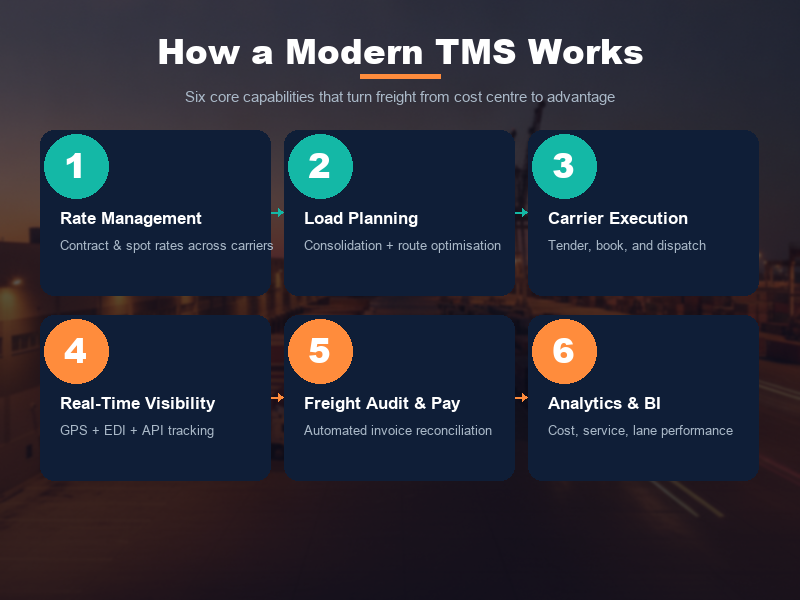
Figure 3: How Transportation Management System (TMS): Complete Guide for Logistics Companies (2026) works step by step
Industry Use Cases: TMS in Action Across Verticals
TMS softwares don’t deliver the same value proposition to every industry. The capabilities that matter most shift dramatically based on your freight profile, customer base, and regulatory environment. Here’s how leading verticals are deploying TMS in 2026.
Retail and Consumer Goods
For high-SKU, high-velocity retail shippers, TMS value concentrates in inbound consolidation, vendor compliance programs, and omnichannel last-mile orchestration. The ability to consolidate vendor shipments into multi-stop inbound loads, enforce routing guide compliance at the PO line level, and dynamically reroute DTC orders between carrier networks saves retailers 10–14% on total inbound freight cost. Major retailers using advanced TMS softwares have reduced carrier count by 22% while improving on-time delivery by 15 percentage points — critical when OTIF penalties from major retailers run $5,000+ per incident.
Manufacturing and Industrial
JIT and JIS production environments cannot tolerate late inbound raw material deliveries. TMS softwares here prioritize inbound visibility integration with production scheduling, automated premium freight approval workflows (because sometimes you have to pay for expedited — but you should control when and how much), and outbound fleet and private carrier optimization. Forrester Research found manufacturers using TMS-driven inbound management reduced production-line stoppages due to material shortages by 31%.
Third-Party Logistics (3PLs)
For 3PLs, the TMS is the product. Multi-tenant architecture, customer-branded visibility portals, rapid carrier onboarding, and margin-per-shipment analytics at the customer level are non-negotiable. A 3PL running 500 customers on a single TMS instance needs configurable business rules that isolate customer freight programs while enabling the 3PL to aggregate volume for carrier pricing power. This is a specialized requirement — most shipper-grade TMS softwares can’t do it cleanly.
Food and Beverage
Temperature-controlled freight adds compliance, traceability, and carrier qualification layers that generic TMS softwares handle poorly. F&B shippers need TMS softwares with reefer-specific carrier scorecards, temperature excursion event capture, FSMA 204 traceability data integration, and automated load-to-carrier matching that respects cold chain certification requirements. Food safety compliance failures cost the industry billions annually — TMS is part of the risk management stack, not just the cost management stack.
Healthcare and Pharma
GDP (Good Distribution Practice) compliance, serialization data handoffs, controlled substance chain-of-custody documentation, and 21 CFR Part 11-compliant audit trails make healthcare TMS a specialized segment. The good news: modern cloud TMS platforms from enterprise vendors have built GDP and DSCSA compliance modules that are pre-validated, significantly reducing implementation risk versus custom builds.
E-Commerce and Omnichannel Retail
Last-mile cost is the single largest freight line item for e-commerce operators — often 50–55% of total outbound spend. TMS platforms here must integrate natively with parcel carrier APIs (AWS-hosted carrier integrations have become the standard), execute dynamic carrier selection at label creation based on real-time rate and service level, and provide post-delivery analytics that tie carrier performance to customer satisfaction scores. The TMS platforms that haven’t built robust parcel optimization capabilities are losing e-commerce clients to specialized parcel audit and multi-carrier shipping platforms.
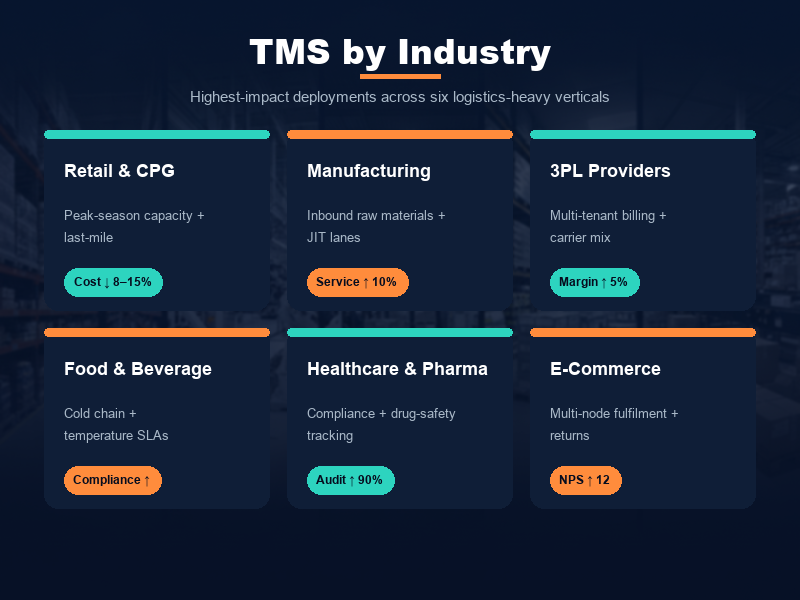
Figure 4: Transportation Management System (TMS): Complete Guide for Logistics Companies (2026) industry use cases
The TMS Buyer’s Checklist: 12 Criteria That Separate Good from Great
TMS vendor selection is one of the highest-stakes software decisions a logistics organization makes. A bad implementation burns 18–24 months and millions of dollars. Here are the 12 criteria your evaluation scorecard must include.
Technical and Integration Capabilities
Before evaluating any functional capability, validate the technical foundation. A TMS that can’t integrate cleanly with your ERP is a standalone island, not a system of record.
- API architecture: Does the TMS offer RESTful APIs with full documentation and sandbox environments? EDI-only integration is a red flag in 2026.
- Pre-built connectors: Count the native integrations to ERPs (SAP, Oracle, NetSuite, Microsoft Dynamics), WMS platforms, carrier networks, and visibility providers. Every custom integration adds $15,000–50,000 in implementation cost.
- Data model flexibility: Can the TMS accommodate your business objects — custom shipment attributes, non-standard mode types, multi-leg international moves — without professional services customization?
- Scalability proof points: Ask for reference clients at 2–3x your current shipment volume. A TMS that performs at 500 shipments per day may buckle at 5,000.
Functional Depth by Mode
Every TMS claims to be multi-modal. Most are strong in one mode and mediocre everywhere else. Map your freight profile by mode and volume percentage, then stress-test the platform’s capabilities in your top two modes during demos — not with vendor-controlled scenarios, with your actual data.
- Truckload: Routing guide management, spot tender automation, drop trailer management, driver/carrier scorecarding
- LTL: Rating engine accuracy (test against your actual carrier tariffs), class and NMFC management, consolidation logic
- Parcel: Multi-carrier rate shopping at label creation, dimensional weight automation, returns management
- Intermodal/Rail: Dray carrier management, rail dwell tracking, intermodal cost modeling vs. TL
- International: Incoterms management, broker integration, HS code assignment assistance, landed cost calculation
AI and Analytics Maturity
Ask every vendor to demonstrate their AI capabilities with your data, not their demo data set. Legitimate AI functionality in 2026 includes predictive ETA modeling with actual carrier ELD integration, demand-driven load building that pulls from your order management system, and freight spend anomaly detection. If the vendor’s “AI” is a rules-based routing engine with a machine learning label on it, you’ll know within 10 minutes of probing.
Implementation Model and Time-to-Value
According to Gartner’s TMS market research, the average cloud TMS implementation runs 16–20 weeks for a mid-market shipper. Anything over 26 weeks deserves scrutiny — either the platform is too complex for your use case or the vendor is under-resourcing your project. Get the implementation timeline in writing, with milestone-based payment tied to go-live deliverables.
Total Cost of Ownership (TCO)
SaaS licensing is the smallest component of TMS TCO. Model the full five-year cost including: implementation services, carrier EDI setup fees, training and change management, ongoing configuration support, and the internal IT resources required for integration maintenance. A platform priced 20% lower on license fees but requiring 3x the implementation investment is not a bargain.
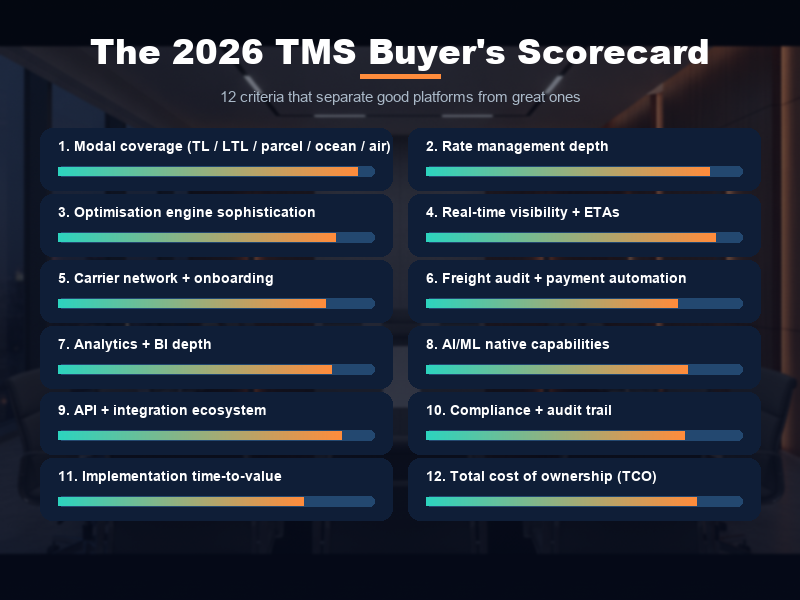
Figure 5: Transportation Management System (TMS): Complete Guide for Logistics Companies (2026) evaluation scorecard
What ROI Actually Looks Like: The Data Behind TMS Business Cases
Every TMS vendor will quote you an ROI. Here’s what independent research and real-world deployments actually show — and how to build a credible internal business case.
Freight Cost Reduction: The Primary Driver
The most consistent ROI lever across TMS deployments is freight cost reduction through better mode and carrier optimization. McKinsey benchmarks 8–12% total freight cost reduction as achievable in the first 12 months post-implementation for companies replacing manual or legacy processes. On $25M in annual freight spend, that’s $2–3M in annual savings — with Year 1 ROI positive for most deployments after accounting for implementation cost.
The breakdown typically looks like this: 3–5% from carrier rate optimization and bid management, 2–4% from mode optimization (shifting LTL to TL consolidation or TL to intermodal where lead time allows), 1–3% from freight audit and invoice error recovery, and 1–2% from load factor improvement through better load building.
Labor Productivity: The Underestimated Gain
Transportation planners and customer service teams spend an extraordinary amount of time on tasks TMS automates: building loads manually, calling carriers for status updates, matching invoices to shipments, responding to delivery inquiries. Deloitte’s Supply Chain research found that TMS automation reduces transportation planning labor by 60–70% on average. A team of 8 transportation planners managing 500 daily shipments manually can often achieve the same throughput with 3 planners post-TMS — while handling 30% more volume.
Service Performance: The Revenue Protection Case
On-time delivery improvement is often harder to quantify in dollar terms but is equally important. The downstream cost of a late shipment — customer deductions, lost future orders, brand reputation — frequently exceeds the freight cost of the shipment itself. Companies deploying TMS with active carrier performance management and real-time exception handling report 15–25% improvement in OTIF rates within 6 months. For retailers subject to retailer-imposed OTIF penalties, this can represent millions in annual deduction recovery.
Building Your Internal Business Case
Use this framework for your TMS business case presentation:
- Baseline your current state: Freight spend by mode, carrier count, on-time percentage, invoice error rate, planning FTE hours per 100 shipments
- Apply conservative improvement assumptions: Use the lower bound of published benchmarks — 8% freight reduction, 50% planning labor reduction, 12% OTIF improvement
- Model the investment: Year 1 license + implementation + integration + training; Year 2–5 ongoing license + support
- Calculate payback period: Most mid-market TMS deployments ($500K–2M total Year 1 investment) hit payback in 12–18 months at conservative savings assumptions
- Include risk-adjusted scenarios: Model best/base/worst case to build board-level credibility
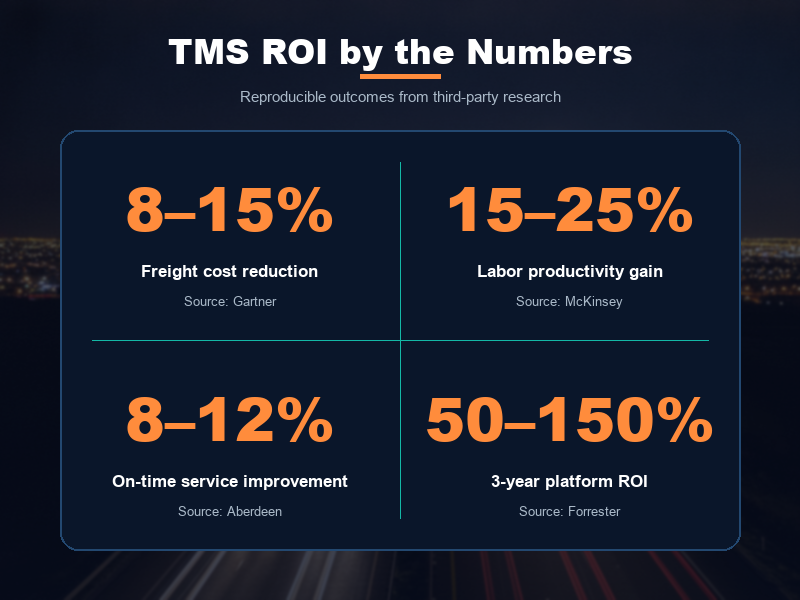
Figure 6: Transportation Management System (TMS): Complete Guide for Logistics Companies (2026) ROI metrics
Common TMS Implementation Pitfalls — And How to Avoid Them
The failure rate for TMS implementations isn’t published openly, but logistics consultants who’ve seen dozens of deployments consistently cite the same avoidable mistakes. Don’t skip this section. These pitfalls have killed ROI cases and careers.
Pitfall 1: Treating TMS Implementation as an IT Project
TMS implementation is a business transformation project that happens to involve software. When IT owns the implementation without deep operational sponsorship, the result is a technically functional system that no one uses correctly. The VP of Transportation or Chief Supply Chain Officer needs to be the executive sponsor — not a project champion. Operational buy-in determines adoption rates, which determine ROI realization. Period.
Pitfall 2: Migrating Broken Processes Into the New System
A TMS automates your transportation processes. If those processes are broken before you implement, you’ll automate broken processes at machine speed. The carrier qualification process that relies on a spreadsheet maintained by one person who’s retiring next year? Fix it before go-live. The routing guide that hasn’t been updated since 2021? Rebuild it before you load it into the system. Process improvement precedes technology deployment — not the other way around.
Pitfall 3: Underestimating Carrier Onboarding Complexity
Your TMS is only as good as the carrier connections feeding it. EDI setup for 50 carriers takes longer than most implementation plans budget. Start carrier enablement in parallel with system configuration, not after go-live. Prioritize your top 20 carriers by volume first — they typically represent 80% of your shipments — and use the TMS vendor’s carrier network for the long tail where direct EDI isn’t cost-justified.
Pitfall 4: Skipping the Data Quality Audit
Garbage in, garbage out applies with violent intensity to TMS optimization algorithms. Route optimization with inaccurate customer delivery windows produces routes that fail in the field. Freight audit with incorrect contracted rate tariffs generates false disputes. Before implementation, audit your customer master data, carrier rate contracts, lane history, and shipment attribute data. Budget 4–6 weeks for data cleansing. It will be the highest-ROI investment in your implementation budget.
Pitfall 5: Not Planning for Change Management
Transportation planners who have operated a certain way for 10 years will find ways to work around a new system if they aren’t brought along in the design process. Run co-design workshops with your planning team during the requirements phase. Document the “what’s in it for me” for every role that touches the system. Measure adoption through system usage metrics, not just go-live completion. Allocate 15–20% of the implementation budget to training, documentation, and change management support.
Future Trends: What TMS Looks Like in 2027 and Beyond
The TMS market doesn’t stand still. Here are the capability trajectories that will separate leaders from laggards over the next 24 months.
Autonomous Freight Procurement
The next frontier in TMS is fully autonomous spot procurement — where the system identifies capacity need, pulls real-time market rates, evaluates carrier performance scores, tenders the load, and books capacity without human intervention within defined parameters. Several enterprise TMS platforms are in production with autonomous procurement features today. By 2027, it will be a standard capability expectation for high-volume shippers.
Sustainability and Carbon Accounting Integration
Scope 3 emissions reporting requirements under SEC climate disclosure rules and EU CSRD are making freight carbon data a board-level reporting requirement. TMS platforms are building carrier emissions factor databases, lane-level carbon intensity scoring, and mode shift scenario modeling that quantifies both cost and emissions impact simultaneously. Selecting a TMS without a credible sustainability module in 2026 means you’ll be doing a second integration project in 18 months.
Embedded AI Agents for Exception Management
LLM-based AI agents that monitor shipment status, identify at-risk deliveries, draft carrier communication, and propose resolution options — all without dispatcher involvement — are moving from pilot to production across leading platforms. The logistics companies deploying these agents are recovering 2–3 hours per dispatcher per day, which they’re reinvesting in shipper-of-choice relationship building with strategic carriers.
Network-Level Optimization Across Shipper Communities
The most sophisticated TMS platforms are aggregating anonymized shipment data across their shipper communities to identify backhaul collaboration opportunities, shared consolidation lanes, and network-level mode shift opportunities that no single shipper could find in isolation. This is the TMS network effect — and it’s a structural competitive advantage for platforms with large, dense shipper communities versus point solutions.
The Bottom Line: Three Things Every Logistics Leader Needs to Know
Cut through the vendor noise. Here’s what actually matters.
- TMS ROI is real and fast — if you commit to it fully. Companies that treat TMS as a partial deployment or a bolt-on to broken processes see marginal results. Companies that redesign their transportation processes around the platform, enable full carrier connectivity, and drive user adoption hit 10–15% freight cost reduction within 12 months. Half-measures produce half-results.
- The technology gap between TMS tiers is widening. The delta between a best-in-class TMS with AI-native capabilities and a legacy platform with bolt-on features is no longer incremental — it’s structural. Platforms built on modern cloud architecture with real-time data pipelines, open API ecosystems, and ML-driven optimization are outperforming legacy systems on every functional dimension. The evaluation criteria have changed.
- Your implementation partner matters as much as your platform choice. The best TMS platform in the world underperforms with a weak implementation. Find a partner who has your specific industry experience, who will co-design processes with your operations team, and who will hold themselves accountable to adoption metrics — not just go-live date.
Conclusion
Transportation management has moved from a back-office function to a genuine source of competitive advantage. The companies building that advantage in 2026 are doing it with purpose-built TMS platforms that replace manual, error-prone processes with automated, data-driven ones — and they’re deploying those platforms with the operational discipline to actually realize the ROI.
The freight market will remain volatile. Carrier capacity will remain unpredictable. Customer delivery expectations will keep rising. A TMS doesn’t eliminate those challenges — it gives you the tools to navigate them faster, cheaper, and more reliably than competitors who are still working from spreadsheets and phone calls.
If you’re ready to evaluate your options, our supply chain engineering team at DreamzTech is ready to help — from initial technology assessment through to production deployment. Reach out through our AI Consulting practice or contact us directly. The conversation costs you nothing. The status quo costs you more every quarter.
Frequently Asked Questions
1. What is TMS software and what does it actually do?
A TMS is a software platform that plans, executes, optimizes, and analyzes the movement of freight from origin to destination. It manages carrier selection and tendering, load planning and route optimization, real-time shipment tracking, freight audit and payment, and transportation analytics. In practical terms, it replaces the combination of spreadsheets, phone calls, email threads, and ERP freight modules that most companies use to manage transportation — and does so at a fraction of the cost and error rate. Modern cloud TMS platforms also include AI-driven optimization for dynamic routing, predictive ETA modeling, and autonomous spot procurement.
2. How much does a TMS cost in 2026?
TMS pricing varies widely based on shipment volume, module scope, and deployment model. Cloud SaaS TMS platforms for mid-market shippers (1,000–10,000 shipments per month) typically run $2,000–15,000 per month in license fees. Enterprise platforms handling higher volumes start at $150,000–500,000 annually in license fees. Implementation costs add 50–150% on top of first-year license costs. Total Year 1 investment for a mid-market deployment including implementation, integration, and training typically runs $300,000–1.5 million. Most deployments achieve payback in 12–18 months through freight cost savings alone.
3. How long does TMS implementation take?
Cloud TMS implementation for a mid-market shipper with 2–3 modes and a defined carrier base typically runs 16–20 weeks from contract signature to go-live. Enterprise deployments with complex multi-modal freight profiles, international shipments, and multiple ERP integrations can run 6–12 months. The primary variables are data quality (carrier rate tariffs, customer master data, lane history), carrier EDI onboarding complexity, and ERP integration scope. Phased implementations that go live on domestic truckload first, then add LTL, parcel, and international in subsequent phases, consistently achieve faster time-to-value than big-bang deployments.
4. What’s the difference between a TMS and a freight broker’s technology platform?
A TMS is a shipper-side system that manages your freight program — your contracted carriers, your routing guide, your freight spend, your customer visibility commitments. A freight broker’s technology platform (like those offered by major digital brokers) connects shippers to spot capacity and provides tracking for broker-managed shipments. The two are complementary, not competing. Most enterprise shippers run a TMS that integrates with one or more freight brokerage APIs as a source of spot capacity within their broader carrier procurement strategy. The TMS remains the system of record for all freight activity regardless of how capacity is sourced.
5. Do I need a TMS if I use a 3PL for most of my freight?
Yes — for different reasons than a self-managed freight operation. Even with a 3PL managing execution, a TMS gives you visibility into what’s moving, at what cost, and how your 3PL is performing against service commitments. Without a TMS, you’re entirely dependent on your 3PL’s reporting, which is a significant governance and cost management risk. A TMS also gives you the analytical foundation to benchmark your 3PL’s rates against market, evaluate whether self-managing specific lanes or modes would be more cost-effective, and maintain strategic optionality in your carrier relationships. According to Forrester, shippers with TMS visibility into 3PL-managed freight reduce 3PL costs by 7–11% through more effective performance management.
6. What integrations does a TMS need to be effective?
The minimum viable integration set for a TMS to deliver full value includes: ERP integration for order-to-shipment data flow and freight cost posting; WMS integration for dock scheduling and shipment confirmation; carrier EDI or API connections for tender, tracking, and invoice receipt; and a customer order management system connection for visibility portal population. Secondary integrations that significantly extend TMS value include: real-time visibility networks (project44, FourKites), freight payment platforms, carrier rate benchmarking tools, and business intelligence platforms (Tableau, Power BI). The strength of a TMS vendor’s pre-built integration library is one of the most important evaluation criteria — every custom integration adds cost and ongoing maintenance burden.
7. Can a TMS work for small and mid-sized logistics companies, or is it only for enterprises?
TMS solutions exist across the market spectrum. Small 3PLs and shippers with as few as 200–500 monthly shipments can achieve positive ROI from cloud TMS platforms designed for that scale — several vendors have built specifically for mid-market and SMB logistics companies with simplified onboarding, flat-rate pricing, and self-service configuration. The key threshold question is whether your freight spend is large enough to absorb the implementation and licensing cost. A rule of thumb: if your annual freight spend exceeds $2 million, a TMS will almost certainly pay for itself within 18 months. Below that threshold, multi-carrier shipping platforms or freight audit services may deliver better ROI before a full TMS is warranted.
8. How does AI improve transportation management in 2026?
AI in TMS operates across three functional areas in 2026. First, predictive analytics: machine learning models trained on carrier ELD data, traffic patterns, and weather feeds deliver ETA predictions that are 40–60% more accurate than static transit time tables. Second, optimization: AI-driven load building and route optimization run thousands of scenarios simultaneously to find cost-optimal solutions that rules-based engines miss. Third, autonomous execution: AI agents monitor shipments, identify at-risk deliveries, initiate carrier communication, and surface resolution options without dispatcher involvement — recovering 2–3 hours per planner per day. DreamzTech’s AI development team builds and integrates these capabilities for logistics clients operating on both commercial TMS platforms and custom-built systems.
9. What should I look for in a TMS implementation partner?
Your TMS implementation partner should have three things: deep functional expertise in your primary freight modes (don’t let a parcel-specialist partner lead a complex truckload-heavy implementation), a track record of deployments in your specific industry vertical, and a change management methodology — not just a technical deployment playbook. Ask for references from clients of similar size and complexity in your industry and speak to them directly about go-live experience, post-live support quality, and adoption outcomes. The best implementations are led by partners who embed with your operations team, co-design processes before configuring the system, and measure success by freight cost reduction achieved — not just on-time delivery of the project plan.