









Dreamztech is a Microsoft Solutions Partner with engineers certified as Azure Solutions Architect Expert, Azure AI Engineer Associate, Azure Data Engineer Associate and Azure Security Engineer Associate — building custom Azure intelligent document processing for healthcare, finance, insurance, legal, logistics and public-sector enterprises.
Azure AI Document Intelligence (formerly Form Recognizer), Azure AI Language and Azure OpenAI (GPT-4o, GPT-4 Turbo, o1) are powerful managed APIs — not a production system. You still need an upload UI, validation rules, exception queues, human-in-the-loop review and ERP / CRM / EHR integration.
That is what Dreamztech builds: Document Intelligence, AI Language, Azure OpenAI, Azure AI Search, Microsoft Semantic Kernel and Azure AI Foundry composed with Azure Functions, Logic Apps, Durable Functions, Blob Storage, Event Grid and API Management — into a HIPAA-eligible, SOC 2 Type II, ISO 27001 / 27018-aligned Azure IDP platform tuned to your documents and compliance posture.
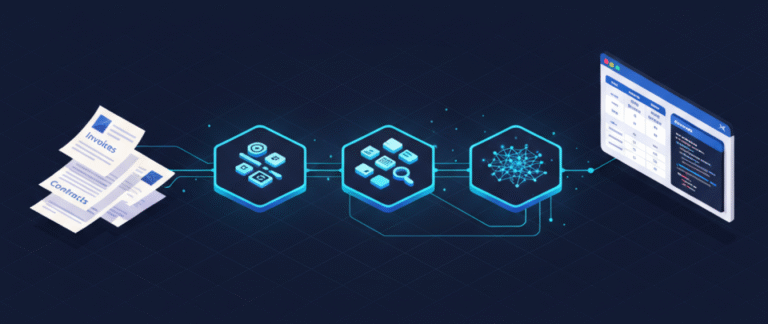
Quick Answer: Azure intelligent document processing (Azure IDP) automates document workflows in four steps — (1) Ingest from email, scanner, portal, API, Azure Blob Storage, SharePoint or SFTP; (2) Classify and extract fields, tables, handwriting and layouts with Azure AI Document Intelligence (formerly Form Recognizer); (3) Validate with AI using Azure OpenAI (GPT-4o, GPT-4 Turbo, o1), business rules and human review; (4) Push structured data to SAP, Salesforce, Microsoft Dynamics 365, NetSuite, QuickBooks, Workday or BI tools via Azure API Management, Logic Apps and Service Bus.
DreamzTech builds custom Azure IDP from $40,000 (Azure Functions + Document Intelligence MVP) up to $400,000+ (agentic IDP with Microsoft Semantic Kernel and custom Azure OpenAI fine-tuning) — HIPAA-eligible under signed Microsoft BAA, SOC 2 Type II, ISO 27001 / 27018 and FedRAMP High on Azure Government.
Reviewed by the DreamzTech AI Practice — Microsoft Solutions Partner with Azure Solutions Architect Expert, Azure AI Engineer Associate and Azure Security Engineer Associate certifications.
Last updated: May 6, 2026 · Reading time: ~9 minutes
Azure AI gives you powerful document intelligence APIs. DreamzTech turns those APIs into a complete business application with upload screens, exception queues, validation rules, audit trails, analytics and system integrations.
Document workflow assessment, Azure service selection, compliance planning, and cost and scaling roadmap on the Microsoft Azure Well-Architected Framework.
Prebuilt, custom-template and custom-neural models on Azure AI Document Intelligence trained for your specific invoices, forms, contracts and claims.
Azure OpenAI (GPT-4o, GPT-4 Turbo, o1) for summarization, clause analysis, RAG search and document Q&A with Azure AI Search.
Power Automate confidence-based review queues with Microsoft Entra ID role-based access, audit logs and continuous learning into custom-neural retraining.
Native integration with SAP, Oracle, NetSuite, Microsoft Dynamics 365, Salesforce and Workday via Azure Logic Apps connectors and API Management.
Azure Monitor dashboards, accuracy reviews, custom-neural model tuning, new document type onboarding and Azure consumption-cost optimization post go-live.
This service is ideal when document processing is slowing down finance, operations, compliance, onboarding, claims or customer service teams.
A well built Azure document processing platform should not just extract text. It should reduce manual effort, improve data quality and create a faster path from document received to business action.
The page should include this section because it helps Google understand technical depth while helping buyers see that DreamzTech builds complete production systems, not isolated OCR scripts.
Documents enter from email, portals, scanners, API uploads, SharePoint, Teams, SFTP or Azure Blob Storage.
Azure AI Document Intelligence extracts fields, tables, layouts, checkboxes, handwriting and key values from documents.
Azure OpenAI and Azure AI Search add summarization, semantic search, entity extraction and document question answering.
Business rules, confidence scores and human review queues validate low confidence or high risk data before posting.
Clean structured output is pushed into ERP, CRM, EHR, accounting, databases, Power BI or custom software systems.
Azure Monitor, audit logs and dashboards track processing time, exception rate, accuracy, cost and user activity.
This comparison section is important for SEO because buyers often compare Azure document processing with OCR tools, SaaS IDP products and custom AI development.
| Capability | Basic OCR Tools | Off The Shelf IDP | DreamzTech Azure IDP |
|---|---|---|---|
| Document Understanding | Text extraction only | Predefined templates and workflows | Custom extraction, classification, validation and Azure OpenAI based understanding |
| Workflow Fit | You build workflows separately | Limited to product configuration | Designed around your exact business process and approval flow |
| Integration | Manual export or API work | Connector dependent | Custom integration with ERP, CRM, accounting, databases and BI systems |
| Ownership | Tool dependent | Vendor platform dependency | You own the application, workflow and source code |
| Best For | Simple text extraction | Generic document automation | Enterprise teams needing secure, customized and integrated document processing |
Our Azure intelligent document processing engineering expertise spans the full ecosystem — healthcare claims and clinical documents on HIPAA-eligible Document Intelligence and AI Language for health, financial statements and lending packets on Azure OpenAI and Document Intelligence, insurance claims with Logic Apps and Durable Functions orchestration, and public-sector forms processing on Azure Government and Azure Sovereign Cloud FedRAMP High-ready architectures.
Azure AI Language for health for PHI and ICD-10 extraction, Document Intelligence for lab reports and prior-auth forms, HIPAA BAA across Azure.
Azure AI Document Intelligence custom-neural on FNOL and ACORD forms, Azure OpenAI for adjuster summaries, Power Automate review, Guidewire integration.
Azure AI Document Intelligence for layout, Azure OpenAI (GPT-4o, GPT-4 Turbo) for 90+ clause extraction, AI Language custom NER for jurisdiction and parties.
Invoice 3-way match, KYC automation, bank statement analysis and mortgage docs on Azure Document Intelligence with SAP, Oracle and Dynamics 365 write-back.
Azure Government and Sovereign Cloud deployments, FedRAMP High and IL5-aligned architectures, FOIA redaction with AI Language PII, permit and grant workflows.
Bills of lading, customs forms, packing lists and commercial invoices on Azure Document Intelligence and Azure OpenAI — Event Grid fan-out to TMS and WMS.
Clinical trial CRFs, regulated document automation and 21 CFR Part 11 audit trails on Azure Monitor, with AI Language for health for protocol abstraction.
Prior-authorisation automation with AI Language for health, claims adjudication on Document Intelligence and Azure OpenAI, member portals on Azure AD B2C with HIPAA BAA.
Three production-ready AI document processing builds, one delivery team. Pick Azure-native for tightest Microsoft 365 / Dynamics fit, AWS-native for serverless integration depth on Amazon Textract + Bedrock, or our cloud-agnostic IDP framework for multi-cloud and on-premise deployments — same case studies, same SLAs, different cloud spine.
Bring your toughest document workflow — invoices spread across 200+ vendor templates, claims with handwritten notes, contracts with 90+ clause types or any specialty form — and a Microsoft-certified Azure IDP architect will walk you through the recommended Azure AI Document Intelligence, Azure OpenAI and Logic Apps pattern, an accuracy benchmark on a representative sample, and a fixed-scope budget range — live, on the call. Free, 30 minutes, no obligation.
Partner with DreamzTech to accelerate your digital transformation. Our awards, partnerships, and global client success stories demonstrate our expertise in delivering enterprise AI and advanced technology solutions.





















Tell us about your document types, volume and the systems you need to integrate. A Microsoft-certified Azure IDP architect will reply within one business day with a reference-architecture sketch, a fixed-scope estimate and recommended next steps. No sales pitch, no obligation — just an expert response from a Microsoft Solutions Partner who has shipped Azure intelligent document processing for Fortune 500 enterprises.
Explore how Dreamztech has built Azure intelligent document processing solutions on Azure AI Document Intelligence, AI Language, and Azure OpenAI that reduce manual data entry, improve extraction accuracy, and streamline document operations across regulated industries.
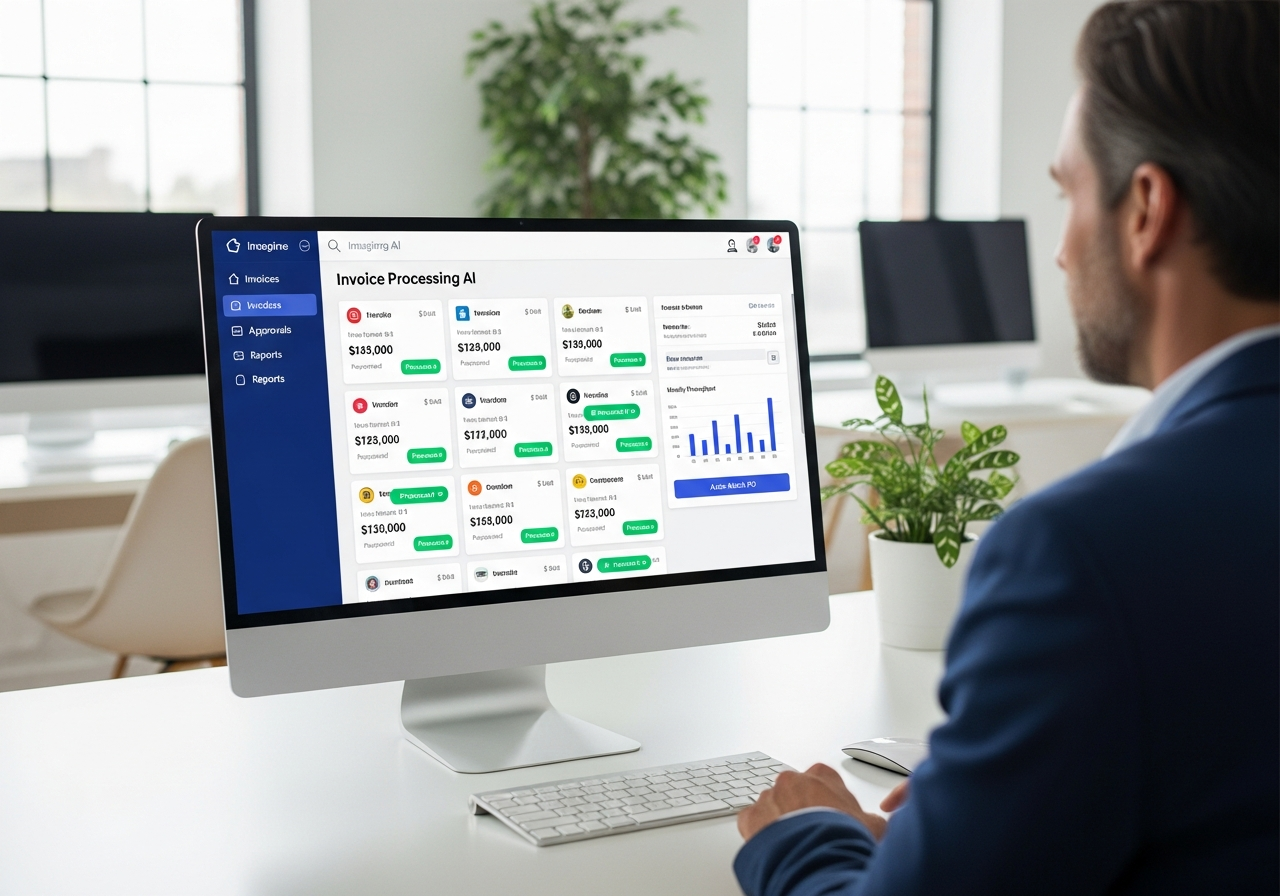
A 200-employee financial services firm replaced manual AP for 3,000+ monthly invoices across 4 subsidiaries. Built on Azure AI Document Intelligence custom-neural extraction (200+ vendor formats), Azure AI Language for line-item classification and Azure OpenAI (GPT-4o) for three-way match. Result: 70% manual entry cut, 84% straight-through, $420K saved in 9 months — full Microsoft Dynamics 365 Finance integration via Azure Functions + Event Grid.
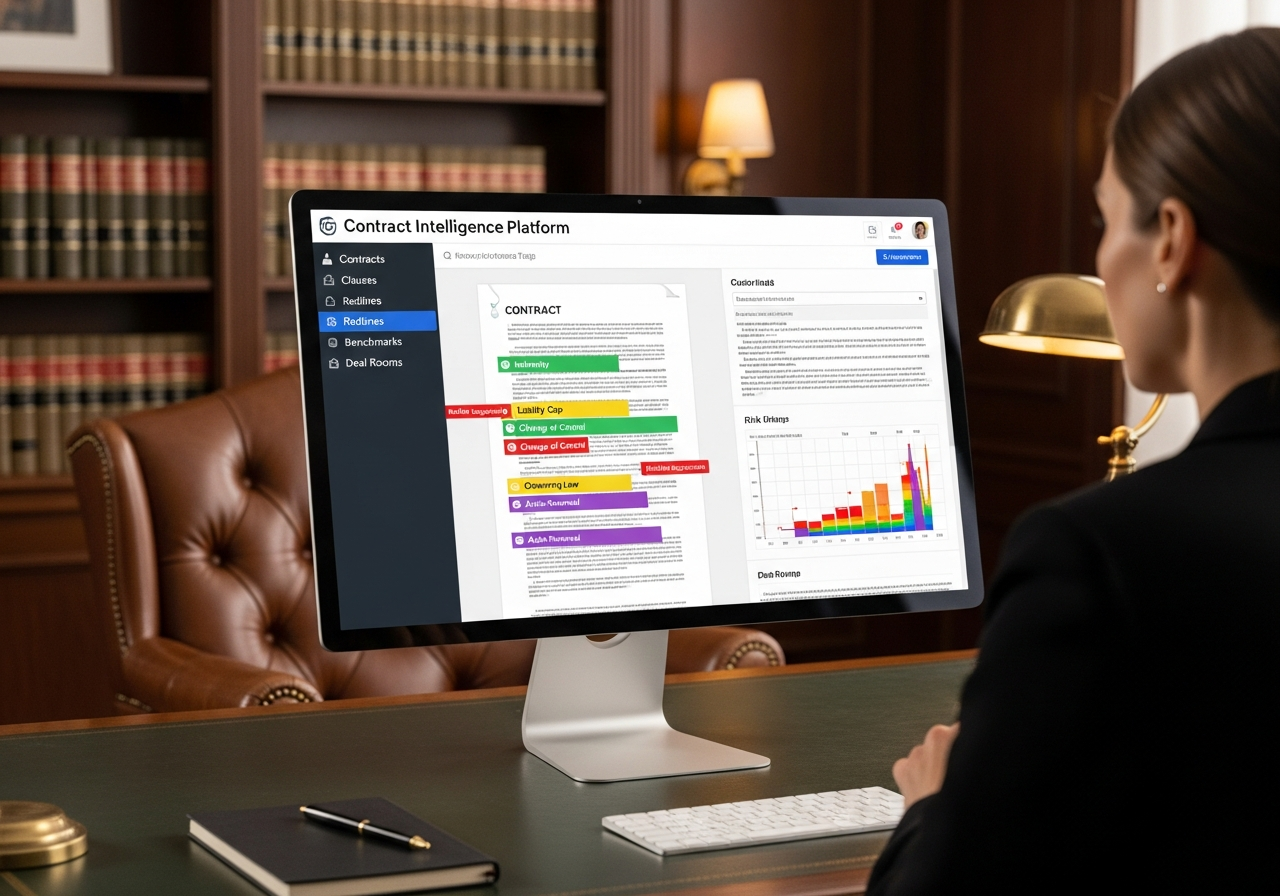
Top-100 global law firm, 6 offices across US/UK, needed to accelerate M&A due diligence. Azure-native platform: Azure AI Document Intelligence + Azure OpenAI GPT-4o + custom Azure Machine Learning NER trained on 45,000 prior contracts. 90+ clause types at 99.1% accuracy. 40h → 12h paralegal review, $2.4M annual billable-hour recapture.
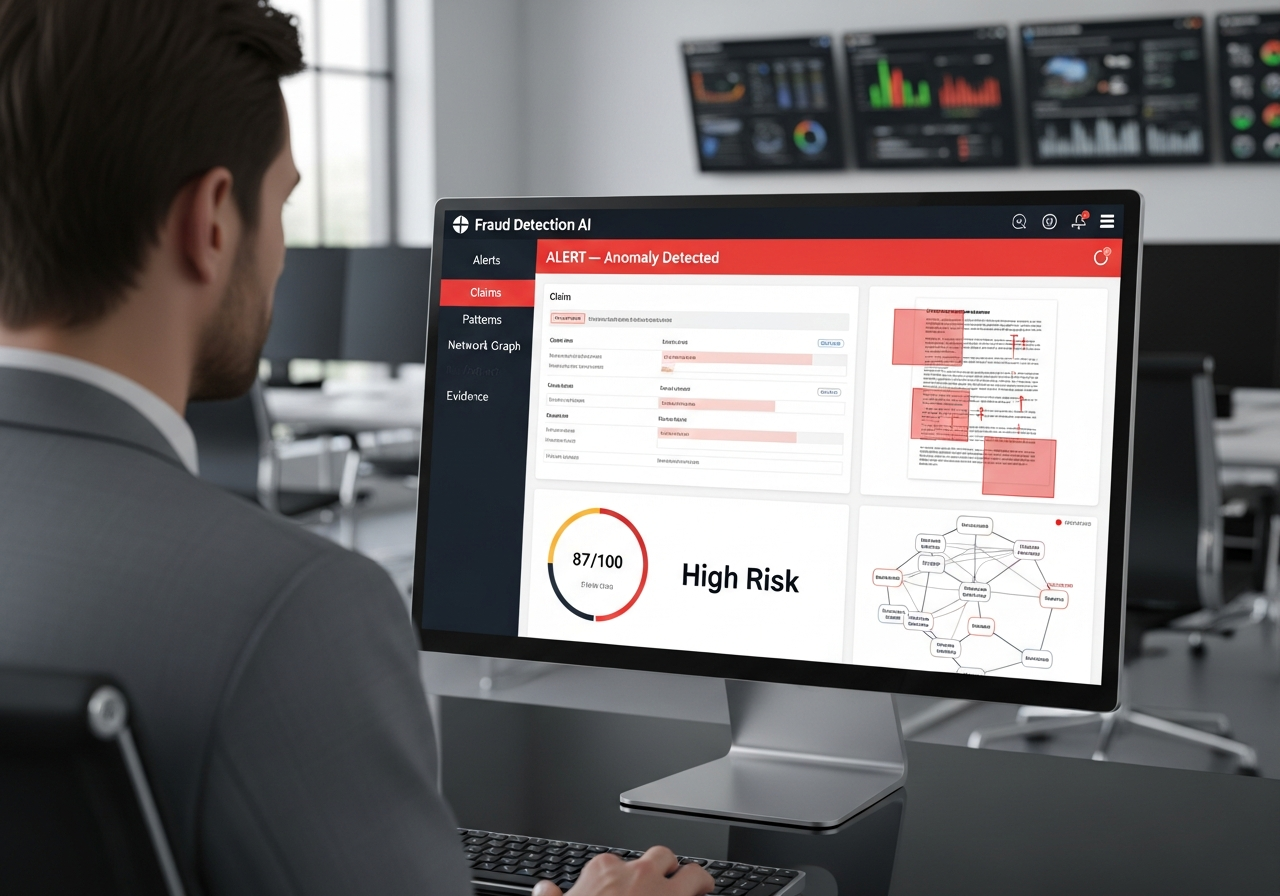
National P&C insurer facing $8M+ annual fraud losses from falsified claims, doctored invoices and AI-generated receipts. Platform combines Azure AI Document Intelligence custom-neural OCR (50,000 historical claims), EXIF/metadata forensics, Azure OpenAI GPT-4o vision and a graph-based cross-claim similarity engine on Azure Cosmos DB Gremlin. Year 1: 62% catch-rate lift, $5.1M prevented, 87% faster SIU triage.
Dreamztech Solutions is a Microsoft Solutions Partner with engineers holding Azure Solutions Architect Expert, Azure AI Engineer Associate, and Azure Security Engineer Associate certifications. We have shipped Azure-native document automation for 200+ clients across 15 countries. Azure AI Document Intelligence reads forms, tables, IDs, and custom layouts. Azure AI Language (and AI Language for health) tags entities, key phrases, and PII / PHI. Azure OpenAI unlocks GPT-4o, GPT-4 Turbo, and o1 for LLM-driven document understanding and reasoning. Each is a powerful managed service — but a real Azure IDP system needs more: a document ingestion UI, validation rules, exception handling, human-in-the-loop review queues, audit logging, and tight integration with your ERP, EHR, claims, or accounting platforms. That is what we build. We assemble Document Intelligence, AI Language, Azure OpenAI, and LangChain / Semantic Kernel together with Azure Functions, Logic Apps, Durable Functions, Blob Storage, Event Grid, and API Management into a turnkey Azure intelligent document processing solution — HIPAA-eligible under signed BAA, SOC 2 Type II, ISO 27001 / 27018, and tuned to your specific document classes and business rules.

A structured, transparent five-phase process designed for regulated Azure-native document workloads — delivering working, HIPAA-eligible, SOC 2 Type II-aligned Azure IDP software incrementally, with document and security stakeholders involved at every stage.
We study your document types (invoices, contracts, claims, records), current processing workflows, error rates, and integration requirements. We analyze 50-100 of your actual documents to define AI model requirements and accuracy targets.
Microsoft-certified engineers pick the right Azure AI mix — Document Intelligence (prebuilt or custom-neural) for forms, AI Language for entities, Azure OpenAI for LLM understanding, Power Automate for human review — orchestrated on Azure Functions and Logic Apps under the Azure Well-Architected Framework.
We annotate your historical documents in Azure AI Document Intelligence Studio, fine-tune custom-template and custom-neural models on your specific layouts and terminology, and (where needed) train custom Azure AI Language NER models — iteratively validating accuracy against your team's manual processing results.
We build the complete Azure-hosted application your team will use — document upload portal on Azure Blob Storage with SAS pre-signed URLs, extraction review dashboard, Power Automate exception-handling workflows, approval routing on Logic Apps and reporting on Power BI Embedded.
Microsoft Solutions Partner-grade Azure IDP — Azure AI Document Intelligence for OCR and forms, Azure AI Language for entities and PII, Azure OpenAI for understanding, Power Automate for human review. Production-ready in 4–14 weeks.
Every extracted document, PII field and API payload is encrypted with AES-256 at rest and TLS 1.3 in transit. Field-level encryption with Azure Key Vault customer-managed keys (CMK), Bring Your Own Key (BYOK), and Managed HSM ensures sensitive document data — contracts, claims, invoices and KYC records — stays protected end-to-end inside your Azure tenant.
Granular RBAC limits what every user sees — AP clerks, legal reviewers, compliance officers and executives each get a scoped view backed by Microsoft Entra ID (Azure AD) and Azure RBAC. Enterprise SSO via Microsoft Entra ID, Okta or Google Workspace. Every document access, extraction, approval, override and export is logged with immutable Azure Monitor + Log Analytics audit trails and tamper-evident hashing for SOX, 21 CFR Part 11 and GDPR audits.
Our Azure document processing platforms are deployed on SOC 2 Type II-attested Azure infrastructure with ISO 27001 / 27018-aligned information security management. HIPAA BAAs are signed across all HIPAA-eligible Azure services. Annual third-party penetration testing, Microsoft Defender for Cloud vulnerability scanning, and a secure-SDLC under the Microsoft Azure Well-Architected Framework provide defence-in-depth.
Multi-region data residency lets you pin document processing to EU (Frankfurt / Ireland), US (Virginia / Oregon), APAC, or on-premise per contract. Built-in GDPR right-to-erasure, data-portability exports, consent management, and automatic PII redaction on extraction. CCPA-compliant data subject request workflows ship out of the box.
Automatic detection and redaction of PII (SSN, credit card, PHI, passport, bank account) before documents are sent to LLM providers. Data Loss Prevention rules block accidental exfiltration. Prompt-injection detection on uploaded documents prevents adversarial content from manipulating GPT-4 or Claude extraction pipelines — a critical safeguard for document AI that legacy OCR tools do not address.
Deploy on your own cloud tenant with private OpenAI (Azure), Anthropic Claude, AWS Bedrock, or self-hosted open-source LLMs (Llama 3, Mistral) — so document content never leaves your security perimeter. Zero data retention agreements with all model vendors. Full offline / air-gapped deployment available for defense, intelligence, and regulated finance clients.

Information security

Privacy & Security Rule
ONC-compliant APIs
Annual audit certified
Electronic records
ADA-accessible UI
Built on the Microsoft Azure Well-Architected Framework — Reliability, Security, Cost Optimization, Operational Excellence and Performance Efficiency reviewed at every milestone.
Real feedback from CFOs, Directors of Knowledge Management, and Heads of Investigations running production Azure intelligent document processing pipelines built by DreamzTech on Azure AI Document Intelligence, Azure OpenAI and Azure AI Language.









Every custom Azure IDP project at DreamzTech is built on a tightly-integrated Azure-native stack. Azure AI Document Intelligence (formerly Form Recognizer) handles forms, tables and handwritten OCR with custom-neural training; Azure AI Language tags entities, key phrases and PII/PHI with custom NER; Azure OpenAI — running GPT-4o, GPT-4 Turbo and o1 — adds reasoning, summarization and clause-level understanding; and Azure Machine Learning fine-tunes domain-specific models on your historical document corpus.
Behind the AI layer: Azure Functions for serverless extraction pipelines, Azure Logic Apps + Durable Functions for workflow orchestration, Azure Blob Storage for HIPAA-eligible document storage, and Microsoft Dynamics 365 / Microsoft 365 native integrations — all running inside your Azure tenant, your VNet and your Azure Key Vault customer-managed keys.
Choose the engagement model that fits your document processing software project scope, timeline, and budget.
A full-time team of document processing software engineers, QA specialists, and a delivery lead focused solely on your product roadmap. Best for long-term document processing platform development.
Ideal for well-defined custom document processing software development scopes with clear timelines. We agree up front on deliverables, SOC 2 compliance milestones, and schedule.
Quickly add senior document processing software developers, compliance specialists, or REST API integration experts to fill critical skill gaps on your in-house team.
Maximum flexibility for evolving document processing software requirements. Pay for actual development hours with full transparency and sprint-based billing.
Azure AI Document Intelligence, Azure OpenAI, Azure AI Language, Microsoft Semantic Kernel, Azure AI Search and Azure AI Foundry — Dreamztech ships the full Azure IDP stack, not just one service.
Three real options exist for intelligent document processing: license a SaaS IDP product (UiPath, Hyperscience, Rossum, ABBYY Vantage, Nanonets, Docsumo), call hyperscaler APIs directly (Azure AI Document Intelligence + AI Language + Azure OpenAI, AWS Textract + Comprehend + Bedrock, Google Document AI), or commission custom IDP development. Each is right for different problems. Here’s the honest comparison.
| Dimension | SaaS IDP | Hyperscaler APIs | Custom Build |
|---|---|---|---|
| Cost model | $3K–$30K/month + per-document fees | $0.001–$0.05 per page + dev cost | $50K–$400K project, no per-doc fees |
| Time to first production | Weeks to months (depending on document templates) | Days for prototype; 2–4 months for production | 3–9 months end-to-end |
| Customisation depth | Limited to vendor’s template + extraction patterns | API-level flexibility; no UI, workflow, or business-logic layer | Anything technically possible — full UI, workflow, business rules, IP ownership |
| Compliance posture | Vendor BAA / DPA; sub-processor chain often opaque | Cloud-provider BAA only; you build the rest | Full BAA chain validated end-to-end + your audit logs |
| Integration with your stack | Pre-built connectors for major ERPs / EHRs; uneven for niche systems | You build all integrations | Native integrations to your specific ERP, EHR, CRM, claims-management system |
| Accuracy on your documents | Vendor-trained models; 70–90% out-of-the-box on standard formats | Generic models; 60–85% on standard formats; lower on custom layouts | Custom-tuned to your documents; 90–98% achievable with proper training |
| MLOps + drift handling | Vendor-managed; you have limited visibility | You build your own MLOps | DreamzTech designs MLOps in from day one |
| Best for | Standard documents (invoices, receipts, generic forms) at modest volume | Engineering teams comfortable owning the IDP build end-to-end | Specialty documents, regulated workloads (HIPAA / GDPR), enterprise volume, multi-system integration, or where document accuracy is a competitive moat |
Choose custom intelligent document processing development with DreamzTech when: (1) your documents are specialty (medical records, legal contracts, claims forms, custom industry forms) where SaaS IDP accuracy is unreliable; (2) your workloads are regulated (HIPAA / SOC 2 / GDPR) and need a validated BAA / DPA chain; (3) you process millions of documents per year and per-document SaaS pricing doesn’t scale; (4) the IDP system needs to integrate deeply with your specific ERP / EHR / CRM / claims system; (5) document-extraction accuracy is a competitive moat in your business. If you have standard invoices and receipts at modest volume, SaaS IDP is the right starting point.
Building on AWS specifically? See our dedicated AWS Intelligent Document Processing page for Textract + Comprehend + Bedrock + LangChain architecture patterns.
Azure AI Document Intelligence handles structure. Azure AI Language handles entities. Azure OpenAI handles understanding. Dreamztech handles the production system.
Azure Intelligent Document Processing (IDP) is the discipline of extracting, classifying, and routing data from documents using Azure managed AI services — primarily Azure AI Document Intelligence (formerly Form Recognizer) for OCR and form extraction, Azure AI Language for entity recognition and PII / PHI detection, and Azure OpenAI Service (GPT-4o, GPT-4 Turbo, o1) for LLM-driven document understanding. Orchestration uses Azure Functions, Logic Apps, Durable Functions, Blob Storage, Event Grid, and API Management. The result: invoices, contracts, claims, medical records, and KYC documents become structured data flowing into your ERP, EHR, or CRM with 95–99% accuracy on structured forms.
Azure AI Document Intelligence goes far beyond optical character recognition. It identifies forms (key-value pairs), tables (with row / column / cell structure preserved), checkboxes, signatures, and stamps. It ships with prebuilt models for invoices, receipts, IDs, US tax forms (W-2, 1099), business cards, health insurance cards, and contracts — out-of-the-box. For specialty documents, custom-template and custom-neural models train on as few as 5–15 labeled examples to achieve 90%+ accuracy. Generic OCR tools return raw text; Document Intelligence returns structured key-value JSON ready for downstream business logic.
Azure OpenAI Service provides enterprise-grade access to GPT-4o, GPT-4 Turbo, o1 reasoning models, and embeddings — running in your Azure tenant under your data-residency, BAA, and isolation guarantees. For IDP, this unlocks document understanding tasks that template-based extraction cannot solve: classifying free-form documents, summarizing multi-page contracts, extracting clauses with reasoning, answering questions across document corpora via RAG, and agentic workflows. Combined with Document Intelligence (for layout) and AI Language (for structured NER), Azure OpenAI handles the unstructured comprehension layer.
Document Intelligence handles the layout and structure layer: which characters appear where, what’s a form field versus a table cell versus a paragraph, and pre-built / custom field extraction. Azure AI Language handles the semantic layer on top of any text: entity recognition (people, organizations, places, products, custom entities), key-phrase extraction, sentiment, PII / PHI detection, language detection, summarization, and custom NER models. A typical Azure IDP pipeline calls Document Intelligence first to get structured fields and tables, then passes free-text spans to AI Language for entity tagging and to Azure OpenAI for reasoning.
Azure IDP development with DreamzTech ranges by complexity: Basic Azure Functions + Document Intelligence MVP $40,000–$80,000 (4–6 weeks), Mid-tier with custom-neural models + AI Language + ERP integration $80,000–$180,000 (8–14 weeks), Advanced with Azure OpenAI + LangChain / Semantic Kernel orchestration $180,000–$400,000 (12–24 weeks), Enterprise with custom Azure OpenAI fine-tuning + multi-region active-active deployment $400,000+. Azure consumption costs are billed per page / per call separately and typically run $0.001–$0.05 per page processed.
Yes — when configured correctly. Azure AI Document Intelligence, AI Language (and AI Language for health), Azure OpenAI Service, Blob Storage, Functions, and Logic Apps are all HIPAA-eligible Azure services available under Microsoft’s HIPAA Business Associate Agreement (BAA). Microsoft signs a single BAA covering its entire Azure regulated-eligible services list. DreamzTech configures HIPAA-eligible deployment patterns: private endpoints for all storage and AI services, customer-managed keys (CMK) via Azure Key Vault, audit logging via Azure Monitor + Log Analytics, RBAC + Azure AD conditional access, encryption in transit and at rest, and FIPS-validated cryptographic modules.
A serverless Azure Functions + Document Intelligence + Blob Storage IDP MVP can ship in 4–6 weeks. Adding Azure AI Language entity extraction, custom-neural model training, and human-in-the-loop review usually adds 4–8 weeks. Full enterprise IDP with Azure OpenAI orchestration, ERP / EHR integration, multi-region failover, and a comprehensive audit + governance layer typically takes 12–24 weeks. DreamzTech’s process delivers working software in 2-week iterations, so your first useful Azure IDP capability is in production by week 6 even on long-running engagements.
The reference pattern: documents arrive in an Azure Blob Storage container → a Blob trigger fires an Azure Function → the Function calls Azure AI Document Intelligence (analyze layout / prebuilt / custom-neural) → results pass to Azure AI Language for entity / PII detection → free-text spans pass to Azure OpenAI for reasoning or summarization → structured output writes to Azure SQL or Cosmos DB → an Azure Logic App or Durable Function pushes data to ERP / EHR / CRM via API Management. Azure Application Insights provides observability, Azure Monitor + Log Analytics covers compliance audit logs, and Azure Key Vault holds all secrets and CMK keys.
Both orchestrate multi-step document workflows on top of Azure OpenAI. LangChain is the cross-platform Python / TypeScript orchestration framework — broad community, large tool ecosystem. Microsoft Semantic Kernel is Microsoft’s open-source AI orchestration SDK with first-class Azure integration, .NET / Python / Java SDKs, and built-in plugins for Azure services. A typical pipeline: (1) call Document Intelligence for OCR and layout; (2) split the document into logical chunks; (3) for each chunk, call Azure OpenAI through the orchestrator with a prompt that extracts specific data; (4) validate outputs against a schema; (5) call AI Language for PII redaction. DreamzTech defaults to Semantic Kernel for .NET-heavy enterprises and LangChain for Python-first teams.
Yes. DreamzTech regularly integrates Azure IDP outputs with SAP, NetSuite, Oracle ERP, Microsoft Dynamics 365, Workday, Salesforce, HubSpot, Epic, Cerner, athenahealth, and custom legacy systems. Integration patterns: Azure Logic Apps connectors for SaaS (one of the largest connector libraries on any cloud — 1,400+ connectors), Azure Service Bus for guaranteed-delivery messaging, Event Grid for pub-sub, API Management for REST contracts, and Azure Data Factory for batch loads. For EHR specifically, we ship FHIR R4 transformations through the Azure Health Data Services FHIR service.
Azure AI Document Intelligence bills per page processed: ~$0.001 per page for Read (pure OCR), ~$0.01 per page for Layout, ~$0.05 per page for prebuilt models (invoice, receipt, ID, W-2 / 1099) and custom-neural models. Add-on AI Language calls bill per 1,000 text records (~$1 per 1K for standard NER). Azure OpenAI bills per 1,000 input + output tokens (e.g. GPT-4o is ~$2.50 / $10 per 1M input / output tokens). For a typical mid-tier IDP system processing 100,000 pages monthly, total Azure consumption usually lands $2,000–$8,000 / month — far below the $1.20 manual-handling cost per page.
Out-of-the-box Document Intelligence prebuilt models achieve 88–95% field-level accuracy on standard business forms (invoices, receipts, W-2s, 1099s, IDs, business cards, health insurance cards). For custom forms (your specific industry’s claim forms, lab reports, packing lists, lending packets), the custom-template model reaches 92–97% with 5–15 labeled examples, and the custom-neural model reaches 95–99% with 50–500 labeled examples and proper validation rules. DreamzTech ships every Azure IDP project with a benchmark report on a representative document sample before go-live, so you have measurable F1 / precision / recall scores in writing.
Use Document Intelligence directly if: (a) you have an in-house engineering team comfortable with Azure architecture, MLOps, custom-neural model training, and document workflows; (b) your documents are simple (a single document type matching a prebuilt model); (c) the consuming system is straightforward. Hire DreamzTech if: (a) you need a complete production system (UI, validation, exceptions, integrations) not just an API call; (b) you have specialty documents requiring custom-neural training plus business-rule validation; (c) you’re regulated (HIPAA / SOC 2 / GDPR / FedRAMP) and need a validated BAA / DPA chain; (d) you need ERP / EHR integration and audit-grade logging.
Agentic intelligent document processing uses Azure OpenAI agents (or LangChain / Semantic Kernel agents over Azure OpenAI) where the LLM orchestrates the document pipeline itself: deciding which Document Intelligence model to call, when to fall back to layout-only extraction, when to call AI Language for PII redaction, when to escalate to a human reviewer, and how to format the final output. This replaces brittle if-then pipelines with a reasoning-driven workflow. DreamzTech ships agentic Azure IDP for clients with high document-type variability — legal teams ingesting 20+ contract types, insurers handling claims from hundreds of providers — where deterministic pipelines fail.
DreamzTech is a Microsoft Solutions Partner with team members holding Microsoft Certified: Azure Solutions Architect Expert, Azure AI Engineer Associate, Azure Data Engineer Associate, and Azure Security Engineer Associate certifications. We have shipped Azure-native production workloads for clients across healthcare (Epic / Cerner / FHIR integrations), finance (KYC and lending document automation), insurance (claims IDP), and government (FedRAMP-aligned forms processing). All Azure IDP engagements include access to our Microsoft FastTrack and Azure Cost-Management consulting partners for architecture review and consumption-cost optimization.
Azure IDP (Azure intelligent document processing) is Microsoft’s reference pattern for extracting, classifying and routing data from documents using Azure managed AI services — primarily Azure AI Document Intelligence (formerly Form Recognizer) for OCR, forms and tables; Azure AI Language for entity recognition and PII / PHI detection; and Azure OpenAI Service (GPT-4o, GPT-4 Turbo, o1) for LLM-driven document understanding. Orchestration uses Azure Functions, Logic Apps, Durable Functions, Blob Storage, Event Grid, API Management and Microsoft Semantic Kernel. DreamzTech builds custom Azure IDP systems combining these into a HIPAA-eligible, SOC 2 Type II, ISO 27001-aligned production platform.
Yes — Microsoft renamed Azure Form Recognizer to Azure AI Document Intelligence in early 2024. Same underlying service, same prebuilt and custom models (Layout, Read, Invoice, Receipt, ID, W-2, 1099, Contract, Health Insurance Card, Custom Template, Custom Neural). The 4.0 GA release added more language coverage, an updated Studio UI, the new add-on capabilities (Query Fields, Barcode Detection, Formula Detection, Font Property Extraction), and tighter integration with Azure AI Foundry. SDKs and REST endpoints reflect both names during the transition. New Dreamztech Azure IDP builds use the current “Azure AI Document Intelligence” branding.
Both extract text, key-value pairs, tables and signatures from documents. Azure AI Document Intelligence differentiates with a richer prebuilt-model catalog (invoices, receipts, IDs, W-2 / 1099, business cards, health insurance cards, contracts, US tax forms), the Custom Template (5–15 examples) and Custom Neural (50–500 examples) low-data fine-tuning paths, an integrated Studio UI for labeling and training, and tighter integration with the rest of Azure (Logic Apps, Power Automate, Azure AI Search, Azure OpenAI). For organisations standardised on Azure, Document Intelligence avoids cross-cloud data egress, Microsoft Entra ID federation overhead and gives a single Microsoft BAA covering the entire pipeline.
Google Document AI offers strong specialty processors for US lending (URLA, mortgage docs) and a Workbench labeling tool. Azure IDP differentiates on the depth of the surrounding ecosystem: Azure OpenAI Service (GPT-4o, GPT-4 Turbo, o1) running in your tenant, Azure AI Foundry as the unified model + agent + evaluation hub, Microsoft Semantic Kernel SDK, Azure AI Search for vector + hybrid retrieval, Azure Government and Sovereign Cloud for FedRAMP High / IL5, and Microsoft Entra ID + Microsoft Purview for governance. Azure IDP wins for enterprises already on Microsoft 365 / Dynamics 365, regulated workloads needing FedRAMP High, and Microsoft-shop developer teams using .NET + Semantic Kernel.
Azure AI Foundry (formerly Azure AI Studio) is Microsoft’s unified portal and SDK for building AI applications on Azure — combining a model catalog (Azure OpenAI plus Llama, Mistral, Phi, DeepSeek, partner models), agent and assistant tooling, prompt-flow management, evaluations, content safety filters, and managed deployment. For Azure IDP, Foundry is where teams: (1) prototype prompts that pair Document Intelligence output with Azure OpenAI extraction; (2) build agents that call Document Intelligence + AI Language + custom Azure Functions; (3) run evaluations against ground-truth document samples; (4) ship to managed online endpoints with Azure AI Content Safety filters. DreamzTech builds Foundry-anchored agentic Azure IDP for clients with high document-type variability.
The reference serverless Azure IDP pattern: (1) document arrives in an Azure Blob Storage container; (2) Blob trigger fires an Azure Function; (3) Function calls Azure AI Document Intelligence (prebuilt for invoices/receipts/IDs, or custom-neural for specialty forms); (4) extracted JSON stored back in Blob Storage; (5) a second Function calls Azure AI Language for entities + PII redaction and Azure OpenAI for reasoning / summarisation; (6) confidence-score branching routes low-confidence pages to Power Automate human review; (7) Azure Logic Apps or Durable Functions orchestrates the workflow with retry, error handling and alarms; (8) final structured data lands in Azure SQL or Cosmos DB or is pushed via API Management and Event Grid to your ERP, EHR or CRM. Azure Monitor + Application Insights for observability, Azure Key Vault for encryption.