











US-Led Delivery • Production Document AI • Full Source-Code Ownership

Intelligent Document Processing Services for Production-Ready Enterprise Automation

Custom AI Document Processing Company in USA

Build a production-ready AI document processing system that classifies documents, extracts accurate data, validates with business rules and AI, and integrates directly with your ERP, CRM, EHR, accounting or internal workflow systems.

16+ Years building enterprise software, now AI-first 250+ Engineers across AI, data, cloud, QA and product US-Led Delivery - timezone-aligned stakeholder communication
Trusted by Startups, SMBs and Fortune 500 Enterprises
Explore the Document AI Ecosystem

Extraction, Understanding, Validation and Integration in One Platform

A complete document-processing system combines layout-aware extraction, semantic understanding, business-rule validation, human review, auditability and enterprise integration.

Our AI Document Processing Services

AI Document Processing From Discovery to Managed Operations

We assess the workflow, benchmark representative documents, design the architecture, build extraction and review services, integrate downstream systems and operate the production pipeline.

Workflow Discovery & Accuracy Benchmarking

Assess document volume, formats, exceptions, business rules and accuracy targets against a representative sample.

Custom Document Extraction Models

Build and train layout, prebuilt, custom-template and custom-neural extraction models for your document types.

Human-in-the-Loop Review

Route low-confidence fields and business-rule exceptions into role-based review and approval queues.

ERP, EHR & CRM Integration

Deliver validated data through APIs, webhooks, queues and workflow engines into the systems your teams already use.

LLM Document Intelligence

Add summarisation, clause extraction, semantic classification, RAG and question answering over approved document stores.

Managed IDP & Continuous Improvement

Track extraction quality, exceptions, latency, spend and document drift while onboarding new document types safely.

AI Document Processing Lifecycle

How We Take an IDP Build From Sample Documents to Production

Six controlled phases move the workflow from discovery and document benchmarking through extraction, validation, integration, security testing and monitored production release.

Document AI Engineering Capabilities

Depth Across Extraction, LLMs, Integration and Cloud

Production IDP needs more than OCR: it requires document understanding, validation, workflow orchestration, secure integrations, observability and measurable accuracy.

LLM

LLM & Prompt Engineering

Assistants, copilots and language applications built on foundation models with retrieval, structured outputs and evaluation. The specialist page is LLM development; broader generative work including image, audio and multimodal is generative document AI development.

RAG

Retrieval & Knowledge

Grounding answers in your own approved content with permission-aware retrieval, reranking and citation, so output can be traced to a source. Delivered as RAG development services.

AGT

Agents & Tool Use

Systems that act rather than answer: scoped tools, least-privilege permissions, approval gates and audit logging. Built as custom AI agent development, or agentic document AI development where the work is genuinely multi-step.

CV

Computer Vision & OCR

Detection, classification, inspection and document extraction from images and scans, including edge and cloud inference. See computer vision development services.

MLO

Predictive ML & MLOps

Forecasting, scoring and anomaly detection built as services with feature pipelines, retraining and drift monitoring. See machine learning development, with advisory through ML consulting.

SEC

Integration & Security

Connecting builds to ERP, CRM, warehouses and internal APIs with entitlements carried across the boundary through AI integration services, under controls defined by AI governance consulting.

Why Custom IDP

Why Companies Choose Custom IDP Over Another SaaS Tool

Custom IDP makes sense when your document types, validation rules, integrations, security controls or review workflow create the real operational advantage.

Document AI Solutions by Workflow

Document Automation Built for Real Business Workflows

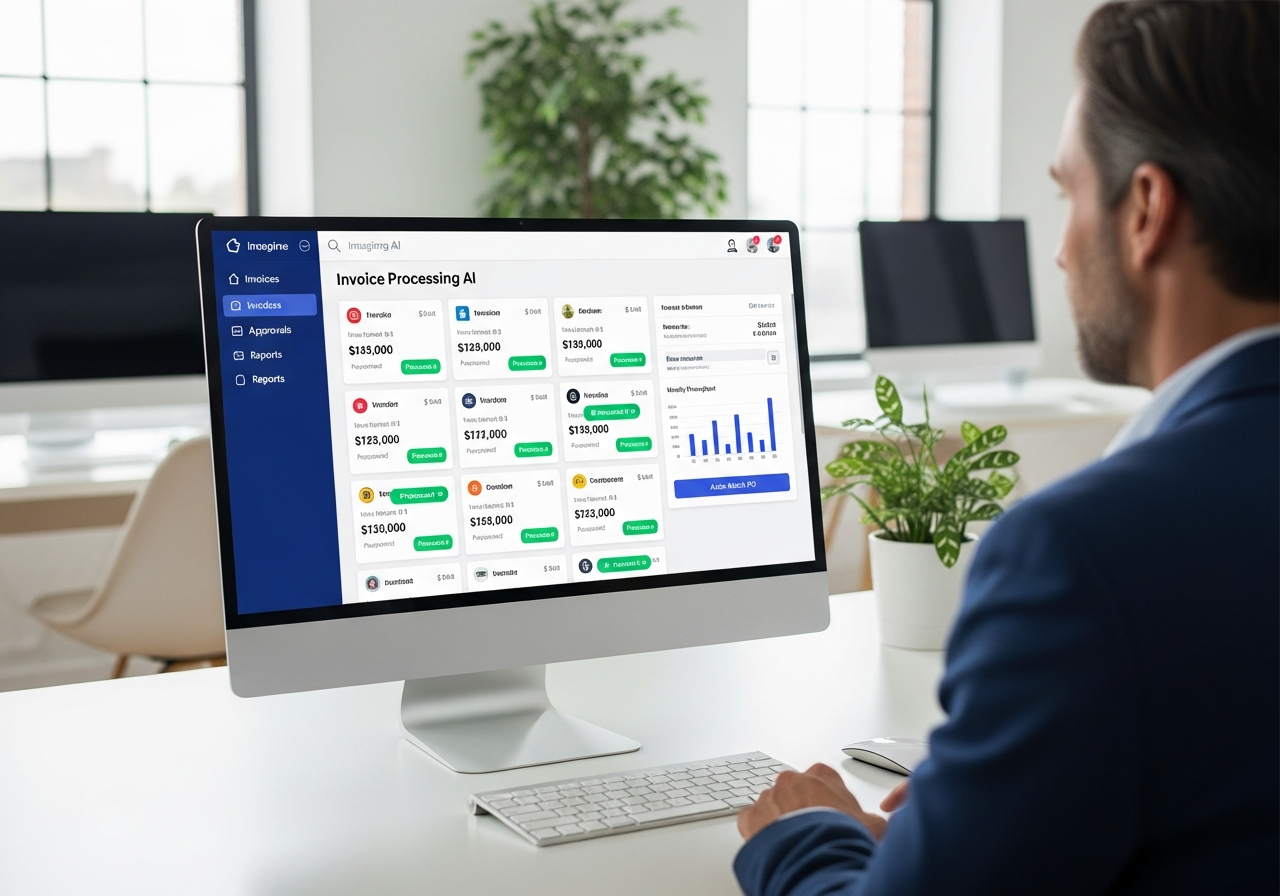
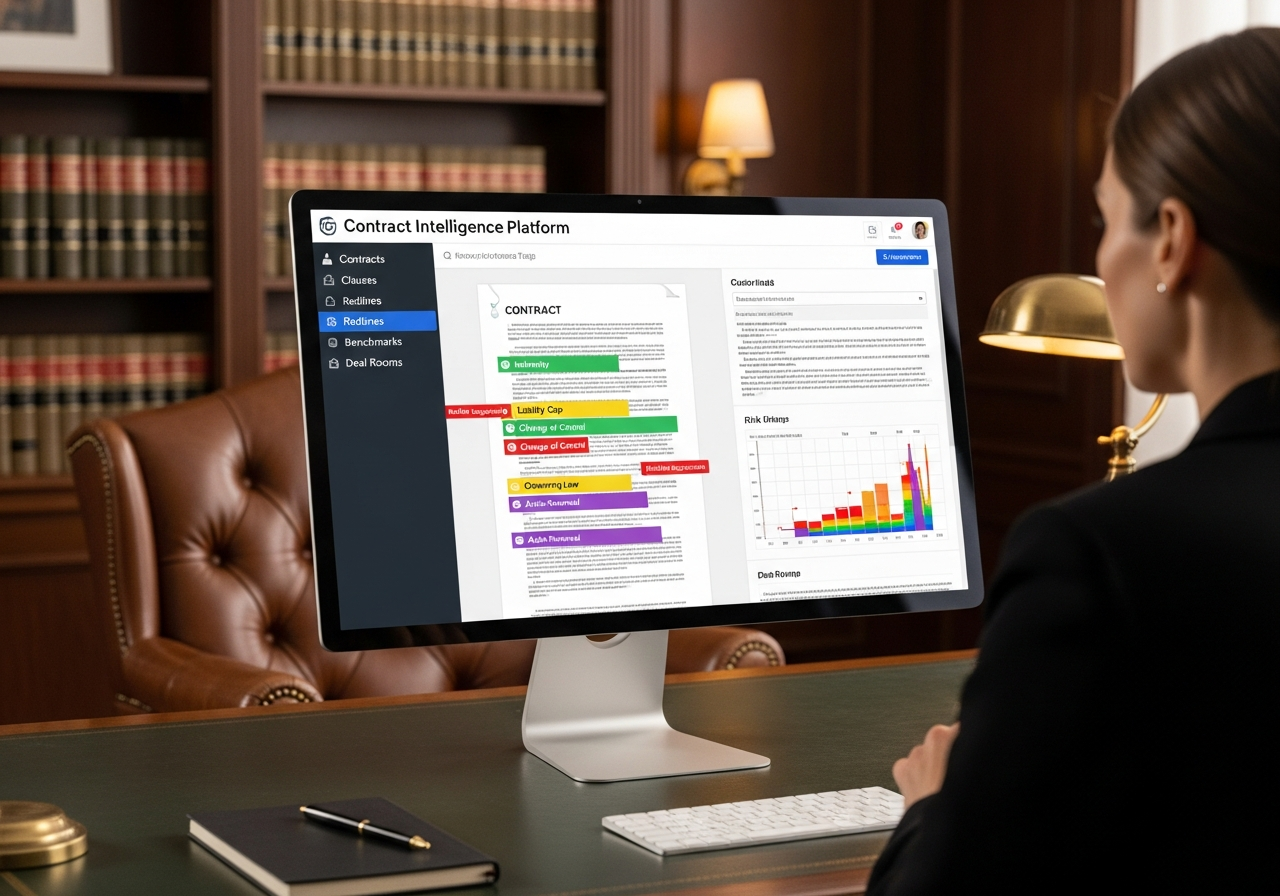
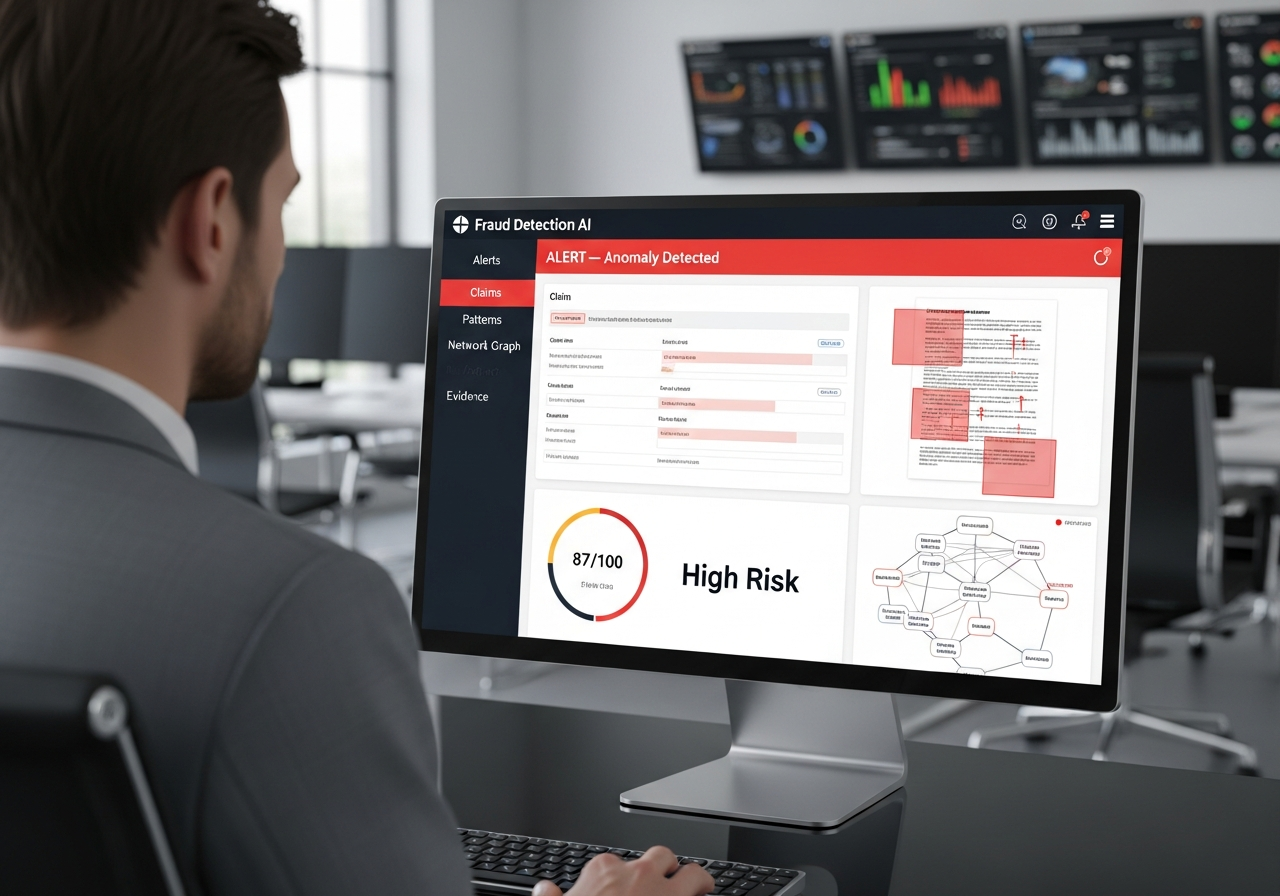
Automate invoice, contract, claims, KYC, medical-record, logistics and custom-form workflows while keeping exceptions and approvals visible.

AI Case Studies

Document AI Built for Real Business Operations

Real DreamzTech AI engagements, chosen to show the integration, governance and production complexity behind systems that people actually use every day.

US-Led Delivery

AI Document Processing Company With US-Led Delivery

DreamzTech pairs US-led engagement and project management with certified cloud, AI, data, integration and security specialists across its global engineering organization.

US Project Leadership

Engagement and project management run from the US, so scoping calls, demos, escalations and executive reporting all happen inside your working day rather than waiting on an overnight cycle.

Timezone-Aligned Delivery

Overlapping hours for the decisions that actually block progress — data access, integration questions, model behaviour reviews and UAT feedback.

Contracting and Ownership

Agreements, IP and source-code ownership defined up front under terms your legal and procurement teams are used to reviewing.

Las Vegas, Nevada
Arizona
Engineering across the US, UK and India
Engagement Models

Choose the document-processing delivery model that fits your roadmap

Three ways to work with us, depending on whether you need a partner to own delivery, a managed team alongside your product organization, or specific expertise added to engineers you already have.

End-to-End IDP Project

Build

concept to production

Dedicated Document AI Team

Team

embedded specialists

Hire Document AI Specialists

Talent

named AI engineers

Connect With Our Document AI Experts

Tell us what you process and what systems receive the data

Bring representative documents, volume, accuracy goals, review requirements and downstream systems. We will outline the fastest path to a secure production IDP workflow.

What you want AI to do

What already exists

Awards & Recognition

Ratings

Talk to an AI document processing company

Share your document workflow and we will outline the architecture, extraction approach, review model, integrations and delivery plan. NDA available.

    By submitting the form, you agree to the DreamzTech Terms and Policies

    Document AI Technology Stack

    Cloud, model and orchestration choices driven by your documents

    We select AWS, Azure or Google Cloud services, foundation models, OCR engines, workflow tools and data stores according to accuracy, latency, residency, security and cost at your volume.

    CategoryTools / technologies
    ModelsOpenAI, Anthropic Claude, Google Gemini, Meta Llama, Mistral, plus open-weight models you can self-host
    OrchestrationLangChain, LlamaIndex, custom agent frameworks, MCP tool servers
    Retrieval & vectorpgvector, Pinecone, Weaviate, OpenSearch, Elasticsearch
    ML & visionPyTorch, TensorFlow, scikit-learn, Hugging Face, OpenCV
    DataSnowflake, Databricks, BigQuery, Redshift, Kafka, Airflow, dbt
    ApplicationPython, Node.js, .NET, Java, React, Next.js, TypeScript
    Cloud & MLOpsAWS Bedrock & SageMaker, Azure AI Foundry, Google Vertex AI, Docker, Kubernetes, CI/CD
    EvaluationOffline eval sets, human review workflows, tracing, drift and quality monitoring
    SecurityRole-based access control, encryption in transit and at rest, audit logging, SSO / MFA, environment separation
    Document Workflows We Automate

    AI Document Processing for Regulated and Document-Heavy Industries

    Financial services, insurance, healthcare, legal, logistics, government and enterprise operations each require different documents, controls and integration patterns.

    Start in 3 Simple Steps

    Move from sample documents to a delivery plan without weeks of sales process

    01

    Share Representative Documents

    Provide redacted samples, volumes, formats, exception rates and the downstream outcome you need.

    02

    Benchmark, Architect & Scope

    We test extraction options, define validation and review, map integrations, and estimate the build against measurable acceptance criteria.

    03

    Pilot, Measure, Then Scale

    Release a narrow production workflow, measure field-level accuracy and exception handling, then expand document types and business units.

    Client Validation

    What clients value about working with DreamzTech

    Verified client feedback consistently highlights responsiveness, practical problem solving, communication and delivery quality.

    Clutch Reviews

    Why Choose DreamzTech for IDP

    Why companies choose DreamzTech for AI document processing

    We combine US-facing delivery leadership with document AI, cloud architecture, integration, security and product engineering required for a complete production system.

    US-Based Engagement Leadership

    Engagement and project management run from the US, so planning, demos and escalations happen in your working day.

    Software Engineering, Not Just Models

    Most document AI projects fail on integration, data and operations rather than modelling. Those are the disciplines we bring.

    Source-Code Ownership

    Ownership terms are defined in the engagement agreement, so you retain the codebase, documentation and roadmap.

    Security & Governance by Design

    Access control, audit logging, environment separation and human review designed in from the start, not added before launch.

    Extract. Validate. Integrate.

    Ready to automate a document workflow?

    Share the document types, sample volumes, validation rules, review users and destination systems. We will outline the fastest route to a measurable production pilot.

    Frequently Asked Questions

    AI document processing services — frequently asked questions

    Direct answers about extraction accuracy, OCR versus IDP, LLMs, security, cloud architecture, integrations, cost and delivery timelines.

    Intelligent Document Processing (IDP) is the discipline of extracting, classifying and routing data from documents using AI services — primarily AI document extraction (OCR + forms + tables), AI language services (entity recognition, PII / PHI detection) and foundation-model LLMs (GPT-4, Claude, Gemini, Llama) for understanding. Orchestration runs on serverless functions, workflow engines, object storage and API gateways. The result: invoices, contracts, claims, medical records and KYC documents become structured data flowing into your ERP, EHR or CRM with 95–99% accuracy on structured forms. DreamzTech builds AI IDP on AWS, Azure or Google Cloud — pick the cloud, we build the system.

    Modern AI document extraction services go far beyond optical character recognition. They identify forms (key-value pairs), tables (with row / column / cell structure preserved), checkboxes, signatures and stamps. They ship with prebuilt models for invoices, receipts, IDs, US tax forms (W-2, 1099), business cards, health insurance cards and contracts — out-of-the-box. For specialty documents, custom-template and custom-neural models train on as few as 5–15 labelled examples to achieve 90%+ accuracy. Generic OCR returns raw text; AI document extraction returns structured key-value JSON ready for downstream business logic.

    Foundation-model LLMs (GPT-4o, Claude 3.5 Sonnet, Gemini 1.5 Pro, Llama 3 and reasoning models like o1) provide enterprise-grade access to text understanding — running in your AWS / Azure / Google Cloud account under your data-residency, BAA and isolation guarantees. For IDP, this unlocks tasks template-based extraction cannot solve: classifying free-form documents, summarising multi-page contracts, extracting clauses with reasoning, answering questions across document corpora via RAG, and agentic workflows. Combined with AI document extraction (for layout) and AI language services (for structured NER), LLMs handle the unstructured comprehension layer.

    AI document extraction handles the layout and structure layer — which characters appear where, what is a form field versus a table cell versus a paragraph, plus prebuilt and custom field extraction. AI language services handle the semantic layer on top of any text — entity recognition (people, organisations, places, products, custom entities), key-phrase extraction, sentiment, PII / PHI detection, language detection, summarisation and custom NER models. A typical AI IDP pipeline calls document extraction first to get structured fields and tables, then passes free-text spans to language services for entity tagging and to foundation-model LLMs for reasoning.

    AI IDP development with DreamzTech ranges by complexity: Basic serverless functions + AI document extraction MVP $40,000–$80,000 (4–6 weeks); Mid-tier with custom-neural models + AI language services + ERP integration $80,000–$180,000 (8–14 weeks); Advanced with foundation-model LLMs + LangChain / LlamaIndex orchestration $180,000–$400,000 (12–24 weeks); Enterprise with custom LLM fine-tuning + multi-region active-active deployment $400,000+. Cloud consumption costs (AWS / Azure / Google) are billed per page or per call separately and typically run $0.001–$0.05 per page processed.

    Yes — when configured correctly. Each major cloud provider (AWS, Azure, Google Cloud) signs its own HIPAA Business Associate Agreement (BAA) covering its eligible AI document services, language services, LLM services, object storage, serverless and database services. DreamzTech configures HIPAA-eligible deployment patterns on whichever cloud you choose: private endpoints for all storage and AI services, customer-managed keys (CMK) via cloud-managed key services, audit logging via cloud observability, RBAC with enterprise SSO and conditional access, encryption in transit and at rest with FIPS-validated cryptographic modules.

    A serverless AI document extraction + object-storage MVP can ship in 4–6 weeks. Adding AI language entity extraction, custom-neural model training and human-in-the-loop review usually adds 4–8 weeks. Full enterprise IDP with foundation-model LLM orchestration, ERP / EHR integration, multi-region failover and a comprehensive audit + governance layer typically takes 12–24 weeks. DreamzTech’s process delivers working software in 2-week iterations, so your first useful AI IDP capability is in production by week 6 even on long-running engagements.

    The reference pattern (works the same conceptually on AWS, Azure or Google Cloud): documents arrive in an object-storage container → an event trigger fires a serverless function → the function calls AI document extraction (analyze layout / prebuilt / custom-neural) → results pass to AI language services for entity / PII detection → free-text spans pass to foundation-model LLMs for reasoning or summarisation → structured output writes to a managed database → a workflow engine pushes data to ERP / EHR / CRM via an API gateway. Cloud-native observability, audit logs and key management round out the platform.

    All three orchestrate multi-step document workflows on top of foundation-model LLMs. LangChain is the cross-platform Python / TypeScript orchestration framework with the broadest tool ecosystem. LlamaIndex specialises in RAG and document indexing. Microsoft Semantic Kernel is Microsoft’s open-source AI orchestration SDK with first-class .NET / Java / Python integration. A typical AI IDP pipeline: (1) call AI document extraction for OCR and layout; (2) split the document into logical chunks; (3) for each chunk, call an LLM through the orchestrator with a prompt extracting specific data; (4) validate outputs against a schema; (5) call language services for PII redaction. DreamzTech defaults to Semantic Kernel for .NET-heavy enterprises, LlamaIndex for RAG-heavy use cases, and LangChain for everything else.

    Yes. DreamzTech regularly integrates AI IDP outputs with SAP, NetSuite, Oracle ERP, Microsoft Dynamics 365, Workday, Salesforce, HubSpot, Epic, Cerner, athenahealth, Guidewire, Duck Creek and custom legacy systems. Integration patterns: cloud workflow engines with 1,400+ pre-built SaaS connectors, message buses for guaranteed-delivery messaging, event buses for pub-sub, API gateways for REST contracts, and managed data-integration pipelines for batch loads. For EHR specifically, we ship FHIR R4 transformations through cloud-native FHIR services.

    Per-page pricing is broadly similar across hyperscalers: ~$0.001 per page for plain OCR; ~$0.01 per page for layout extraction; ~$0.05 per page for prebuilt models (invoices, receipts, IDs, W-2 / 1099) and custom-neural models. AI language services bill per 1,000 text records (~$1 per 1K for standard NER). Foundation-model LLMs bill per 1,000 input + output tokens (e.g. GPT-4o is ~$2.50 / $10 per 1M input / output tokens; Claude 3.5 Sonnet, Gemini 1.5 Pro and Llama 3 are similar). For a typical mid-tier IDP system processing 100,000 pages monthly, total cloud consumption usually lands $2,000–$8,000 / month — far below the $1.20 manual-handling cost per page.

    Out-of-the-box prebuilt AI document extraction models achieve 88–95% field-level accuracy on standard business forms (invoices, receipts, W-2s, 1099s, IDs, business cards, health insurance cards). For custom forms (your specific industry’s claim forms, lab reports, packing lists, lending packets), custom-template models reach 92–97% with 5–15 labelled examples and custom-neural models reach 95–99% with 50–500 labelled examples and proper validation rules. DreamzTech ships every AI IDP project with a benchmark report on a representative document sample before go-live, so you have measurable F1 / precision / recall scores in writing.

    Use AWS Textract, Azure AI Document Intelligence or Google Document AI directly if: (a) you have an in-house engineering team comfortable with cloud architecture, MLOps, custom-neural model training and document workflows; (b) your documents are simple (a single document type matching a prebuilt model); (c) the consuming system is straightforward. Hire DreamzTech if: (a) you need a complete production system (UI, validation, exceptions, integrations) not just an API call; (b) you have specialty documents requiring custom-neural training plus business-rule validation; (c) you are regulated (HIPAA / SOC 2 / GDPR / FedRAMP) and need a validated BAA / DPA chain; (d) you need ERP / EHR integration and audit-grade logging.

    Agentic intelligent document processing uses foundation-model LLM agents (orchestrated through LangChain, LlamaIndex, Semantic Kernel, AWS Bedrock Agents, Azure OpenAI Assistants or Google Vertex AI Agent Builder) where the LLM orchestrates the document pipeline itself: deciding which extraction model to call, when to fall back to layout-only extraction, when to call language services for PII redaction, when to escalate to a human reviewer, and how to format the final output. This replaces brittle if-then pipelines with a reasoning-driven workflow. DreamzTech ships agentic AI IDP for clients with high document-type variability — legal teams ingesting 20+ contract types, insurers handling claims from hundreds of providers — where deterministic pipelines fail.

    DreamzTech is an AWS Partner, Google Cloud Partner and Microsoft Solutions Partner with team members holding AWS Solutions Architect, Google Cloud Architect and Azure Solutions Architect Expert; AWS Certified Machine Learning – Specialty, Azure AI Engineer Associate and Google Cloud ML Engineer; plus AWS / Azure / Google Cloud Security specialty credentials. We have shipped AI document processing for clients across healthcare (Epic / Cerner / FHIR integrations), finance (KYC and lending document automation), insurance (claims IDP), legal (contract intelligence) and government (FedRAMP-aligned forms processing). Engagements include access to cloud cost management and architecture-review services on whichever cloud you choose.

    AI IDP (artificial-intelligence-powered intelligent document processing) is the practice of extracting, classifying and routing data from documents using cloud-managed AI services — primarily AI document extraction (OCR, forms and tables), AI language services (entity recognition and PII / PHI detection) and foundation-model LLMs (GPT-4, Claude, Gemini, Llama) for LLM-driven understanding. Orchestration uses serverless functions, workflow engines, object storage and API gateways. DreamzTech builds custom AI IDP systems on AWS, Azure or Google Cloud — combining these into a HIPAA-eligible, SOC 2 Type II, ISO 27001-aligned production platform.

    Each cloud has genuine strengths. AWS Textract leads on document templates, Textract Queries (ask the document a specific question), and tight serverless integration with Amazon S3, Lambda and Step Functions; Amazon Bedrock provides Claude, Titan and Llama under one API; Amazon A2I covers human review out-of-the-box. Azure AI Document Intelligence has the deepest custom-neural training tooling, the broadest prebuilt model catalog (W-2, 1099, health insurance cards, contracts), Azure OpenAI for GPT-4o / Claude / o1 in-tenant, and the tightest .NET / Microsoft 365 / Power Automate integration. Google Document AI offers the strongest specialty processors for US lending (URLA, mortgage docs), Workbench labelling, and Vertex AI for Gemini 1.5 Pro. DreamzTech’s pick: choose AWS if you are AWS-standardised; Azure if you are Microsoft / Dynamics 365-centric or need .NET; Google if your team is on GCP or you need US lending processors. We build on whichever fits.

    Both are mature AI document extraction services. Amazon Textract has Textract Queries (ask a question, get the answer extracted), tighter integration with the AWS serverless stack (S3 → Lambda → DynamoDB) and direct Bedrock co-deployment for LLM-driven understanding. Azure AI Document Intelligence has a richer prebuilt-model catalog (W-2, 1099, health insurance cards, contracts), the Custom Template (5–15 examples) and Custom Neural (50–500 examples) low-data fine-tuning paths, Document Intelligence Studio for labelling and training, and tighter integration with the rest of Azure (Logic Apps, Power Automate, AI Search, Azure OpenAI). For organisations standardised on AWS, Textract avoids cross-cloud egress; for Microsoft 365 / Dynamics shops, Document Intelligence usually wins.

    Google Document AI offers strong specialty processors for US lending (URLA, mortgage docs, paystubs) and a Workbench labelling tool. AWS and Azure differentiate on the depth of the surrounding ecosystem. AWS brings Bedrock with Claude / Titan / Llama, A2I for human review, SageMaker for custom training, GovCloud for federal workloads. Azure brings Azure OpenAI Service (GPT-4o, GPT-4 Turbo, o1) running in-tenant, Azure AI Foundry as the unified model + agent + evaluation hub, Semantic Kernel SDK, AI Search for vector + hybrid retrieval, Azure Government and Sovereign Cloud for FedRAMP High / IL5, plus Microsoft Entra ID + Microsoft Purview for governance. Google wins on lending specialty docs and Gemini 1.5 Pro’s long-context reasoning; AWS and Azure win on the breadth of the broader IDP toolchain.

    LangChain is the most popular cross-platform AI orchestration framework — broadest community, largest tool ecosystem, Python and TypeScript SDKs. LlamaIndex specialises in RAG and document indexing — the right choice when retrieval-augmented generation over large document corpora is the central use case. Microsoft Semantic Kernel is Microsoft’s .NET-first AI orchestration SDK with built-in plugins for Azure services and tight integration with Microsoft 365 / Power Automate. AWS Bedrock Agents and Google Vertex AI Agent Builder are first-party agent frameworks tightly integrated with their respective clouds. DreamzTech defaults to Semantic Kernel for .NET-heavy enterprises, LlamaIndex for RAG-heavy use cases, and LangChain for everything else. For agentic IDP we frequently combine LangChain agents with cloud-native agent runtimes.

    The reference serverless AI IDP pattern (works on AWS, Azure or Google Cloud): (1) document arrives in an object-storage container; (2) an object-storage event triggers a serverless function; (3) the function calls AI document extraction (prebuilt for invoices/receipts/IDs, or custom-neural for specialty forms); (4) extracted JSON stored back in object storage; (5) a second function calls AI language services for entities + PII redaction and a foundation-model LLM for reasoning / summarisation; (6) confidence-score branching routes low-confidence pages to human review; (7) a workflow engine orchestrates the pipeline with retry, error handling and alarms; (8) final structured data lands in a managed database or is pushed via an API gateway and event bus to your ERP, EHR or CRM. Cloud observability and key management round out the platform.