HIPAA-Compliant Telehealth Platform Development

HIPAA-Compliant Telehealth Platform Development

Case Study

How DreamzTech helped a U.S.-based healthcare company create a secure telehealth experience for virtual visits, private patient communication and coordinated provider workflows.

  • What we built: HIPAA-Compliant Telehealth Platform
  • Industry: Healthcare / Telehealth
  • Delivery: Discovery, Design, Engineering & Phased Rollout
Discuss Your Telehealth Project
HIPAA-Compliant Telehealth Platform Development
Trusted By Startups, SMBs to Fortune 500 Brands

Quick Answers

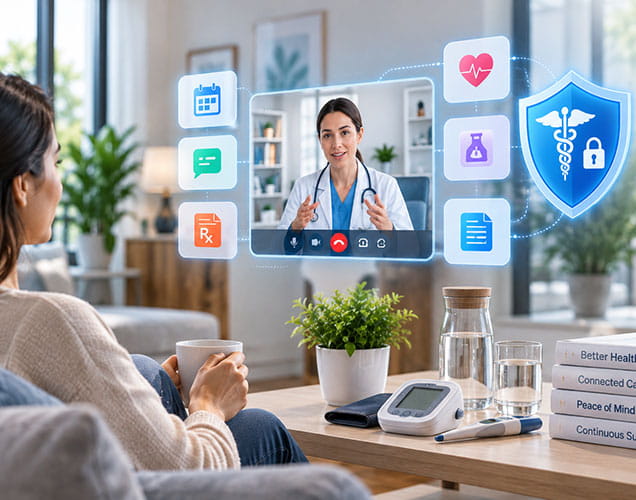
DreamzTech developed a custom telehealth platform for a U.S.-based healthcare company that needed a safer and more consistent way to deliver virtual care. The solution brought secure video visits, private communication, role-based access, workflow management, audit visibility and integration-ready architecture into one platform designed to support HIPAA-compliant operations.

ClientIndustryEngagementCore CapabilitiesDelivery Approach
U.S.-based healthcare company (name withheld under NDA)Healthcare / TelehealthCustom telehealth software developmentSecure virtual visits, patient and provider workflows, messaging, access controls, auditability and integrationsDiscovery, experience design, platform engineering, integration, security validation and phased rollout

Overview

What is a HIPAA-compliant telehealth platform? A HIPAA-compliant telehealth platform is a virtual-care system operated with the administrative, physical and technical safeguards needed to protect electronic protected health information. Relevant capabilities can include encrypted data transmission and storage, verified user access, role-based permissions, audit logs, secure communications, controlled integrations and appropriate business associate agreements. Technology is only one part of compliance; healthcare organizations must also maintain policies, training, risk analysis and ongoing oversight.

The client wanted to make virtual care easier for patients and staff without treating video as a separate tool. Appointment preparation, communication, care-team coordination and follow-up needed to work as one connected journey. At the same time, the platform had to protect sensitive information, limit access by role and provide the visibility required for responsible healthcare operations.

DreamzTech designed and engineered a custom platform around those workflows, reflecting the same custom healthcare software development practice behind DreamzTech's other clinical and patient-engagement builds. The result was a unified telehealth experience that could support remote consultations while giving the healthcare organization control over branding, user experience, integrations and future expansion.

Challenges

Virtual care involved more than starting a video call. The organization needed to connect the steps before, during and after a virtual appointment. Fragmented tools created extra work for staff, made the patient journey harder to follow and complicated the protection of sensitive information.

Design principles guiding the build:

  • Privacy by design: Limit collection, access and exposure of sensitive information throughout the user journey.
  • Simple by default: Reduce steps for patients and make provider actions easy to understand.
  • Least-privilege access: Give each role only the functions and information it needs.
  • Traceable operations: Record security-relevant and workflow-relevant activity for review.
  • Integration with control: Connect approved systems through governed interfaces and defined data ownership.
  • Adaptable architecture: Support future workflows without rebuilding the platform around a single vendor.

Solutions Delivered

DreamzTech translated the client's virtual-care process into a role-based digital platform. The solution combined patient access, provider workflow, communication and operational controls so users could move through a virtual appointment with fewer handoffs.

  • Secure sign-in and account recovery designed for patient-friendly access.
  • Appointment scheduling or confirmation with clear visit details.
  • Digital intake and consent steps configured around the client’s workflow.
  • Reminders and pre-visit instructions to help patients arrive prepared.
  • A guided path into the virtual waiting room and consultation.
  • Protected real-time communication for remote patient-provider visits.
  • Session controls appropriate to the approved consultation workflow.
  • Secure exchange of relevant information before or during a visit.
  • Clear status handling for scheduled, waiting, in-progress and completed visits.
  • Fallback and support pathways for common connectivity or user-access issues.
  • Secure messaging within the authenticated platform.
  • Conversation context tied to the appropriate patient and workflow.
  • Notification design that avoids exposing sensitive details on unsecured channels.
  • Controlled file or document exchange where included in the approved scope.
  • Communication history available to authorized users for continuity and review.
  • A structured view of upcoming and active virtual appointments.
  • Access to the information required to prepare for a consultation.
  • Workflow prompts that help providers complete required steps consistently.
  • Post-visit actions and handoffs captured in the platform.
  • Search and filtering that help teams find the right patient or appointment quickly.
  • Role and permission management for operational control.
  • Configuration of users, services, availability and workflow rules.
  • Visibility into appointment status, usage patterns and workflow exceptions.
  • Audit-oriented records for authorized review.
  • Operational dashboards designed around the client’s management needs.

The platform was designed to exchange information with approved healthcare and operational systems through governed interfaces. This approach helps reduce duplicate entry, supports continuity across virtual and in-person workflows, and allows integrations to be added or expanded without tying the product to one vendor.

  • Standards-aware healthcare data exchange where applicable.
  • API-based connectivity with defined authentication and authorization.
  • Validation, error handling and logging for integration events.
  • Clear ownership of source data and synchronized fields.
  • Environment separation and controlled release processes for integration changes.

HIPAA-Focused Security Safeguards

Security requirements were considered across architecture, user access and operations. The delivered controls were designed to support the client's HIPAA compliance program; the healthcare organization remains responsible for its policies, workforce practices, risk analysis, vendor management and lawful use of the platform.

Safeguard AreaHow the Platform Supports It
Identity and accessAuthenticated access, role-based permissions and controlled administrative privileges
Data protectionEncryption for sensitive data in transit and at rest, subject to the approved deployment architecture
AuditabilityLogging of relevant authentication, access, workflow and administrative events
Session securityTimeouts, secure session handling and protection against unauthorized reuse
Data minimizationCollection and display of only the information required for each workflow and role
ResilienceBackup, recovery, monitoring and incident-response considerations within the hosting and operating model
Vendor governanceUse of approved service providers and BAAs where vendors handle ePHI

How the Platform Works

From patient preparation to post-visit follow-up, here's how the platform keeps every virtual-care step secure and connected.

Success and Outcome

The engagement gave the healthcare company a unified platform for managing virtual-care interactions instead of relying on disconnected patient, communication and administrative tools. The solution established a more consistent experience for patients and teams while creating a controlled foundation for future telehealth services.

Unified Virtual-Care Journey

Patients can move from preparation to consultation and follow-up through one connected experience.

Stronger Access Governance

Role-based controls help limit information and actions to authorized users.

More Consistent Operations

Configured workflows guide staff through required steps and handoffs.

Improved Audit Visibility

Relevant actions and exceptions can be reviewed through controlled records and logs.

Integration Readiness

The architecture supports governed connections with approved healthcare and business systems.

Product Ownership

The client has a branded platform that can evolve with its services and operating model.

Why DreamzTech

DreamzTech combines product strategy, healthcare software engineering, experience design, integration and security-focused delivery. Rather than adding video to a generic portal, the team designs the complete workflow around patients, providers, administrators and the organization's operating model.

  • Custom product engineering for web, mobile and cloud platforms.
  • Healthcare workflow design with privacy and access requirements considered from discovery onward.
  • Secure communication and role-based platform architecture.
  • API and healthcare-system integration capabilities.
  • Phased delivery, validation and post-launch enhancement support.
  • Technology choices matched to the client's existing environment and long-term roadmap.

Have questions about your own project? Contact DreamzTech to talk through your workflows and requirements.

Conclusion

This project shows how a custom HIPAA-focused telehealth platform can make virtual care easier to use without separating security from the patient and provider experience. By unifying consultations, communication, workflows, access control, auditability and integration readiness, DreamzTech helped a U.S.-based healthcare company create a dependable foundation for digital care delivery. Planning a secure telehealth platform? We can help you define an MVP, modernize an existing platform, or explore telemedicine app development from the ground up.

Leading Global Software Company

Trusted by Industry Leaders Worldwide

Trusted by startups to Fortune 500s, including DHL, Nestlé, and Stanford — partners who rely on us for high-impact, scalable software solutions.

Book a Discovery Call

    By submitting the form, you agree to the DreamzTech Terms and Policies

    Frequently Asked Questions (FAQ)

    DreamzTech built a custom telehealth platform that connects secure virtual visits, patient access, private communication, provider workflows, administrative controls, audit visibility and integration-ready architecture in one branded experience.

    A telehealth platform can support HIPAA compliance through safeguards such as encryption, authenticated access, role-based permissions, audit logs, secure communications, governed integrations and appropriate business associate agreements. Compliance also depends on how the healthcare organization configures, operates and monitors the system, along with its policies, training and risk-management program.

    No. HIPAA establishes requirements for covered entities and business associates, but HHS does not provide a general certification for telehealth software. Organizations should evaluate the platform, vendors, contracts, configuration and operating practices as part of their own compliance program.

    Encryption helps protect sensitive information while it moves between authorized participants and while it is stored. It should be combined with identity verification, access controls, secure key management, logging, monitoring and tested operational procedures.

    Yes. A custom platform can embed protected real-time video into the appointment workflow, along with waiting-room states, patient verification, session controls, private messaging and post-visit actions. The exact implementation depends on the approved architecture and compliance requirements.

    Yes. Telehealth platforms can connect with EHR, EMR, scheduling, billing and other approved systems through standards-aware interfaces and secure APIs. Each integration should define data ownership, permissions, validation, error handling and audit requirements.

    Role-based access control gives each user type only the information and actions required for its responsibilities. Administrative privileges, patient records, appointment workflows and reporting access can be separated and reviewed according to the client’s policies.

    When a vendor creates, receives, maintains or transmits protected health information on behalf of a covered entity, a Business Associate Agreement may be required. The healthcare organization’s legal and compliance teams should review every relevant vendor relationship and data flow.

    Typical capabilities include patient registration, scheduling, digital intake, consent, virtual waiting rooms, secure video, private messaging, provider dashboards, notifications, post-visit workflows, reporting, audit logs and integrations. Scope should follow the organization’s clinical, administrative and compliance needs.

    Custom software gives an organization more control over branding, workflows, integrations, permissions, data flows and roadmap. Off-the-shelf tools can launch faster for standard needs, while a custom platform is better suited to differentiated services or complex operating requirements.

    Yes. A modular architecture, governed integrations, monitoring and capacity planning can help the platform grow with new users, services and workflows. Any public performance or concurrency claim should come from validated production evidence.

    The timeline depends on workflow complexity, platforms, integrations, validation and rollout requirements. DreamzTech recommends a discovery phase followed by a prioritized MVP and staged enhancements rather than publishing a generic timeline without an approved scope.

    Review the partner’s healthcare workflow experience, security practices, integration capability, product-design process, testing approach, documentation, support model and willingness to define evidence-based compliance responsibilities.

    Yes, where there is a validated use case and appropriate governance. AI can assist with scheduling, support, documentation or workflow prioritization, but it should not be presented as making clinical decisions unless the system has the necessary clinical validation, oversight and regulatory controls.