AI-Powered Restaurant POS System Case Study

AI-Powered Restaurant POS System Case Study

Case Study

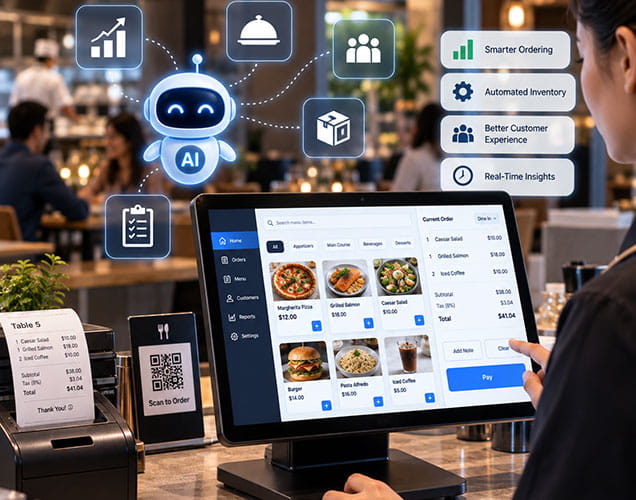
DreamzTech built a cloud-based restaurant POS platform for a US-based merchant technology company, connecting ordering, payments, kitchen operations, inventory, guest engagement and multi-location administration. The solution supports QSR, full-service, bar and pizzeria workflows, with responsible AI embedded across analytics, inventory, marketing, feedback and workforce operations.

  • What we built: Multi-location restaurant POS and operations platform
  • Industry: FinTech and hospitality technology
  • Delivery: POS, Mobile POS, KDS, kiosk, digital menu, voice ordering and administration
Discuss Your Restaurant POS Project
AI-Powered Restaurant POS System Case Study
Trusted By Startups, SMBs to Fortune 500 Brands

Quick Answers

  • Platform: A unified restaurant POS for ordering, kitchen, payments, inventory, loyalty and analytics.
  • Restaurant formats: QSR, full-service, bar and grill, pizzeria, food truck, cafe and multi-location groups.
  • Channels: Counter POS, tableside mobile, kiosk, online, QR, curbside, delivery and drive-thru.
  • FinTech layer: EMV/NFC/contactless payments, split tenders, tips, refunds, reconciliation, gift cards and accounting export.
  • AI layer: Forecasting, replenishment, insights, voice ordering, menu optimization, marketing, sentiment and workforce support.

Overview

A US-based merchant technology company needed one restaurant platform that could serve multiple operating models without forcing every location into the same workflow. QSR teams needed speed and drive-thru coordination; full-service venues needed tables, reservations and course firing; bars needed open tabs and age controls; pizzerias needed complex variants and modifiers.

DreamzTech designed a configurable restaurant management platform spanning 34 functional modules. It brings POS, Mobile POS, KDS, kiosk, digital menu boards, online and QR ordering, voice ordering, payments, inventory, loyalty, reservations, feedback and multi-location reporting into a shared operating model. Eight AI capability areas add forecasting, recommendations, content assistance and exception detection with human-in-the-loop safeguards. DreamzTech's retail POS system case study covers a related build for a different operating model.

Challenges

  • Different restaurant formats required different service, menu and payment workflows.
  • Orders and item availability had to stay synchronized across many channels and devices.
  • Payments, tips, tabs, refunds and reconciliation needed traceable FinTech controls.
  • Recipe, ingredient, purchase and waste data had to connect with real sales activity.
  • AI recommendations needed confidence, review and fallback controls before action.

How the Restaurant POS Works

The platform coordinates the restaurant journey through five connected stages.

Solutions Delivered

DreamzTech delivered six connected components covering ordering, kitchen operations, payments, inventory, guest engagement and responsible AI:

One menu and order model serves multiple restaurant experiences.

  • Counter, tableside, kiosk, online, QR, curbside, delivery and drive-thru ordering
  • Categories, variants, modifiers, combos, dayparts, pricing and availability rules
  • Allergen, nutrition, substitution and Smart Allergy controls
  • Central publishing across locations, channels and digital menu boards

Orders become structured preparation work rather than disconnected tickets.

  • KDS routing by item, station and recipe step
  • Recipe versions, yields, portion costs, cook steps, timers and reference images
  • Course firing, order stacking, preparation status and predicted ETA
  • Floor plans, tables, waitlists, reservations, zones and server assignments

Payment capabilities are embedded in the restaurant workflow.

  • Cash, cards, EMV/NFC/contactless, mobile wallets, gift cards and loyalty points
  • Split payments, deposits, tips, gratuity, refunds, voids and partial settlements
  • Bar-tab preauthorization, transfer, limits, partial close and audit trails
  • Digital receipts, offline continuity, batch settlement and accounting export

Recipe and stock data connect demand with replenishment and cost visibility.

  • Ingredient, product, storage, barcode, batch and expiry management
  • Recipe-based deduction, yield variance, waste and out-of-stock synchronization
  • Low-stock alerts, purchase orders, receiving and inter-location transfers
  • Food cost, margin, wastage, COGS and delivery-zone reporting

Every interaction can contribute to a more consistent guest experience.

  • Customer profiles, visit and order history, preferences and saved cards
  • Spend-, visit-, item- and category-based loyalty programs
  • Coupons, gift cards, bundles, happy hours and occasion-based offers
  • Feedback capture across POS, kiosk, QR, SMS, email and online channels

Eight AI capability areas help operators forecast, recommend and communicate with human oversight.

  • Natural-language analytics, insight summaries, anomalies and scenario modeling
  • Inventory forecasting, smart reorder points, stock-out prediction and AI-assisted POs
  • Voice ordering, upsell recommendations and dynamic menu-board rotation
  • Marketing creative, social content, sentiment analysis, scheduling and training assistance

Success and Outcomes

The delivered scope provides a practical foundation for restaurant groups that need more than a checkout screen. It connects service, preparation, inventory and financial activity while giving operators a controlled path to use AI for forecasts, recommendations and content assistance.

1 Connected Restaurant Platform

Ordering, kitchen, payments, inventory, guest, labor and administrative workflows are designed to operate in one configurable environment.

34 Functional Modules

The documented scope covers restaurant configuration through AI-assisted analytics, inventory, marketing, feedback and workforce support.

8 AI Capability Areas

AI spans analytics, inventory, marketing, social media, sentiment, scheduling/training, voice ordering and menu/promotion intelligence.

Omnichannel Order Control

One order model coordinates counter, handheld, kiosk, online, QR, delivery, curbside and drive-thru demand.

Embedded FinTech Operations

Payments, tips, tabs, refunds, receipts, gift cards and reconciliation stay connected to orders and role-based approvals.

Multi-Location Governance

Central settings, reporting, menus, permissions and publishing support consistent operations with location-specific flexibility.

Conclusion

This AI-powered restaurant POS system case study demonstrates how DreamzTech translated QSR, full-service, bar and pizzeria requirements into one configurable software platform. The result connects guest ordering, kitchen execution, payment operations, ingredient control and business intelligence without separating FinTech from day-to-day restaurant work. DreamzTech can design custom POS software around a restaurant brand's service model, hardware environment, payment relationships, integration requirements and AI-readiness goals.

Leading Global Software Company

Trusted by Industry Leaders Worldwide

Trusted by startups to Fortune 500s, including DHL, Nestlé, and Stanford — partners who rely on us for high-impact, scalable software solutions.

Book a Discovery Call

    I Consent to Receive SMS Notifications, Alerts from DreamzTech US INC. Message frequency may vary. Message & data rates may apply. Text HELP for assistance. You may reply STOP to unsubscribe at any time.
    I Consent to Receive the Occasional Marketing Messages from DreamzTech US INC. You can Reply STOP to unsubscribe at any time.
    By submitting the form, you agree to the DreamzTech Terms and Policies

    Frequently Asked Questions (FAQ)

    A restaurant POS system is software that connects order entry, menu rules, kitchen preparation, payments, receipts and reporting. A broader restaurant management platform can also include inventory, recipes, reservations, loyalty, staff scheduling, feedback and multi-location administration.

    An AI-powered restaurant POS uses operational data to support forecasts, recommendations, anomaly detection, natural-language analysis and content generation. In this platform scope, managers review AI suggestions before purchase orders, schedules, public replies or marketing content are finalized.

    Payments are linked directly to orders and can support cash, cards, EMV/NFC/contactless, mobile wallets, gift cards, loyalty redemption, split tenders, tips, deposits, refunds and digital receipts. Individual processor and terminal certifications must be verified for each deployment.

    Yes. The configurable design covers fast-touch QSR ordering, drive-thru and curbside workflows, tables and reservations, course firing, bar tabs, age verification and complex pizzeria variants, modifiers and combos.

    Recipes map menu items to ingredients, quantities and yields. When an order is completed, the system can deduct ingredient usage, update availability, identify low or expiring stock and support purchasing, receiving, transfers, waste review and food-cost analysis.

    The KDS receives routed items by preparation station and can show recipes, modifiers, allergen alerts, timers, course status and queue priority. Completed work can move to the next station or service pass while order status updates across connected devices.

    The documented payment scope includes offline continuity with synchronization after reconnection. The production implementation must define device storage, transaction limits, processor rules, conflict handling and operational procedures for outages.

    A restaurant POS handling payment data should use role-based access, audit logs, tokenization, secure terminal integrations and deployment controls aligned with applicable PCI DSS obligations. DreamzTech should not claim PCI certification, P2PE validation or processor certification unless the specific implementation has been independently verified.