






















Build a custom RFID inventory tracking system that automatically captures inventory movement across receiving, storage, picking and dispatch. Track pallets, cases, bins, tools, assets and individual items using fixed RFID readers, handheld devices and warehouse software connected to your existing WMS, ERP or business systems.


RFID inventory tracking system development is the process of building the tags, read points and event software around your actual warehouse — your racking, zones, dock doors, item types and movement paths — instead of fitting your operation to a fixed RFID product. Off-the-shelf RFID platforms assume a median warehouse: preset read-point templates, per-reader or per-seat licensing, and event rules you cannot change. So your team ends up working around the software's idea of a putaway or a pick, instead of the software recording what your warehouse actually does.
DreamzTech does the opposite. Our custom RFID inventory tracking software is engineered around your operation — receiving, putaway, storage, cycle counting, picking, staging and dispatch — with tag strategy, fixed and handheld reader placement, event and exception logic, and WMS, ERP or TMS integration designed in from day one. As an RFID software development company with 15+ years of experience, our engineers prove read accuracy in a pilot zone before committing the site, then expand zone by zone, with most clients live in 12–16 weeks. And because this isn't SaaS, you own 100% of the code — no per-reader fees, no per-seat licences, no vendor lock-in.
Related solutions: warehouse management software development, RFID logistics tracking system, and RFID asset tracking software. Explore our end-to-end logistics software development company services.
Tell us what you need to track, your warehouse size and the systems you already use. We’ll help define the RFID architecture, reader approach, workflow and integration strategy for your operation.


Warehouse teams lose time searching for inventory, checking locations manually and correcting stock discrepancies after the movement has already happened.
Staff know an item is somewhere in the warehouse but not exactly where it was last moved. Solution: RFID reads can automatically update the item's last-known warehouse zone or storage location.
Barcode processes require direct line of sight and often depend on operators remembering to scan at each workflow step. Solution: RFID portals, fixed readers and handheld readers can automate data capture based on the process.
Inventory discrepancies appear because movement occurs faster than system updates. Solution: capture RFID events as materials move through receiving, storage, issue, return and dispatch.
Warehouse teams spend excessive time checking stock manually. Solution: RFID handheld devices can accelerate cycle counting by identifying multiple tagged items without scanning each barcode individually.
Teams may know that inventory was received but not which pallet, tote or container it moved with. Solution: associate item, case, pallet, tote and container IDs inside the RFID software.
RFID data may exist separately from ERP, WMS or inventory records. Solution: create integration workflows so RFID events automatically update or enrich the system of record.
DreamzTech builds the complete software layer required to convert RFID reads into usable inventory intelligence, workflows and operational actions — the capabilities that turn tagged stock into a working RFID inventory management system rather than a stream of raw reads.
Capture inbound pallets, cases and tagged materials, associate RFID tags with purchase orders or receiving records, validate expected versus received inventory, record receiving time and location, and create exception workflows for unmatched tags.
An RFID inventory tracking system tracks tagged inventory across warehouse workflows, showing quantity and location, searching by SKU, tag, asset ID, pallet, container or business reference, maintaining item movement history, identifying items not seen for a defined period and supporting configurable status rules.
An RFID warehouse tracking system monitors movement through fixed reader points, tracks warehouse zones, identifies entry and exit events, captures item movement without individual barcode scans, supports alerts for unexpected movement and visualizes inventory by warehouse area.
Capture movement from receiving to warehouse zones, associate inventory with rack, aisle, bin or zone, update last-known location, support zone-level or more granular tracking based on the installed infrastructure, and retain full movement history.
Perform rapid handheld RFID counts, compare physical reads with system quantities, create recount and discrepancy workflows, validate picked items, detect missing items and verify tagged materials before shipment with outbound RFID events and chain-of-custody history.
Track reusable equipment, tools, mobile assets, returnable containers, test equipment, warehouse devices and maintenance-related assets alongside stock, using the same tag, read and event model.


RFID is most useful when inventory events become part of the operational workflow instead of remaining inside a separate tracking application. Each read moves through the same six stages.
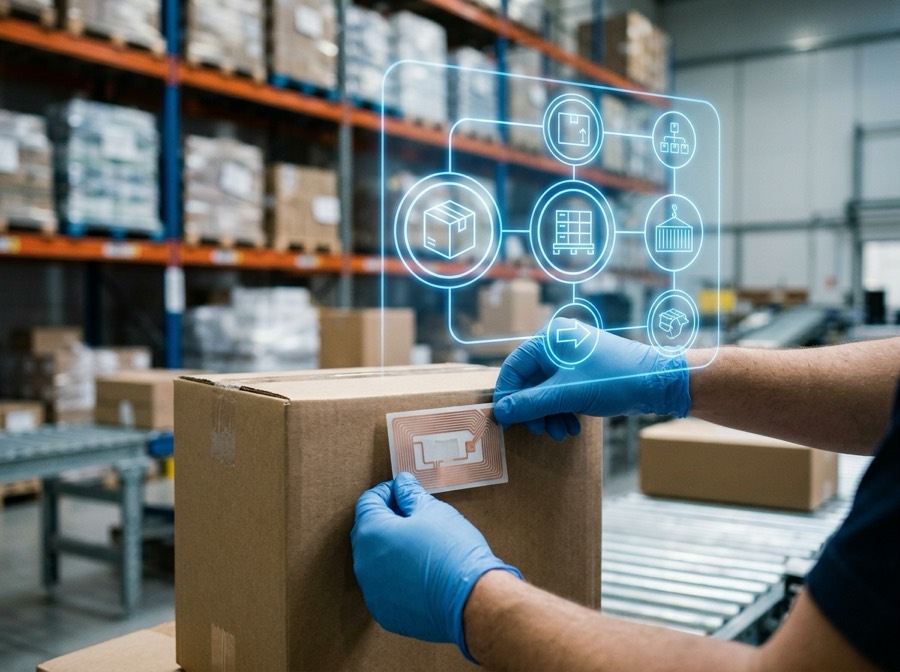
Apply RFID tags to whatever needs to be tracked: an individual item, carton, case, pallet, tote, bin, container or asset. Tag choice depends on material, environment and read distance, and can include passive UHF labels, durable industrial tags, on-metal tags and reusable asset tags.
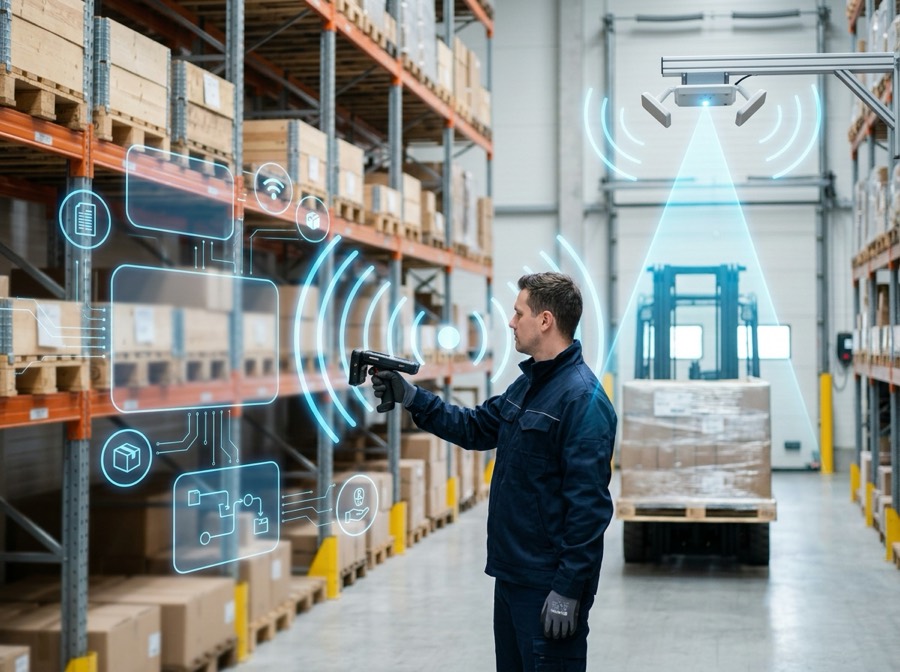
RFID data is captured using the hardware suited to the workflow: handheld RFID readers, fixed readers, dock-door portals, overhead readers, antennas and enterprise mobile computers.
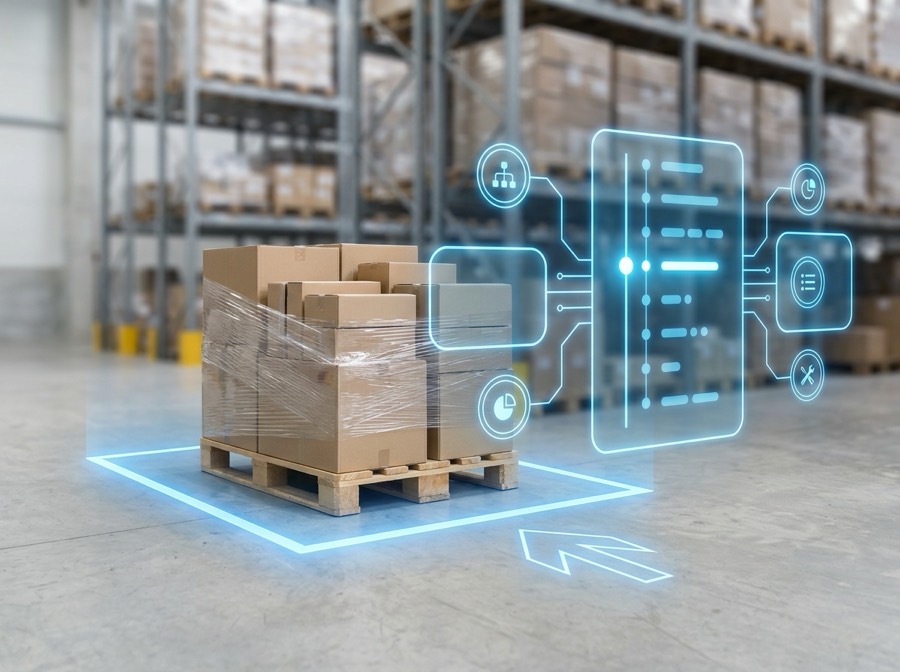
The software interprets each read and determines the event: item received, item entered a zone, item left a zone, pallet moved, item picked, shipment staged, item dispatched or an unexpected item detected.
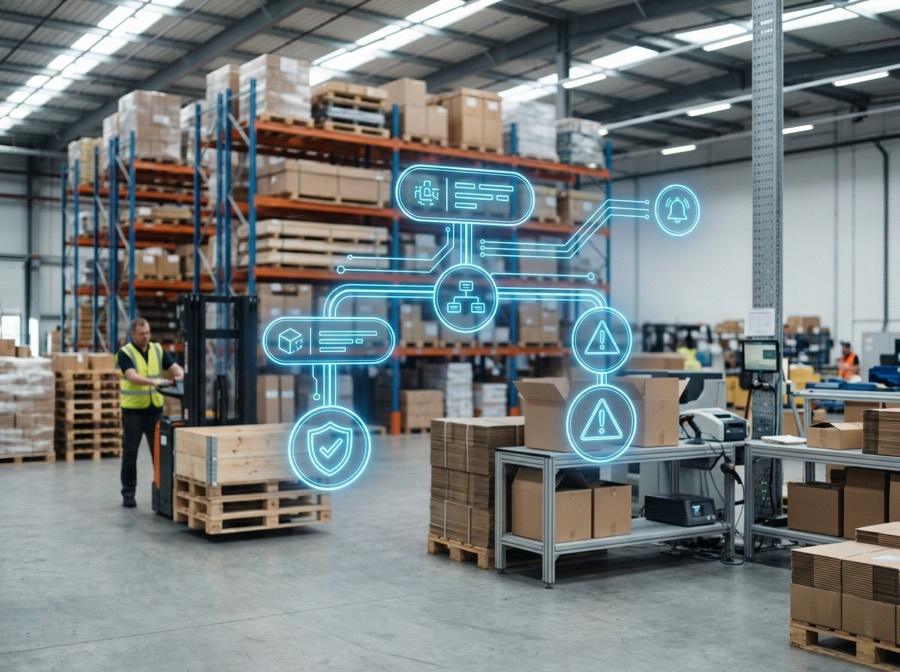
The platform validates the event against the purchase order or warehouse location, updates inventory status, flags unexpected movement, creates exceptions, notifies a supervisor and decides what should reach the system of record.
Approved RFID events are sent to your WMS, ERP, inventory management platform, TMS, CMMS, procurement system or custom business application through APIs, webhooks or middleware.

Dashboards cover inventory location, movement history, stock discrepancies, dwell time, missing items, zone movement, cycle count variance and receiving and dispatch status.

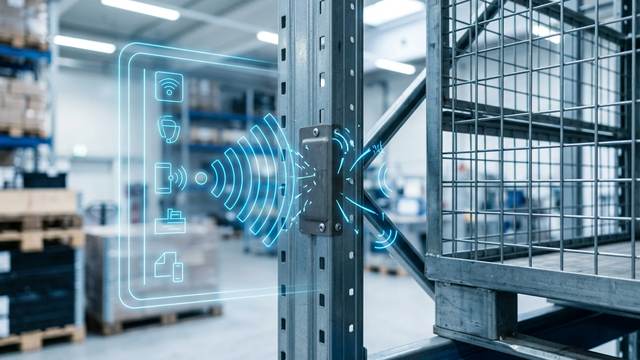
Not every warehouse requires the same RFID technology. The right approach depends on what needs to be tracked, the required location accuracy, warehouse layout, asset value, read distance, environmental conditions and budget. DreamzTech can design the software and integration architecture around passive RFID, active RFID or other real-time location technologies depending on the use case.
Best suited for many warehouse inventory workflows where tagged items move through defined read points or are counted using handheld readers.
Better suited to use cases where the business needs more continuous or precise location awareness.
The best RFID warehouse tracking system is not based on choosing the most advanced technology. It is based on selecting the tracking architecture that meets the required visibility and operational outcome without unnecessary infrastructure.
The best warehouse solution may use RFID, barcode, QR codes or a combination of technologies. DreamzTech designs the tracking workflow around the operational requirement rather than forcing a single technology everywhere.
| Capability | RFID | Barcode |
|---|---|---|
| Line of sight | Not always required | Required |
| Multiple items | Can read multiple tags depending on setup | Usually scanned individually |
| Automated checkpoints | Strong fit | Limited |
| Handheld cycle counting | Faster for tagged inventory | More manual |
| Item search | RFID handheld can help locate tagged items | Requires visible barcode |
| Cost per tag | Typically higher | Typically lower |
| Infrastructure | Readers, antennas and software | Scanners and labels |
| Best fit | High-volume tracking and automation | Simple or lower-cost identification |
RFID performance depends on more than choosing a reader and attaching a tag. Warehouse materials, tag orientation, reader placement, antenna configuration and physical layout can all influence read performance. DreamzTech designs the software and workflow with these real-world conditions in mind, and recommends validating the final architecture through a controlled pilot before full rollout.

Metal can affect RFID performance and may require:
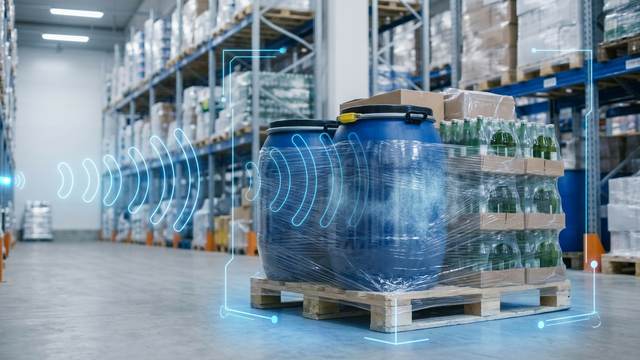
Liquids can absorb or interfere with UHF RFID signals. Depending on the item being tracked, the solution may require:
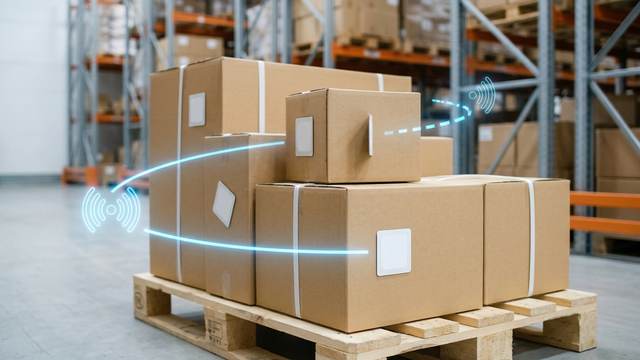
RFID read performance can change based on tag orientation, item stacking, pallet configuration and material density. The implementation should test how tags behave in the actual warehouse workflow.
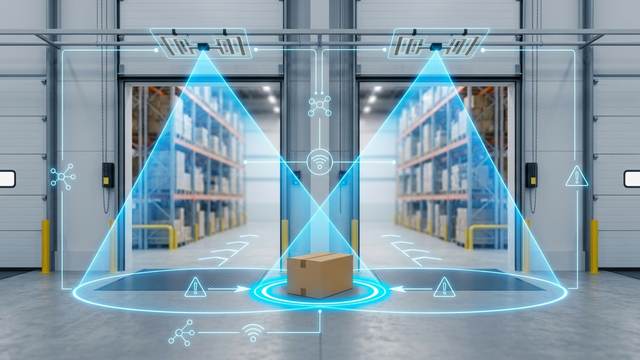
A reader may detect a tag outside the intended operational zone. The solution can reduce false movement events using:
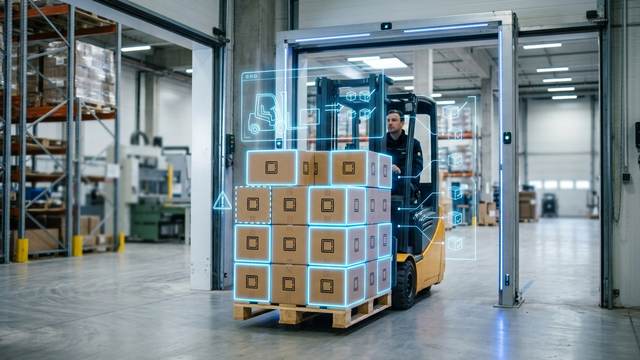
RFID systems should account for the possibility that an expected read is not captured. Software logic can support:
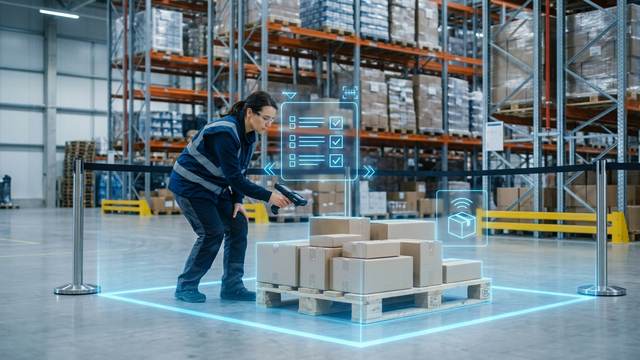
Before a full rollout, validate:
RFID success depends on the process around the reader, not only the reader itself. We map the real warehouse workflow first, then build the software, integrations, mobile workflows and dashboards around those rules.
The cost of an RFID inventory tracking system depends on the physical warehouse environment, number of locations, tracking accuracy required, RFID hardware, tag strategy, software workflows and integrations. A small checkpoint-based pilot may require a very different architecture from a multi-warehouse deployment with continuous asset visibility.
The number of warehouse areas, zones and facilities affects the required RFID infrastructure and software configuration.
A project with a few receiving and dispatch checkpoints requires less infrastructure than a warehouse with many dock doors, storage zones and automated movement points.
The number and type of readers affect both hardware cost and system architecture.
Integration complexity depends on your WMS, ERP, inventory system, custom applications and available APIs.
Cost depends on workflows, dashboards, alerts, reporting, user roles, mobile requirements, multi-site support and business rules.
A controlled pilot can validate read performance, operational fit, integration and business value before expanding the system.
Cost varies based on whether the project uses:
Tracking only entry and exit points is different from:
Tell us:
and our team can help define the recommended implementation approach.
DreamzTech is a software and systems integration partner, not a hardware manufacturer. We design the software to work with the RFID hardware ecosystem selected for your warehouse environment, and the architecture can support existing devices or new hardware chosen during implementation. Compatibility examples include common enterprise ecosystems such as Zebra, Impinj and Honeywell.
Not every warehouse needs the same architecture. Tracking can run at checkpoint level, at zone level, or with denser infrastructure where more continuous positioning is required — and the software should support that expansion without rebuilding the entire application.
We select the right technology for your scale, read environment and operational requirements. The RFID software layer, event processing, integrations and dashboards are built on proven components.


Verified DreamzTech engagements across RFID tracking, warehouse inventory, spare parts, procurement and asset management.
Challenge: fragmented systems and manual work-order distribution left container and asset movement untraceable.
Solution: an RFID and sensor driven platform with EAM automation, real-time container updates, digital invoicing and route optimization. Outcome: 80% less manual tracking effort, 95% automated invoicing accuracy and a 70% reduction in scan time.
Challenge: stock health was invisible across locations and procurement ran on manual processes.
Solution: a platform combining ML demand forecasting, configurable procurement scheduling, comprehensive stock health monitoring across all locations and an LLM chat interface for business intelligence.
Challenge: parts shortages were stopping production and availability sat at 78%.
Solution: an AI-driven parts inventory system with ML reorder points across 50K SKUs. Outcome: 60% reduction in production downtime, parts availability up to 97% and $3.1M annual savings.
Challenge: equipment downtime and unreliable spare-part stock levels across mining operations.
Solution: a maintenance and inventory platform with automated reconciliation and supplier integration. Outcome: 40% decrease in equipment downtime, 93% inventory accuracy and 30% faster spare part procurement.
Challenge: asset maintenance, scheduling and inspection records were spread across disconnected tools.
Solution: a CMMS platform with automated availability management, real-time calendar validation, branded report templates and on-site mobile data capture.
Challenge: stockouts across 180 retail locations with demand forecast accuracy at 68%.
Solution: a unified inventory platform with AI demand forecasting across all sites. Outcome: 42% reduction in stockouts, forecast accuracy up to 94% and $2.3M annual savings.
Verified client feedback consistently highlights responsiveness, practical problem solving, communication and delivery quality.
DreamzTech builds the software, integration and workflow layer around your warehouse and the RFID hardware that fits it — then proves it in a controlled pilot before expanding across zones, workflows and sites.
Build around your actual warehouse process instead of forcing a generic off-the-shelf workflow.
Connect readers and RFID events to WMS, ERP, inventory and operational platforms.
Delivery experience across warehouse, logistics, RFID and supply-chain systems.
Validate the technology in a controlled area, then expand across additional workflows, warehouse zones and facilities.
Design around appropriate RFID readers, tags and mobile devices rather than locking you to one hardware vendor — and you own 100% of the code, with no per-reader fees, no per-seat licences and no software vendor lock-in.
Production-ready software, integrations, user controls, security and scalability.
Recognized globally for technology innovation, engineering excellence, business growth, and measurable client success.
Tell us what you need to track, how inventory moves through your warehouse and which systems you already use. DreamzTech can help define the RFID architecture, software workflows, reader strategy and integrations required to turn RFID reads into reliable warehouse inventory visibility.


Your inventory data, supplier records and warehouse operations are protected by independently audited controls.


Explore how DreamzTech has helped businesses across industries turn ideas into scalable, high-performance solutions.
An RFID inventory tracking system uses RFID tags, readers and software to identify inventory and record its movement. Unlike barcode-only workflows, RFID does not always require direct line-of-sight scanning and can automate data capture across receiving, storage, picking and dispatch.
RFID tags are attached to items, cases, pallets, tools or containers. Readers detect those tags at configured warehouse locations. The software interprets each RFID read, applies business rules and updates inventory location, status or movement history in the connected WMS, ERP or inventory system.
An RFID warehouse tracking system combines RFID tags, readers, antennas and software to monitor tagged inventory and assets as they move through warehouse workflows such as receiving, putaway, storage, picking, staging and dispatch.
Yes, but the level of real-time visibility depends on the RFID architecture. A warehouse may use checkpoint tracking, zone-level tracking, last-known location or a denser real-time location infrastructure depending on operational requirements.
RFID can be used to track individual items, cases, pallets, bins, totes, returnable containers, tools, spare parts, equipment and other tagged assets.
RFID can automate inventory capture and read multiple tagged items without scanning each barcode individually. Barcode is typically lower cost and remains suitable for many identification workflows. Many warehouse environments use both RFID and barcode.
Yes. RFID software can integrate with an existing WMS, ERP, inventory platform or custom application using APIs, middleware, webhooks or direct system integration.
A WMS manages broader warehouse operations such as receiving, putaway, picking, packing and shipping. An RFID inventory tracking system focuses on automatically identifying and tracking tagged inventory or assets. RFID can be integrated into a WMS to improve inventory visibility and movement capture.
Yes. RFID software can associate item-level or case-level tags with a pallet tag so the warehouse can track pallet movement and retain the relationship between the pallet and its contents.
Typical components include RFID tags, handheld or fixed RFID readers, antennas, mobile computers and software. The exact architecture depends on warehouse layout, item type, tracking distance, environmental conditions and required location accuracy.
Yes, subject to device capabilities and available APIs or SDKs. DreamzTech can build the software and integration layer around compatible existing RFID readers, handheld devices and enterprise hardware.
Accuracy depends on tag selection, reader placement, antenna configuration, material composition, warehouse layout, tag orientation and software filtering. A pilot should validate performance in the actual warehouse environment before full rollout.
Yes. Metal can interfere with standard RFID tags and may require on-metal tags, different placement, reader tuning or changes to antenna positioning.
RFID can be used in environments containing liquids, but liquid can affect UHF RFID signals. Tag type, placement and reader configuration should be tested during implementation.
Cost depends on warehouse size, number of read points, tag type, handheld and fixed readers, required tracking accuracy, software customization and WMS/ERP integration. A pilot is often the best way to validate the architecture before a larger rollout.