




Build one product experience across iOS and Android without treating Flutter as a shortcut around architecture, testing or platform-specific work. DreamzTech provides full-lifecycle Flutter app development services covering product strategy, UI/UX, Dart engineering, backend APIs, Firebase, offline data, native integrations, QA, store release and modernization. If native iOS or Android is the better choice for a critical part of the product, we will say so before the architecture is locked in.




Flutter suits products where one codebase across iOS and Android is a genuine advantage — consumer apps, workforce tools, marketplaces, field applications and connected-device clients. We design around the users, workflows and integrations that shape the product.
Commerce, booking, subscriptions, loyalty, content and account experiences shipped to both stores from one Dart codebase — onboarding, authentication, payments, push notifications and analytics.
Internal applications connected to the systems operations already run on — role-based access, approvals, reporting, secure distribution and integration with identity, ERP and CRM.
Multi-sided products with distinct customer, provider and administrator journeys, matching, scheduling, live status, payments, ratings and operational dashboards.
Applications that keep working where connectivity is weak: local persistence with Drift or Hive, background sync, retry and conflict handling, photo and signature capture and location workflows.
Flutter clients for hardware and connected products, reaching BLE, NFC, sensors and vendor SDKs through platform channels and custom plugins where Flutter does not expose them directly.
Flutter products that use AI where it creates a clear user or operational benefit — intelligent search, recommendations, document and image understanding, voice interfaces and workflow automation through cloud AI services or on-device models.
From product strategy and Dart engineering through to QA, store release and long-term modernization — delivered by one accountable team. For broader delivery see our custom mobile app development services.
Production iOS and Android applications from a single Dart codebase, with a state-management and architecture approach chosen for the product rather than applied by habit.
Scope definition, user journeys, information architecture, Material 3 and Cupertino design systems, prototypes and accessibility — so engineering starts from a product decision.
Hire Flutter developers instead →
REST and GraphQL APIs, WebSockets, authentication and OAuth, payments, CRM and ERP connectivity, maps and analytics wired into the Dart client. Often paired with custom API development.
Authentication, Firestore, Cloud Functions, Cloud Messaging, Crashlytics, Analytics and Remote Config, with attention to security rules, offline behaviour and cost at scale.
Staged migration from separate native codebases, plus stabilisation of inherited Flutter apps — null safety, SDK and package upgrades, state-management cleanup and modularization.
Unit, widget, integration and golden tests, device-matrix coverage, CI quality gates, then signing, staged rollout, crash monitoring and ongoing feature delivery after launch.
The service list describes what we deliver. These capabilities show how we engineer Flutter applications that stay stable, testable and maintainable after the first release.
Interfaces that respect each platform’s conventions rather than shipping one look everywhere — adaptive layouts across phone and tablet, animations, accessibility and reusable design-system widgets.
Riverpod, BLoC/Cubit or Provider chosen for the product rather than by habit, with feature-first modularization, repository patterns and business logic kept testable and out of the widget tree.
Drift, SQLite or Hive for local persistence, background synchronization, retry strategies, queued writes and explicit conflict handling for intermittent connectivity.
Platform channels, Pigeon and custom plugins with Swift and Kotlin where the product needs device capabilities, vendor SDKs or background behaviour that Flutter does not expose directly.
Firebase, Supabase or custom REST and GraphQL backends on AWS, Azure or Google Cloud, with messaging, analytics, crash reporting and sensible security rules.
Unit, widget, integration and golden tests, Flutter DevTools frame and memory profiling, CI pipelines with Codemagic or GitHub Actions, then staged App Store and Google Play delivery.
Flutter is strongest when iOS and Android share most functionality and a single team can own both. It is a weaker fit when the product is dominated by platform-specific capability. We will tell you which case you are in before the architecture is locked in.
Most screens, business rules and workflows behave the same on both platforms, so one Dart codebase removes duplicated effort rather than hiding it.
A single team ships both platforms in step, which usually means faster iteration and fewer divergent bugs than running two native backlogs.
Device features and vendor SDKs are reached through platform channels and custom plugins, so Flutter is not a ceiling — but that native work must be planned, not assumed.
Heavy platform-specific UI, deep OS integration, demanding graphics or large existing native codebases can make native the sounder choice. We would rather say so early than mid-build.
Verified DreamzTech engagements where the mobile application carries real operational workflow — device integration, offline field data and multi-role systems connected to central platforms.
A cloud SaaS platform with a driver mobile app for vehicle tracking, fleet operations, load management and driver administration, using real-time GPS and IoT, geofencing alerts, optimized navigation, digital proof of delivery and on-road expense capture. It reduced manual operations by 40% and increased driver productivity by 30%, and shows the architecture required when mobile users, live location data and a central platform must work as one system.
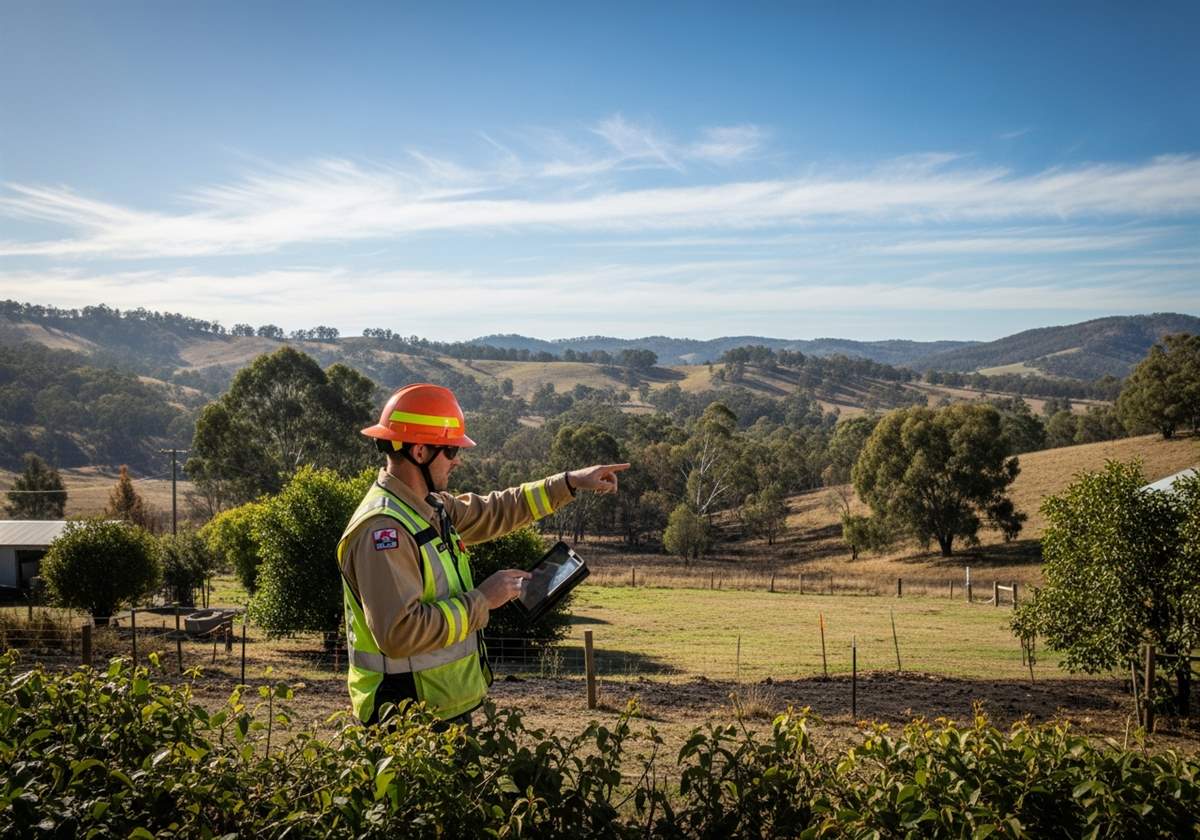
A wildfire inspection and property assessment platform where field inspectors run on-site assessments from a mobile app using dynamic inspection forms, photo documentation, audio notes and recommendation submissions, while a web portal handles scheduling, inspector assignment and availability. A strong reference for mobile products that must keep working away from a desk and under changing connectivity conditions.

A home inspection platform combining a multi-portal web system with a mobile app, giving administrators template, service and fee configuration, inspectors mobile report capture, and customers a self-service portal for inspection reports and scheduling. Automated template-based reporting cut completion from days to hours and intelligent calendar management removed double bookings — relevant to organizations replacing fragmented processes with a purpose-built mobile experience.
Scope-based estimates rather than a fixed price for every Flutter app. The right model depends on workflows, integrations, roles and how much native work the product needs.
A productive first conversation does not require a finished specification. The most useful inputs are the workflows, the users and the systems the app has to work with.

















Share your app idea, existing product or mobile workflow requirements and we will help you determine the right platform strategy, architecture, integration approach and delivery model. DreamzTech combines mobile, backend, cloud, QA, data and AI expertise with clear source-code ownership and US-facing project leadership.
We do not force every application into the same framework. The stack should fit user experience, platform reach, device capabilities, performance, security, integrations, maintainability and the team that will own the product long term.
| Category | Technologies / approaches |
|---|---|
| Language | Dart |
| Framework | Flutter |
| UI | Material 3, Cupertino, adaptive layouts |
| State Management | Riverpod, BLoC / Cubit, Provider, existing GetX where required |
| Navigation | go_router, Navigator APIs |
| Architecture | Modular / feature-based architecture, Clean Architecture where justified, repository and service patterns |
| Async | Futures, Streams, async/await, isolates |
| Networking | Dio / HTTP, REST, GraphQL, WebSockets |
| Local Data | Drift / SQLite, Hive, secure key-value storage where appropriate |
| Backend | Firebase, Supabase, Node.js, .NET, Java, Python, PHP |
| Cloud | AWS, Azure, Google Cloud, Firebase |
| Authentication | OAuth 2.0, OIDC, JWT, MFA, biometrics |
| Native Integration | Platform channels, Pigeon, custom plugins, Swift / Kotlin |
| Payments | Stripe, Apple Pay, Google Pay, approved gateways |
| Maps | Google Maps, Mapbox, native map integrations where needed |
| Notifications | FCM, APNs through appropriate Flutter / native integration |
| Testing | Unit, widget, integration and golden tests where useful |
| Performance | Flutter DevTools, CPU / memory / frame profiling |
| CI/CD | GitHub Actions, Codemagic, Bitrise, Fastlane |
| Distribution | App Store Connect, TestFlight, Google Play Console |
| Monitoring | Crashlytics, Sentry, appropriate observability tooling |
| Analytics | Firebase Analytics, Mixpanel, Amplitude or suitable alternatives |
Three practical steps: define the work, agree the architecture and delivery plan, then build, test and release in iterations you can see.
Target users, business outcome, must-have workflows, platform targets, online and offline requirements, native capability needs, integrations, security expectations and launch window.
UI/UX direction, state-management and architecture decisions, backend and API design, native interop plan, testing strategy, team shape and a release plan.
Iterative Dart delivery with demos, automated and device testing, staged App Store and Google Play rollout, crash and performance monitoring, then continued improvement.
Cross-platform products for industries where the app has to work in the field, on shared devices, and against the systems the business already runs.
Verified client feedback consistently highlights responsiveness, practical problem solving, communication, product ownership and delivery quality.

The value is not simply access to Dart programmers. DreamzTech combines Flutter product engineering with backend, APIs, cloud, QA, DevOps, data and AI capability under one delivery organization, while maintaining US-led stakeholder coordination.
Flutter, backend, APIs, cloud, QA, DevOps, data and AI under one delivery organization, so the product does not stall waiting on a second vendor.
Project leadership and stakeholder communication aligned to US working hours, with global engineering scale behind it.
Repositories, source code and deliverables transfer to you according to the signed agreement, with documented handover.
If native is the better technical choice for part of the product, we will say so before the architecture is locked in rather than after the build has started.
Share your app idea, existing codebase, operational workflow or integration requirements. We can help determine the right architecture, state-management approach, backend, native interop plan, testing strategy and delivery model. Need engineers rather than a managed engagement? Hire Flutter developers instead.
Direct answers to the questions businesses commonly ask when comparing a custom mobile app development company, budget, platform strategy, timeline, security and delivery model.
DreamzTech can support Flutter product discovery, UI/UX, Dart development, iOS and Android delivery, backend/API integration, Firebase, offline data, native platform integration, testing, App Store and Google Play release, maintenance and modernization.
Yes. Flutter applications can be designed around specific users, workflows, backend systems, device requirements and business rules rather than a generic starter template.
A large portion of the application can often be shared, including UI, networking, state, validation and business logic. Some requirements still need platform-specific code, configuration or behavior.
Yes. Dart is the primary programming language used for Flutter application development.
The choice depends on the codebase and product. DreamzTech can work with Riverpod, BLoC/Cubit, Provider and existing architectures. The goal is maintainable state ownership and testability, not using a particular library because it is fashionable.
Yes. Flutter apps can integrate Firebase Authentication, Firestore, FCM, Crashlytics, Analytics, Remote Config and related services. Firebase should be selected because it fits the backend architecture, not because every Flutter app requires it.
Yes. Flutter applications can integrate with REST, GraphQL, WebSockets and custom APIs as well as identity, payments, CRM, ERP, logistics, healthcare and SaaS systems.
Yes. Offline-capable Flutter apps can use local persistence, queues, synchronization, retry logic and conflict resolution. Offline behavior should be part of the architecture from the beginning.
Yes. Flutter can use plugins or native integration through platform channels and custom plugins. Complex functionality may require Swift/Kotlin work alongside the Flutter codebase.
Yes, where the migration makes technical and commercial sense. The existing apps should be audited first to understand native SDKs, platform-specific workflows, data, authentication and migration risk.
Flutter Add-to-App allows Flutter modules to be embedded into an existing native iOS or Android application. It can support incremental Flutter adoption in suitable architectures.
Yes. Modernization can include Flutter/Dart upgrades, dependency cleanup, architecture refactoring, state-management changes, performance work, testing and CI/CD improvements.
Testing can include unit tests, widget tests, integration tests, golden tests where appropriate, API testing, regression testing and device/platform QA.
Yes. Engagements can include signing, build configuration, TestFlight, App Store Connect, Google Play testing tracks, CI/CD and production-release support. Store approval remains subject to Apple and Google policies.
Cost depends on product scope, user roles, UI, backend, integrations, native features, offline behavior, security, QA and release responsibility. DreamzTech recommends a scope-based estimate after the main requirements are understood.
The timeline depends on scope. A focused MVP can be delivered faster than an enterprise application with multiple roles, complex integrations, offline workflows or heavy native SDK requirements.
Not universally. Flutter is strong when iOS and Android share substantial workflows and code reuse has real product value. Native development may be stronger when the roadmap is dominated by platform-specific functionality.
Neither framework is universally better. The decision depends on team skills, required packages, platform integrations, performance needs, code ownership and the wider product architecture.
Yes. Flutter can target web and desktop in appropriate products. That does not mean it is the right choice for every web property, especially SEO-first marketing sites.
Yes. Flutter applications can consume AI capabilities through secure backend APIs for assistants, search, recommendations, vision, document processing and other workflows. On-device approaches can also be considered when they fit the product.
Many US organizations value business-hour communication, stakeholder access and a clear escalation path. DreamzTech uses US-led stakeholder coordination with global engineering delivery.
DreamzTech engagements can be structured with source-code and IP ownership terms defined in the signed agreement, subject to open-source and third-party licensing.
Yes. If your team already owns product management and delivery, use the Hire Flutter Developers model for dedicated Flutter/Dart engineering capacity.