Metal Recycling Management Software Case Study

Metal Recycling Management Software Case Study

Case Study | Recycling Technology and Manufacturing

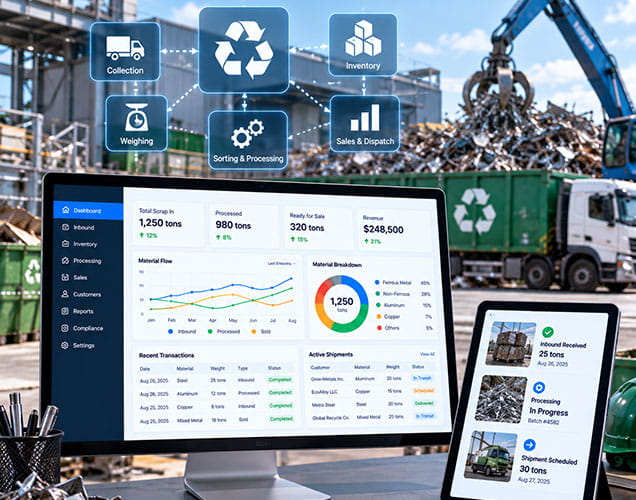
DreamzTech developed and enhanced a custom recycling management platform for a European precious-metal recycling company, connecting catalytic-converter intake, production, laboratory analysis, precious-metal settlement and export inventory in one system. The solution uses lot and container traceability, QR-driven workflows, mass-balance controls and financial reconciliation to give teams a clearer view of each material journey from receipt to refinery payment.

  • Client European precious-metal recycling company
  • Location Catalonia, Spain
  • Primary industry Recycling and Waste Management Technology
  • Website category Manufacturing
  • Supporting industry FinTech
  • Users Production operators, laboratory teams, back-office staff and management
  • Core scope Lot lifecycle, QR traceability, mass balance, refinery reconciliation, hedge planning and supplier ledger
Discuss Your Recycling Software Project
Metal Recycling Management Software Case Study
Trusted By Startups, SMBs to Fortune 500 Brands

Quick Answers

Overview

Precious-metal recycling combines physical production with laboratory evidence and financial settlement. A single supplier lot may be received in several containers, processed across multiple stations, transferred into new packaging, sampled, assayed, hedged, combined with other lots for refinery shipment and paid through advances and final settlement. If each team keeps separate records, the material, weight and financial history can become difficult to reconcile.

DreamzTech created a shared system around the lot record, built through its custom software development services. Production teams follow material through de-canning, milling and sampling; laboratory users record inspection and XRF analysis; back-office teams manage hedges, assays, advances, supplier payments, settlements and export activity. The enhancements extend that foundation with QR-based container traceability, production mass balance and multi-stage inventory ownership.

Challenges

How Material Moves Through the Platform

Every lot follows the same ten-stage path from creation through management reporting.

The Solution DreamzTech Delivered

DreamzTech designed and delivered a comprehensive recycling operations platform, extending its custom manufacturing software solutions expertise across production, laboratory and financial workflows:

  • Links Production, Laboratory and Back Office records around the same lot in one shared web platform.
  • Keeps receipt, processing, assay, hedge, advance, settlement and export actions part of one traceable journey.
  • Removes the need for separate systems to track the same material record.
  • Automatically creates QR codes for lots and packages as they’re created.
  • Lets operators scan a material code with a fixed bay, machine or transit-point code to update stage and location, in the same spirit as DreamzTech’s RFID asset and inventory tracking software for facilities that prefer scanless reads.
  • Removes the need to retype the lot reference at every stage change.
  • Issues a new package QR code when material moves into a different container type.
  • Closes the original package while retaining the parent-child relationship.
  • Keeps the lineage connected with the parent lot and relevant weight difference.
  • Supports gross, tare, net and material-category weights with calculated values on receipt, production and laboratory screens.
  • Uses configurable labels so the workflow reflects the client’s own terminology.
  • Propagates shared weight data across production, laboratory, settlement and reports while preserving established formulas.
  • Lets back-office users group multiple source lots into a single refinery shipment.
  • Records full or partial weights and allocates expected value proportionally across the source lots.
  • Compares shipped weight, expected compound result and expected payment with the refinery’s reported figures.
  • Organizes metal, quantity, due date, auction type and status in a supplier-level planning view.
  • Surfaces reminders for planned hedges, missing linked lots and pending settlement actions.
  • Keeps hedge and settlement follow-up visible in one shared summary.
  • Records input and output weights by production stage, station and shift.
  • Calculates theoretical-versus-actual variance for each production run.
  • Keeps the internal production record separate from supplier settlement weight.
  • Supports configurable fraction names for ceramic monolith, steel and other by-products.
  • Tracks container-level weights without fixing the system to one material list.
  • Feeds a monthly comparison of theoretical production stock against actual stock on hand by location.
  • Brings credits from delivery, advance and final settlement events into one view alongside manually recorded payments.
  • Supports payment methods and optional lot linkage for each entry.
  • Maintains a running supplier balance and an exportable statement.
  • Follows material across a five-stage model: supplier, inbound transit, facility, outbound transit and refinery.
  • Keeps inventory value and proportional ownership visible at every stage.
  • Updates the ownership position once refinery payment is recorded.
  • Turns connected records into refinery reconciliation, production mass-balance, supplier statement and inventory valuation reports.
  • Supports PDF or Excel outputs for operational and management review.
  • Keeps reporting tied to the same underlying lot and financial data.

Verified Platform Outcomes

Connected Lot History

Production, laboratory and financial records can remain linked to the same material lot.

Container-Level Traceability

Package QR codes and lineage records preserve context when lots split across stations or move into new containers.

Structured Production Control

Mass-balance records make theoretical-versus-actual weight variance visible by stage, station, shift and operator.

Refinery Accountability

Combined-lot reconciliation compares shipped weight, expected compound result and expected payment with refinery-reported data.

Supplier Balance Visibility

The payment ledger brings deliveries, advances, settlements and payments into one running supplier account.

Inventory and Ownership Visibility

The five-stage model shows where material is, its recorded value and the ownership position through refinery payment.

Configurable Operations

Editable stage, location, weight and fraction labels allow the system to reflect changing plant terminology and material types.

Management Reporting

PDF and Excel outputs support review of mass balance, refinery reconciliation, supplier statements and inventory valuation.

The AI Opportunity

This platform should not be described as AI-powered unless delivered AI functions are confirmed in production. A future human-reviewed layer could flag unusual weight or assay variances, extract data from refinery documents, predict processing bottlenecks, prioritize overdue hedge and settlement actions, forecast inventory value and answer natural-language questions over approved operational data — similar in spirit to DreamzTech's AI inventory management system work in other industries. Any such capability would remain human-reviewed before affecting production, financial or compliance decisions.

Conclusion

This project demonstrates how recycling management software can connect physical material flow with laboratory evidence and financial settlement. DreamzTech combined lot and container traceability, QR-driven status updates, production mass balance, refinery reconciliation, supplier payments and multi-location inventory visibility for a complex precious-metal recycling operation. The same architecture can support metal recyclers, catalytic-converter processors, scrap operations, precious-metal refiners and other industrial businesses that need traceable batches, variable-weight production and settlement-aware inventory — including facilities that need scanless RFID asset and inventory tracking as a complementary layer. To discuss a similar project, contact DreamzTech.

Leading Global Software Company

Trusted by Industry Leaders Worldwide

Trusted by startups to Fortune 500s, including DHL, Nestle, and Stanford - partners who rely on us for high-impact, scalable software solutions.

Book a Discovery Call

    I Consent to Receive SMS Notifications, Alerts from DreamzTech US INC. Message frequency may vary. Message & data rates may apply. Text HELP for assistance. You may reply STOP to unsubscribe at any time.
    I Consent to Receive the Occasional Marketing Messages from DreamzTech US INC. You can Reply STOP to unsubscribe at any time.
    By submitting the form, you agree to the DreamzTech Terms and Policies

    Frequently Asked Questions (FAQ)

    Recycling management software connects material intake, supplier records, inventory, production, traceability, settlement and reporting in one operational system.

    DreamzTech developed and enhanced a web platform connecting Production, Laboratory and Back Office workflows for catalytic-converter and precious-metal recycling operations at a European precious-metal recycling company.

    The primary business industry is Recycling and Waste Management Technology. On DreamzTech’s website it should be categorized under Manufacturing, with FinTech as a supporting category.

    The system generates QR codes for lots and physical packages. Scanning a material code with a fixed location or machine code can update the package’s recorded stage and location.

    A container transfer creates a new QR code, closes the original package and keeps a parent-child lineage that links both containers to the same lot.

    Lot traceability software records the identity, movement, processing history and related evidence for a material batch from receipt through production and delivery or settlement.

    Operators record material input and output by stage, station and shift. The system compares theoretical weight with actual output and presents the variance for review.

    The platform can combine full or partial source lots, allocate expected value proportionally and compare the company’s weight, compound result and expected payment with refinery-reported data.

    The ledger connects delivery, advance and settlement credits with recorded payments, payment methods and optional lot references to maintain a running supplier balance.

    The system follows material across supplier, inbound transit, facility, outbound transit and refinery stages while recording value and proportional ownership through payment.

    Yes. Its configurable lots, containers, fractions, stages, locations, weights and reports can be adapted for other metal, scrap and industrial recycling workflows.

    Yes. Human-reviewed AI can assist with anomaly detection, document extraction, operational forecasting and follow-up prioritization, but these should be described as future capabilities unless delivered and verified.

    The connected workflows and platform outcomes can be published now. Percentage improvements in time, throughput, accuracy, yield, recovery, cash flow or revenue require approved baseline and post-implementation data.