Quick answer: To build agritech software, start with one valuable agricultural workflow, validate the users and field conditions, map the required data and integrations, then deliver a narrow end-to-end pilot. Architecture, offline mobile behavior, GIS, device connectivity, data ownership and security should be defined before the product scales.
This guide explains the product and engineering decisions behind agritech software development. Organizations that need an experienced delivery partner can review DreamzTech’s custom agriculture software development capabilities for web, mobile, AI, IoT, GIS and cloud platforms.
What is agritech software?
Agritech software is a digital product designed for agricultural production, agribusiness operations or services that support the agriculture value chain. It can be built for growers, ranchers, agronomists, cooperatives, input suppliers, processors, exporters, insurers, lenders, researchers or government programs.
Common products include farm management systems, field-scouting apps, precision-agriculture platforms, crop marketplaces, traceability systems, irrigation applications, livestock software, agricultural ERP, equipment monitoring and supply-chain portals.
Why agricultural products need a specialized development process
A farm application is not simply an office application used outdoors. Users may work across large geographies with unreliable connectivity, gloves, bright sunlight, shared devices and time-sensitive operations. Data may arrive from equipment and sensors as well as people. Seasons, crop cycles and weather can limit when a feature can be validated.
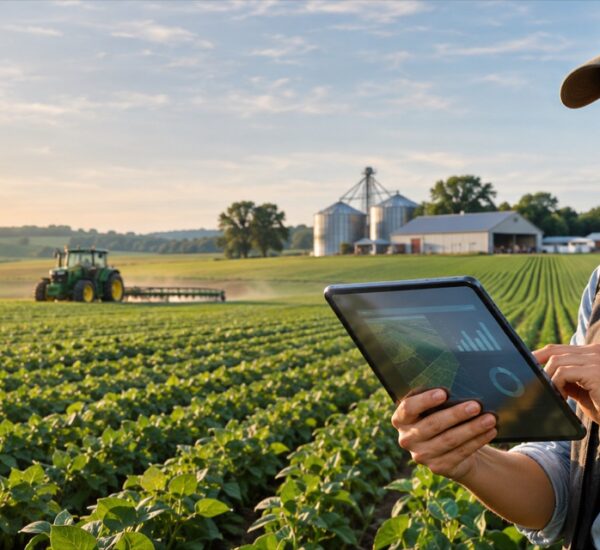
The market is digitally reachable: USDA NASS reported that 85% of U.S. farms had internet access in 2025, and 82% had smartphones. But access does not remove the need for offline operation, simple onboarding, accessible design and clear business value.
Step 1: Choose a problem worth solving
The best starting point is a costly, frequent and observable problem. Interview people who perform and manage the workflow. Document what triggers the work, the information required, current tools, exceptions, approvals and the consequence of delay or error.
Useful discovery questions include:
- Who experiences the problem and who pays to solve it?
- How is the workflow handled today?
- Which decisions are delayed by missing or fragmented information?
- What data already exists, and who owns it?
- What would a measurable improvement look like?
- Which seasonal window is available for a pilot?
A product statement should be specific. “Use AI to improve farming” is too broad. “Help crop advisors prioritize daily scouting locations from imagery, weather and field observations” describes a user, decision and outcome.
Step 2: Select the first product scope
An MVP should test the core value proposition, not recreate every module in a mature farm platform. A strong first release often contains one complete workflow:
- Capture or import the required data.
- Apply the business rule, calculation or model.
- Present a recommendation or task to the correct user.
- Record the decision and outcome.
- Measure whether the workflow improved.
Supporting capabilities such as authentication, role-based access, audit history, notifications and administration should be included only to the level required for safe pilot operation.
Step 3: Design the agritech software architecture
Web application
The web application typically supports planning, dashboards, administration, configuration, maps, reporting and data review. Responsive design is important, but complex maps and tables may still need desktop-optimized workflows.
Mobile application
Agriculture app development should treat offline behavior as a core requirement when users work in fields or remote facilities. Define what data is stored locally, which actions are permitted offline, how changes synchronize, how conflicts are resolved and how sensitive information is protected on the device.
Backend and APIs
The backend enforces permissions and business rules, manages transactions, schedules processing and exposes APIs to approved clients and partners. Separate operational services from heavy imagery, geospatial or machine-learning workloads so each can scale appropriately.
Data platform
A practical data layer may combine relational records, time-series sensor data, geospatial objects, files and analytical datasets. Metadata should capture the source, timestamp, units, location, quality and lineage of important observations.
Integration layer
Integrations may connect weather providers, GIS, machinery files, telematics, laboratories, accounting, ERP, payment systems, marketplaces, government data or customer systems. Use stable internal models so one vendor’s format does not become the product architecture.
Cloud and operations
Plan environments, automated deployment, backups, observability, incident response and data retention before production. Agricultural workloads may be seasonal, so capacity and support processes should handle short periods of high demand.
Features by agritech product type
| Product | Priority capabilities |
|---|---|
| Farm management software | Field plans, tasks, inputs, inventory, equipment, labor, finance and reporting |
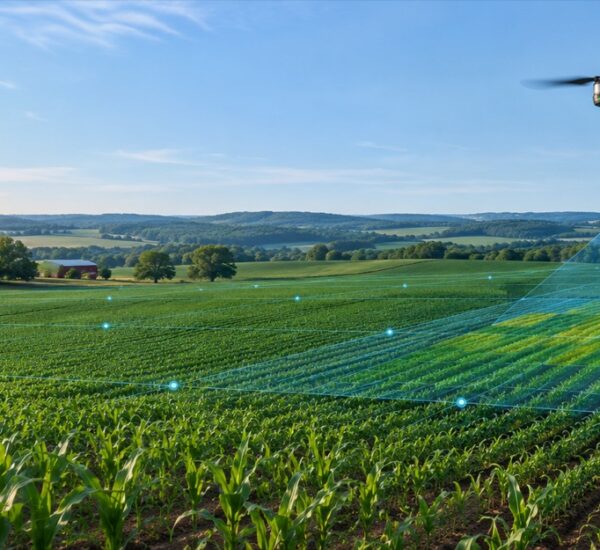
| Precision agriculture software | GIS layers, imagery, sensors, machine data, prescriptions, analytics and scouting |
| Agriculture ERP software | Procurement, inventory, contracts, production, quality, finance and multi-entity reporting |
| Agricultural supply-chain software | Supplier onboarding, lots, traceability, logistics, documents, quality and customer portals |
| Livestock platform | Identity, health events, feeding, breeding, movement, production and compliance |
| Agriculture marketplace | Catalogs, offers, orders, payments, logistics, quality evidence and dispute workflows |
Step 4: Plan AI, IoT and geospatial capabilities
Do not add AI or devices only for product positioning. Each capability should improve a defined decision or reduce a measurable operational burden.
- AI and machine learning: forecasting, risk scoring, classification, anomaly detection and recommendations.
- Computer vision: plant, fruit, weed, pest, disease or quality analysis from images.
- IoT: soil, weather, water, livestock, storage, equipment and environmental monitoring.
- GIS: field boundaries, management zones, sampling points, routes, spatial history and remote sensing.
- Automation: alerts, approvals, work orders and controlled actions in connected systems.
When connected devices are involved, security must cover more than the cloud application. NIST’s IoT cybersecurity guidance treats requirements, device capabilities, customer information and lifecycle support as product concerns. Device identity, secure configuration, data protection and update mechanisms should be included in architecture and procurement decisions.
Step 5: Establish data ownership and governance
Agricultural data can reveal business performance, production practices, asset locations and commercial relationships. Agreements should identify who owns raw and derived data, which uses are permitted, how long information is retained, whether it can train models, and how customers export or delete their records.
Use role-based access, least-privilege permissions, encryption, audit logs and environment separation. For AI features, record model versions, inputs, outputs and human decisions when traceability is important.
Step 6: Test under real field conditions
Functional testing in a laboratory is necessary but insufficient. Field testing should cover poor connectivity, older devices, GPS variation, large maps, bright light, rapid data entry, gloves, battery constraints, delayed synchronization and peak seasonal load.
Test the operating process as well as the interface. Who receives an alert? What happens outside business hours? Can a user correct a bad sensor or field record? How does support distinguish a device problem from a network or application problem?
Agritech software cost and timeline
Budget and timeline depend on platforms, modules, integrations, GIS and imagery workloads, device protocols, AI maturity, data migration, compliance and pilot conditions. The ranges below are planning categories rather than quotes:
- Discovery and prototype: workflow research, architecture, data assessment and testable UX.
- Focused MVP: one end-to-end workflow with production-quality foundations and limited integrations.
- Multi-module platform: web and mobile applications, administration, reporting and several integrations.
- Enterprise or connected ecosystem: multiple regions, business entities, device types, advanced analytics and complex migration.
A focused MVP can often be delivered in a few months. A connected platform should be planned in phases, with time reserved for integration access, data cleaning and validation during an agricultural season.
Build, buy or use a hybrid architecture?
Buy when a proven product covers the workflow and required integrations. Build when the workflow, data or customer experience is the differentiator. Use a hybrid approach when established infrastructure—such as mapping, weather, payments or communications—can be combined with a custom workflow and analytics layer.
Avoid rebuilding commodity capabilities without a business reason. Product investment should concentrate on the workflow and intelligence that create distinct value.
Metrics for an agritech pilot
- User activation and weekly workflow completion
- Time saved per task or reporting cycle
- Data completeness and synchronization success
- Alert precision, false-positive rate and response time
- Input, water, labor or equipment efficiency
- Downtime, loss or exception reduction
- Retention and willingness to expand the pilot
Select a small set before development so the product team knows what evidence will justify the next phase.
Frequently asked questions
Which technology stack is best for agritech software?
There is no universal stack. Choose technologies based on offline needs, geospatial processing, device protocols, integrations, security, scale and the team’s ability to operate the system long term.
Should an agritech MVP include AI?
Only if AI is necessary to prove the core value and representative data is available. A rules-based or human-assisted workflow may validate demand faster and create the data needed for a later model.
How do you handle poor rural connectivity?
Use offline-first mobile design, local queues, compact payloads, retry policies, clear synchronization status and conflict-resolution rules. Test with realistic network conditions.
Can agritech software integrate with existing ERP and machinery?
Yes, when the required APIs or data formats are available. Integration discovery should confirm access, licensing, ownership, update frequency and error-handling requirements before estimates are finalized.
What makes agritech software scalable?
Scalability includes more than server capacity. The product must support new crops, regions, organizations, devices and rules without creating unmanageable configuration, support or data-quality work.
Turn the product idea into a build roadmap
DreamzTech helps agribusinesses and software companies move from workflow discovery to architecture, design, engineering, integration, field testing and production support. Start with the user, decision, data and measurable outcome; then add technology where it improves the operating model.